


|
THE ALVIATOR'S VERDICT
I'm certainly not the target market for the specific variant of premium experience that the airline provides. I commend the effort, though, and the airline also has some of the cheaper fares in the Japanese domestic market |
3.5
|
In March 2026, I flew StarFlyer’s A320 from Tokyo Haneda to Fukuoka Airport. StarFlyer is a quirky “boutique airline” that now operates either domestically within Japan, or between Taipei and Kitakyushu. I was really interested in the airline when I first came across them, and when I found myself with some free time in Tokyo, I couldn’t pass up the opportunity to fly them.
StarFlyer lived up to their promises, with a sleek cabin (and 34″ seat pitch), piano music at the boarding gate, a high-quality safety card, etc.. However, I found my personal priorities to be misaligned with what StarFlyer offers – thanks for the music and robo-style safety video, but give me my WiFi and ergonomic seat features back, please. To be fair, StarFlyer’s newer A320neos do have free WiFi, in line with the competition with other Japanese carriers.
Why I booked StarFlyer’s A320
While in Japan, I was keen to do some domestic flying. Partially, this is because flying Japan Airlines and ANA is affordable in Japan – it costs a small number of miles (on the low end, though not tiny), though basically zero taxes and fees. StarFlyer isn’t easily redeemable unless you’ve got ANA miles (not Star Alliance partners), though I flew ANA on the return.
However, the bigger reason was because I’d heard so much about what it’s like to fly intra-Japan, and really wanted to see what it was like for myself. I’m hugely interested in the way people commute, and how aviation folds into people’s weekly rhythm. Last year I flew a Chinese airline domestically for the first time in many years, and also found that to be an insightful experience.
I could’ve reviewed Japan Airlines’ A350 and ANA’s 787/new 777s head-to-head, sampling the latest and greatest of Japanese aviation – it even would’ve cost me less. However, this time round I was more interested in finally flying a 767 for the first time, which I’ll be reviewing in the next segment. Given that StarFlyer’s airline brand had also caught my eye by this point, I figured I might as well do StarFlyer and ANA this time round, and save a Japanese head-on comparison for another day.
StarFlyer Booking Experience and Cost
Okay, so how was the actual experience booking on StarFlyer? Well, the website seems to have gotten a revamp since I booked, so I’ll just talk you through the booking process if you were to book today. In reality I received a more archaic booking interface, though it didn’t feel finicky at all.
When booking, you’ll have a choice of three fare types – soratabi (early purchase), Star, and General. I missed the soratabi cutoff, so I had a generic “Star” reservation. Refund amounts are actually quite reasonable – it’s 10% of the fare 45 days before departure, 20% of the fare 28-44 days before departure, and 30% of the fare afterwards, unless you no-show (where you’re charged the full amount).
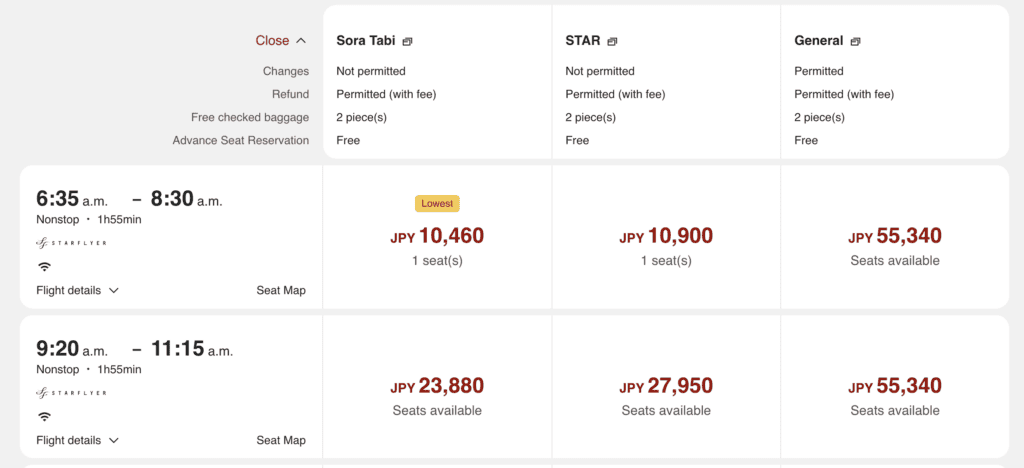
My StarFlyer “Star” fare for my 12:20 PM Thursday flight cost JPY 15,060 (£70) including taxes and fees, and I was able to reserve a window seat at no extra cost. For the record, I booked it exactly a month in advance.
After selecting a flight and entering your details, you’re invited to choose a seat on the flight, before you pay – it feels fairly straightforward. The only surprising bit is that the reservation code is a 4-digit number, instead of a 6-digit numeric number.
Seat selection is generally free for domestic Japanese flights in economy. While that’s awesome, do note that many tend to take advantage of the free seat selection opportunity. Especially if you’re flying a trunk route (such as Haneda-Sapporo), it’s common to book around two months before your flight, and realise that there are no window seats left.
StarFlyer Ground Experience at Haneda Airport
The first hint that I wasn’t really StarFlyer’s target market began at Haneda Airport. I arrived from my ANA flight from Seoul Gimpo, and made my way over to Terminal 1, where my StarFlyer flight was departing.
At Haneda Airport, you go through a security check pier according to the airline you’re flying. While Japan Airlines (understandably) had a large bank in the middle of the airport, StarFlyer had its own sleekly lit entryway to the side. This area was complete with two flatscreen TVs – one showing the StarFlyer flights leaving the terminal, and the second simply featuring the airline’s logo in its full glory.
Here’s the catch – fun as the exclusive little area was, this was the only area of airport security that still featured the old-style scanners, where you had to take your liquids and electronics out of your bags. All of the other less exclusive-feeling areas of the airport had been outfitted with the new-style scanners.
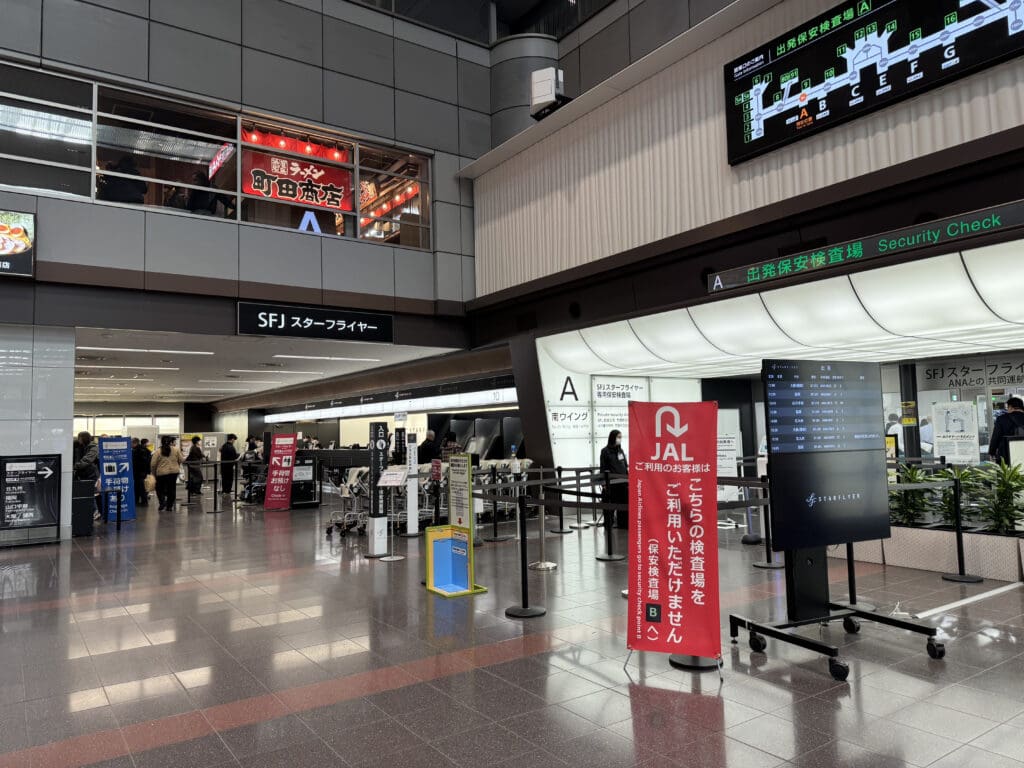
StarFlyer Premium Security at Haneda Airport
Anyway, this wasn’t a huge deal, and I was through to the other side in a matter of minutes. Haneda Airport really is a beast for domestic travel – as you can see from the below departures board, there’s at least one flight leaving every 5 minutes – and this is just for Terminal 1, bearing in mind ANA does their own domestic flights from Terminal 2. Not only this, but Japan Airlines and ANA operate many widebodies exclusively domestically, which seat up to 400 passengers. That should give you a sense of the domestic air travel volume within this long and thin country.
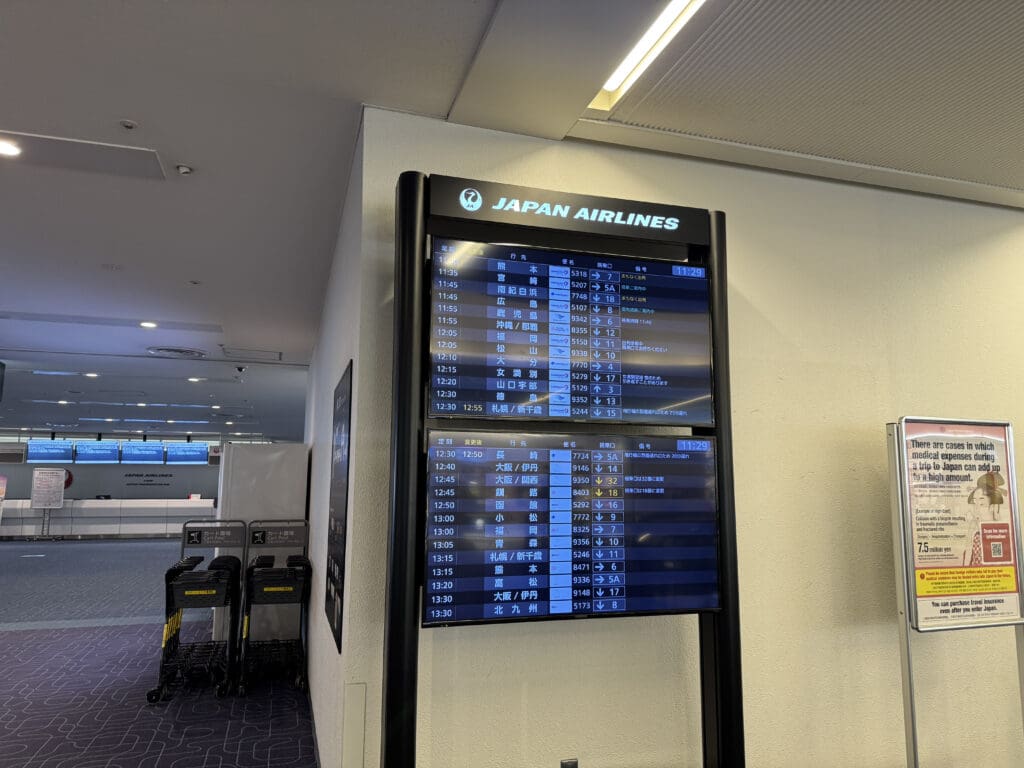
Haneda Airport Terminal 1 Departures Board
StarFlyer has their own set of gates near one of the ends of the terminal (gates 1-3), so I headed there. It was such a beautiful day, and while Haneda’s Terminal 1 doesn’t have the most natural light, it does have floor-to-ceiling windows on one side of the terminal. There were slightly obscured views of both the StarFlyer A320 taking me to Fukuoka, and the plane to Osaka-Kansai parked next to that.
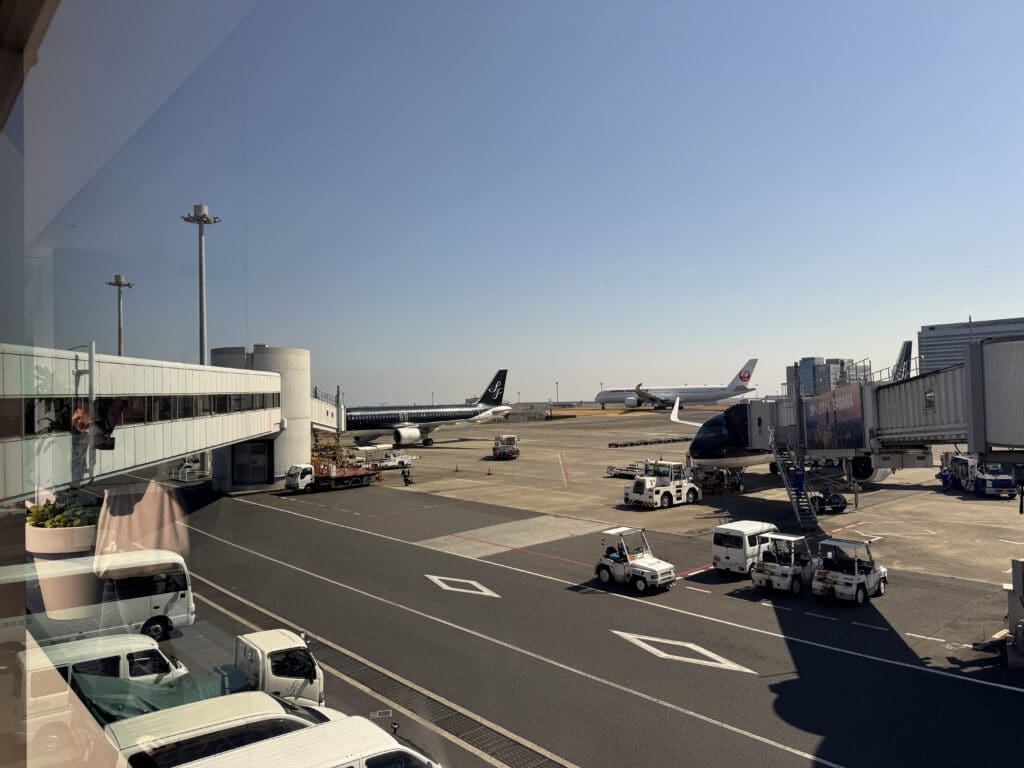
StarFlyer A320 at Haneda Airport
Boarding was scheduled for 12 PM, so I had a bit of time to spare. One of the “customer experience” elements of StarFlyer is that there’s jazz piano music playing by the gate area, which is meant to give a bit of atmospheric pizzazz.
While slick, once again I can’t say I was wooed into an atmosphere of calm or anything – instead I had my head turned by the workstations provided at Haneda Airport, where I was able to get some work done with a handy power port within reach.
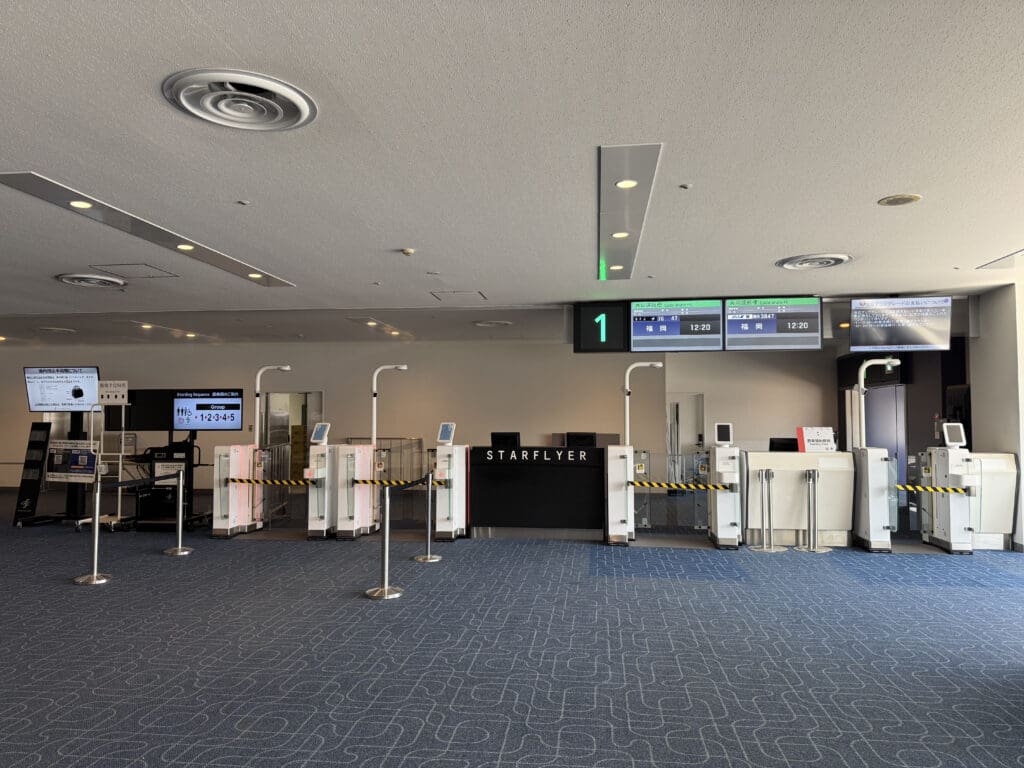
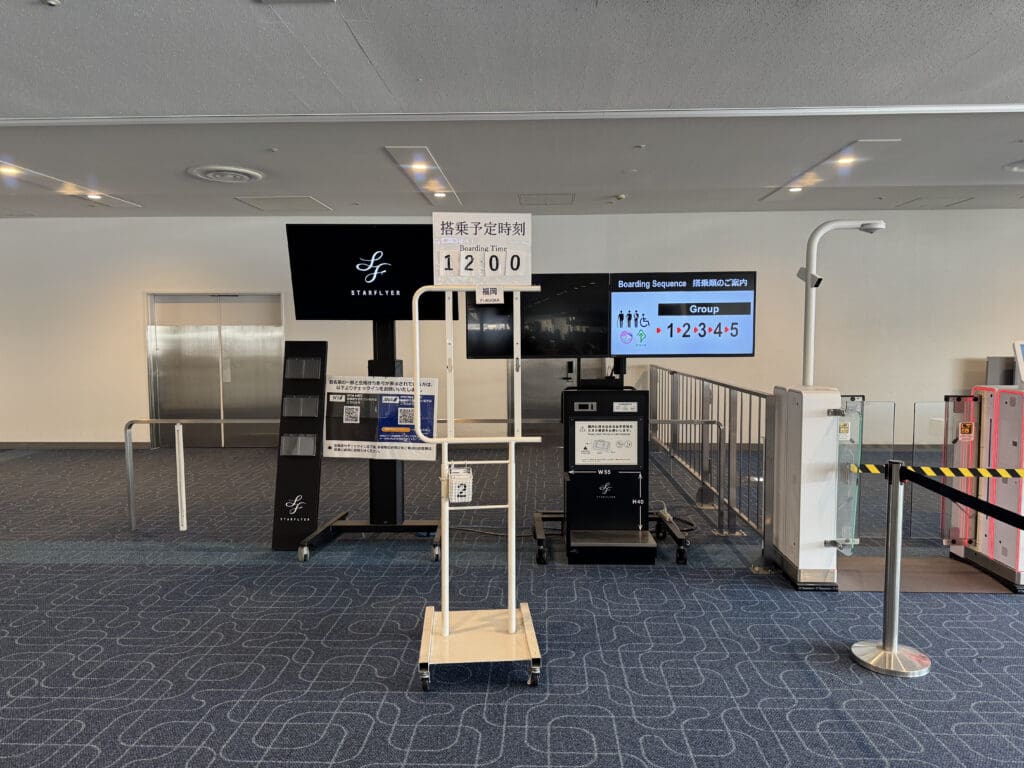
StarFlyer Gate Area at Haneda Airport
Boarding did begin just before 12 PM. StarFlyer boards in five boarding groups – Group 1 is for their frequent flyer programme Star Link’s VEGA members (for those who have taken 30+ StarFlyer flights within a calendar year, Group 2 is for ALTAIR (those taking 10+ flights), as well as Star Alliance Star Gold members, as the airline partners with ANA.
Groups 3, 4 and 5 are for general boarding. Much like the Lufthansa Group, window seat passengers are boarded in Group 3, as well as those seated in the first row or exit row. Group 4 then includes middle seat passengers, followed by aisle seat passengers in Group 5.
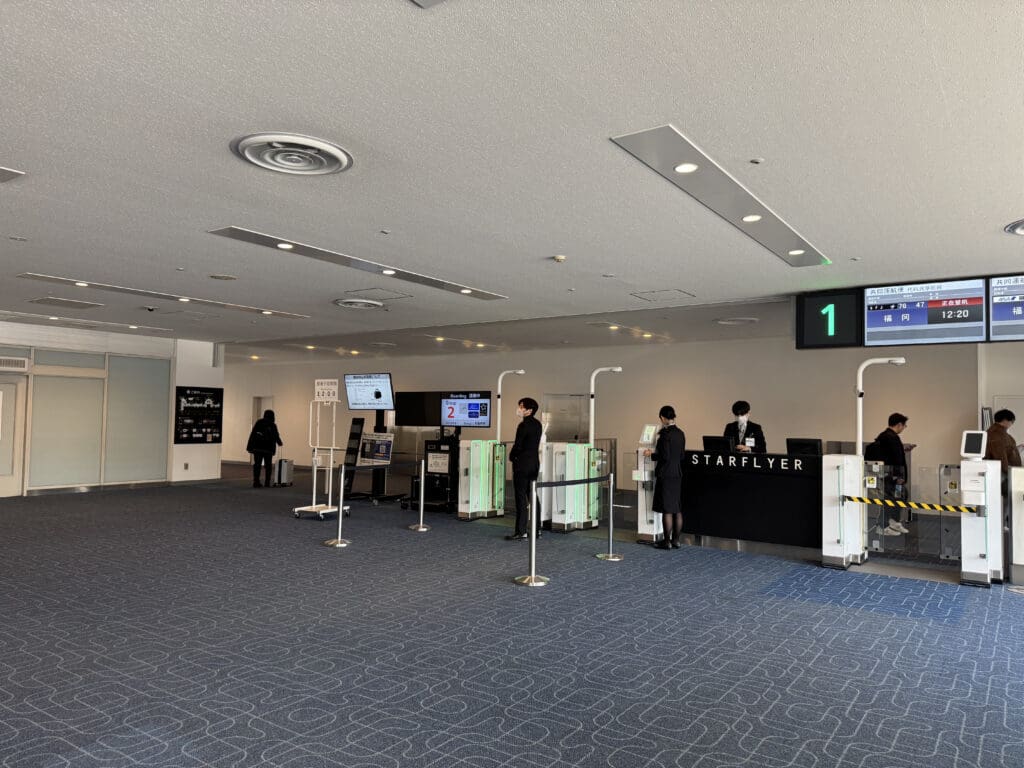
Boarding at Haneda Airport
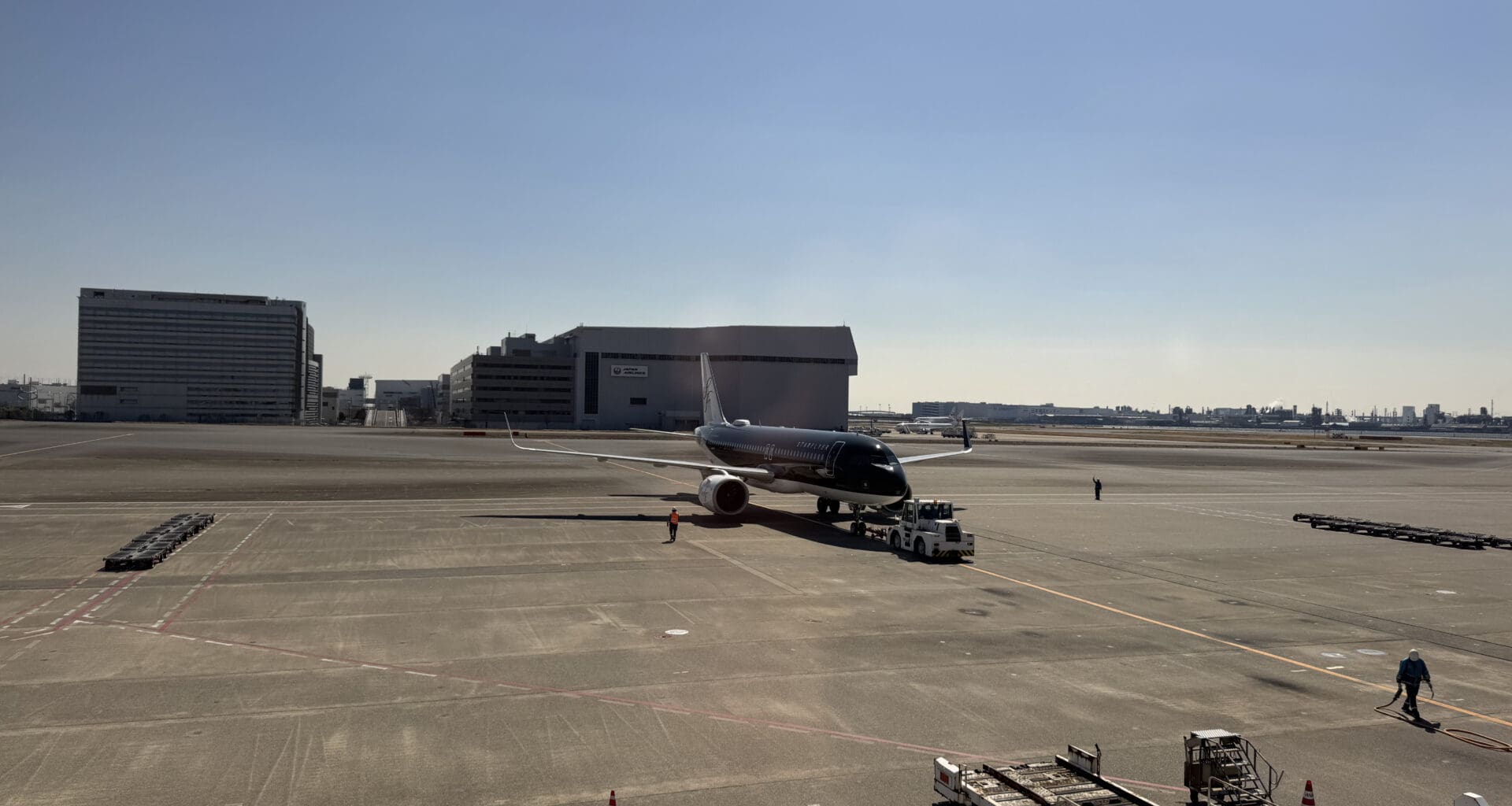
During the walk down the jetbridge, I saw one of StarFlyer’s newer A320neos pushing back. Let me also point out how the airline describes their livery – as quoted by their design consultant Matsui Design Studio, “on the day when the airline went into service for the first time, all employees looked up at the proud brave figure of a black airplane, and their minds were united”.
Once again, it definitely was an elegant livery, though I didn’t personally care as much about how sleek the plane looked on the outside.
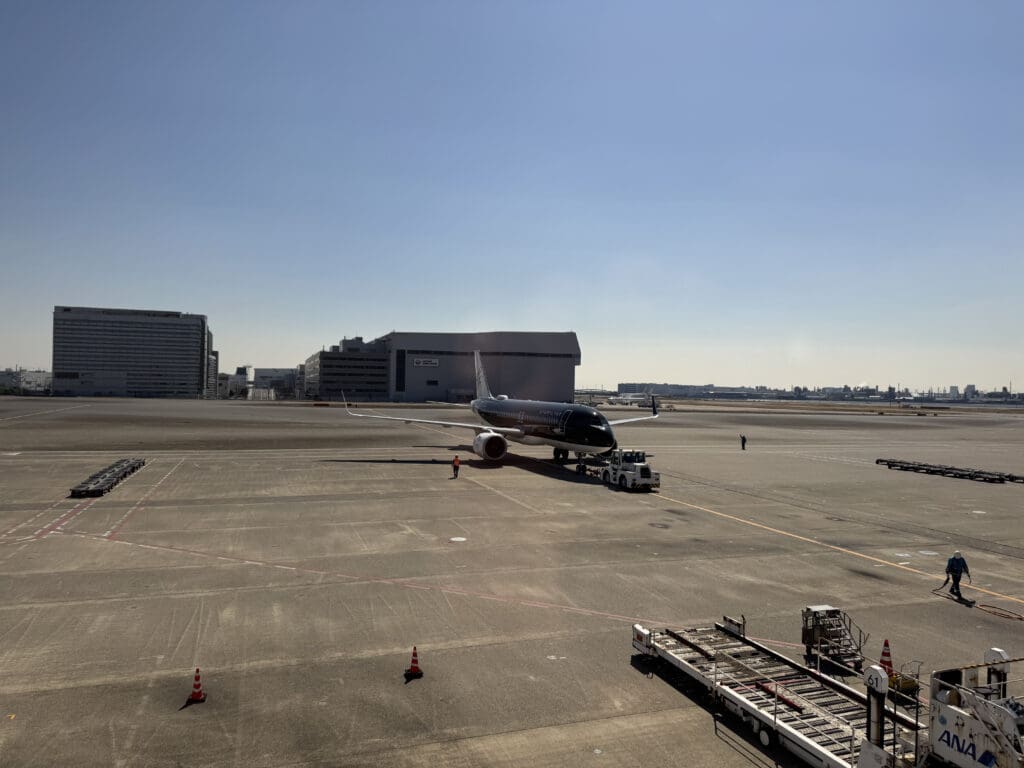
StarFlyer A320neo Pushing Back at Haneda Airport
StarFlyer Flight 7G47
Thursday, March 12, 2026
Origin: Tokyo Haneda (HND) T: 1 Gate: 1 Dep: 12:20 (12:25)
Destination: Fukuoka (FUK) T: D Gate: 6 Arr: 14:25 (14:20)
Duration: 2 hr 5 min (1 hr 55 min)
Aircraft: Airbus A320 Reg: JA07MC
Seat: 7A (Economy Class)
As I stepped onboard this 14-year-old A320, I went past a tray that consisted of earphones, for the IFE provided onboard.
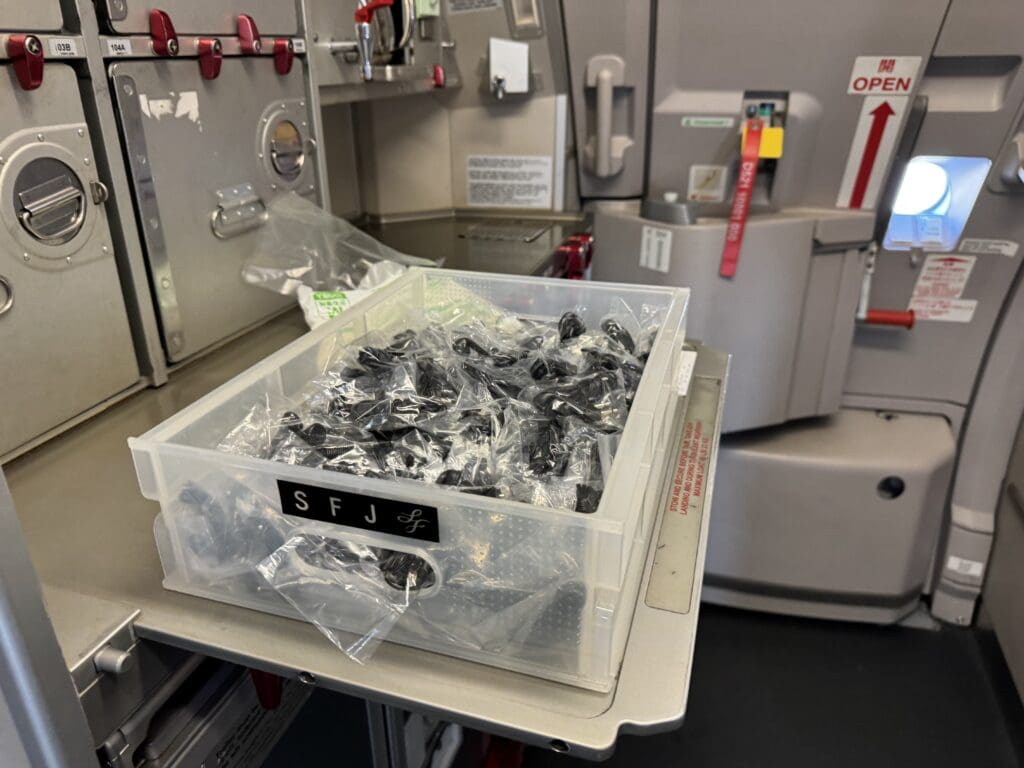
StarFlyer Earphones
StarFlyer A320 Cabin and Seat
StarFlyer’s A320s feature 150 economy seats in a 3-3-3 configuration. That’s right – on an aircraft that normally features 180 economy seats, this aircraft forfeited 30 revenue-making economy class seats, so that everyone could have more legroom.
The seats were leather-clad and jet black, and each seat featured adjustable headrests, which you won’t find all the time on a plane not rostered to fly more than a couple of hours. Even the seat shells were black as well – I’ve gotta commend the airline for its commitment to the colour.
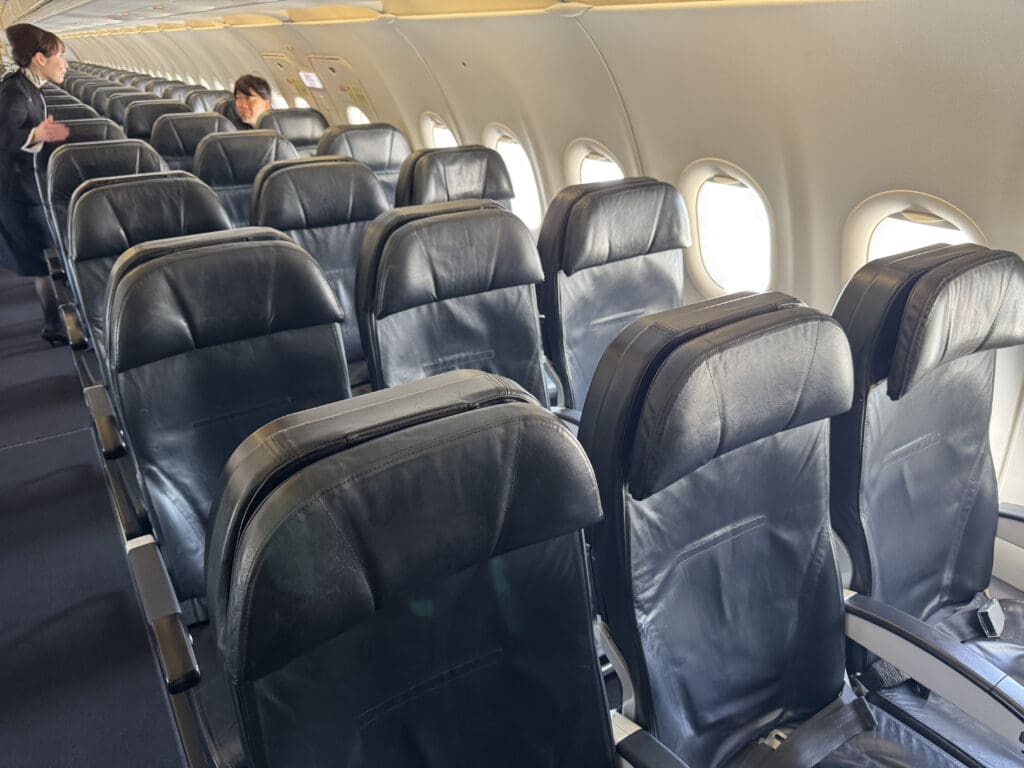
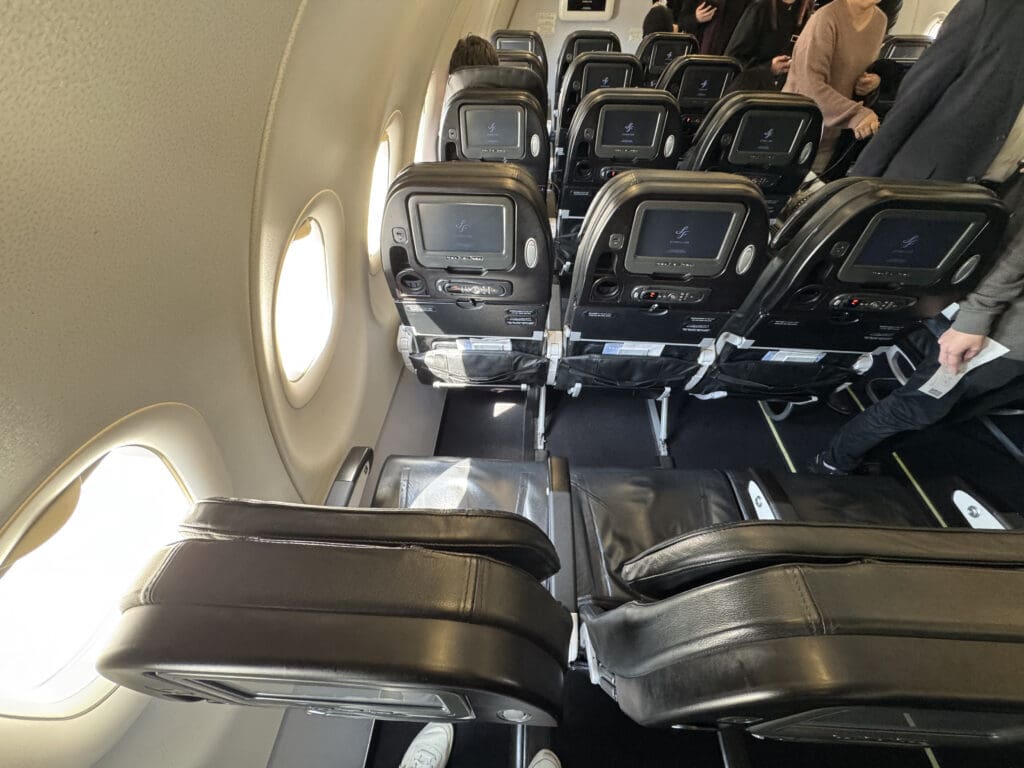
StarFlyer A320 Cabin
As you can see below, the seats are beginning to wear down a bit. That’s fair enough, given how many flights these planes can fly in a day (and the planes hadn’t been reupholstered since they started flying).
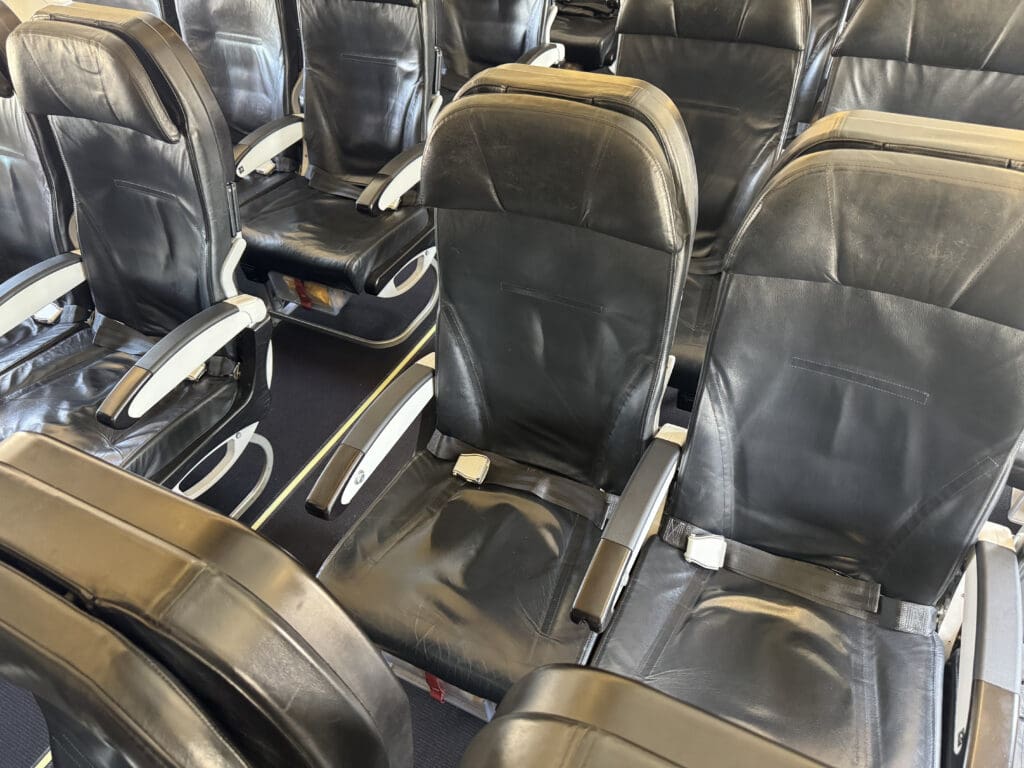
StarFlyer A320 Seats
I’d selected seat 7A, which was free of charge to assign. While legroom was industry-leading, the recline was minimal, as you can see below.
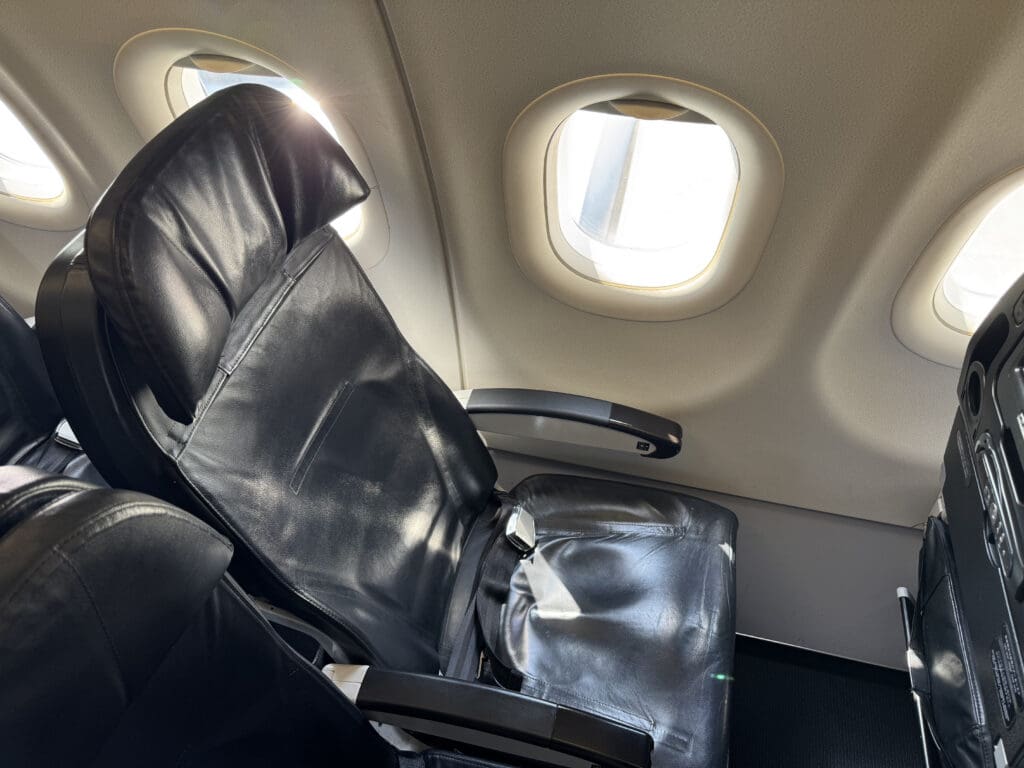
StarFlyer A320 Seat 7A Recline
Legroom felt unsurprisingly generous, and I appreciated the separate phone pocket provided by the seat in front, as well as a literature pocket that was large enough to store a laptop.
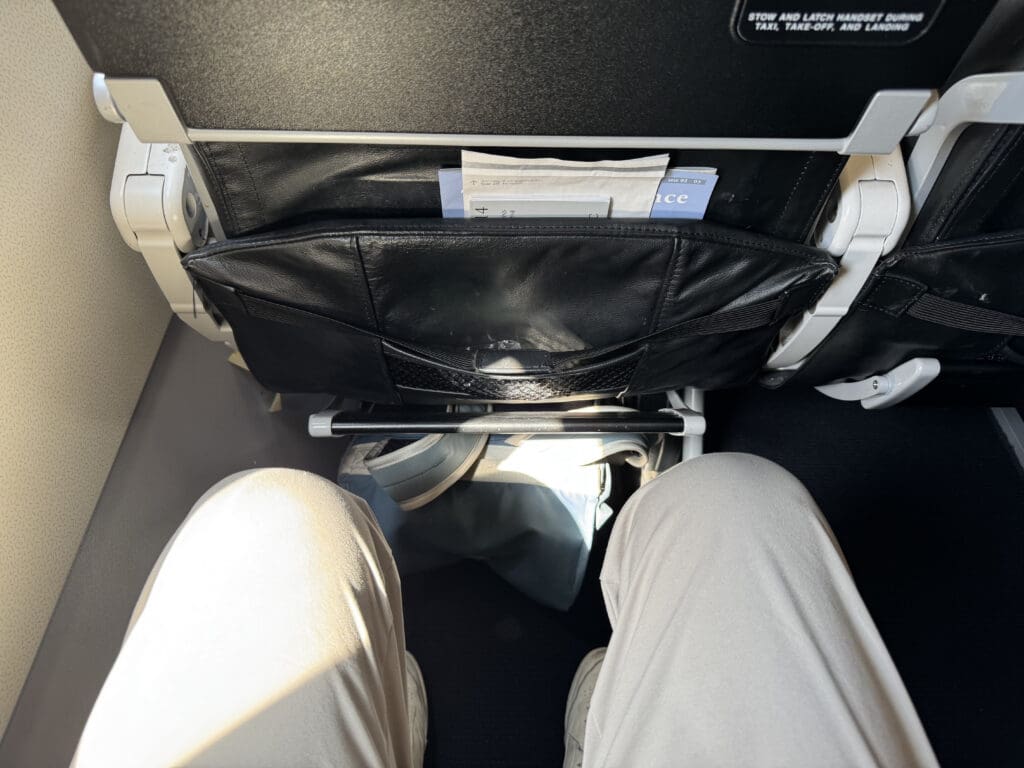
StarFlyer A320 Legroom
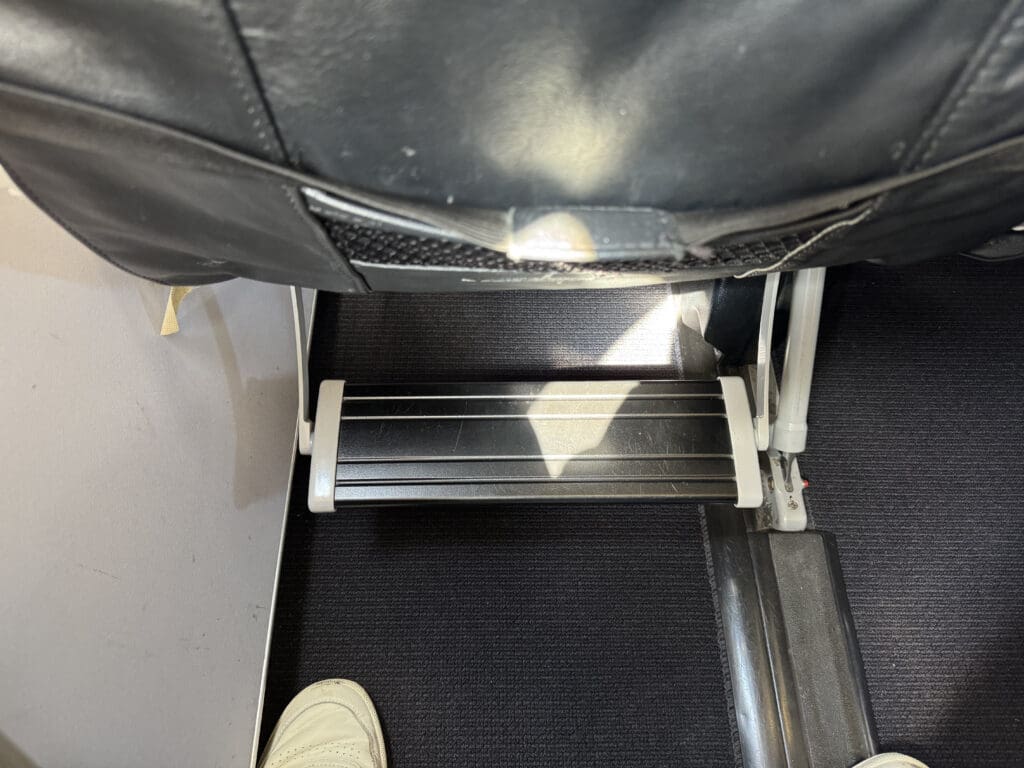
There was also a footrest, which was a genuinely valuable addition for seat comfort. Did it make a huge difference, especially on a 2h flight? No, not massively – though I appreciated the feature, and used it when getting some quick shuteye on this flight.
StarFlyer A320 Footrest
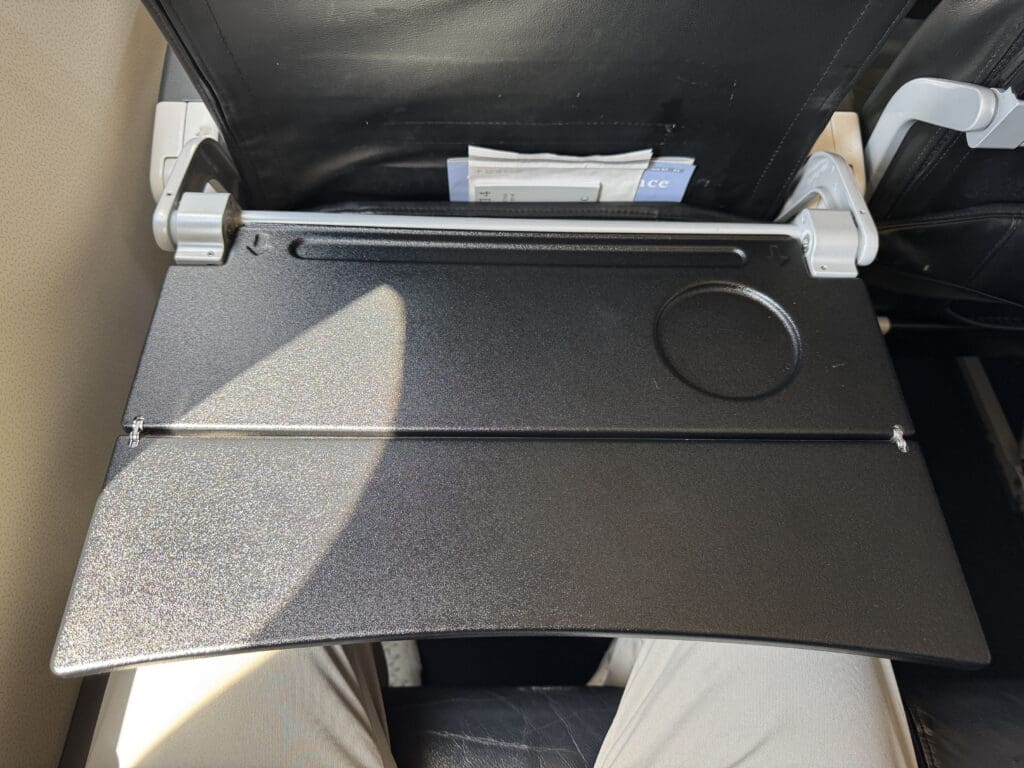
The bi-fold tray table came out of the seat in front.
StarFlyer A320 Tray Table
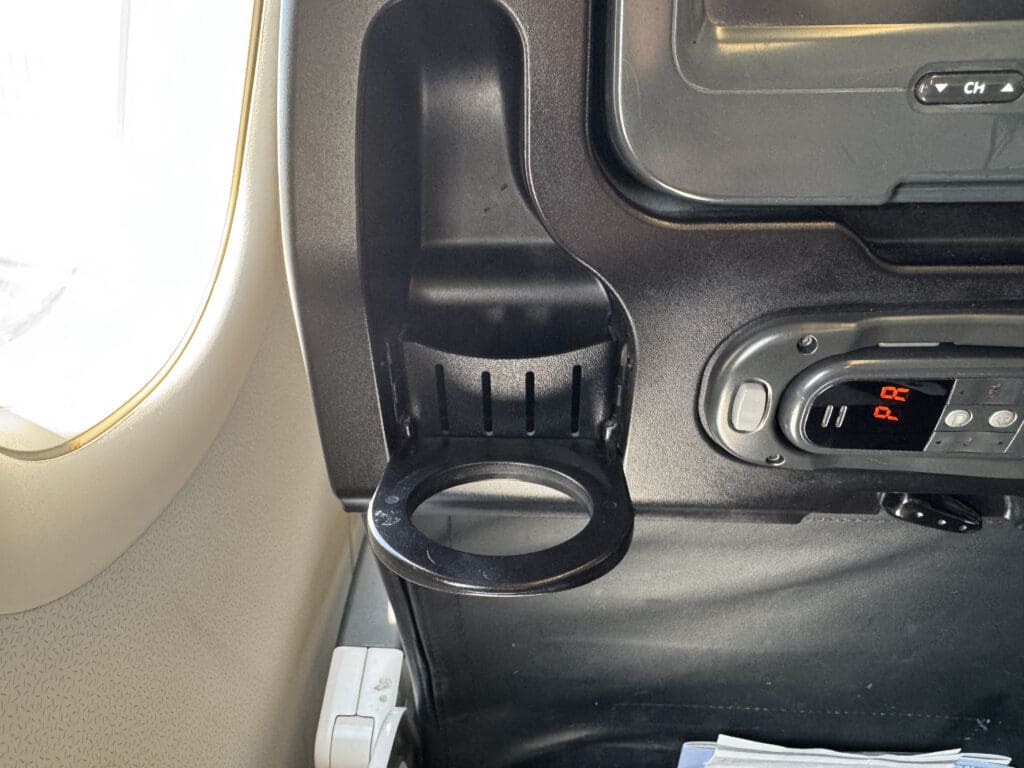
In terms of other seat features, this was a version of the much-used Weber 5751 seat that you’ll find on a lot of last-generation economy class seats – it felt remarkably similar to the Korean Air 737 I’d been on the night before, or China Eastern’s A330 economy class springs to mind as well. The seat was modified slightly, and one of the things I found was a cupholder next to the TV screen.
StarFlyer A320 Cupholder
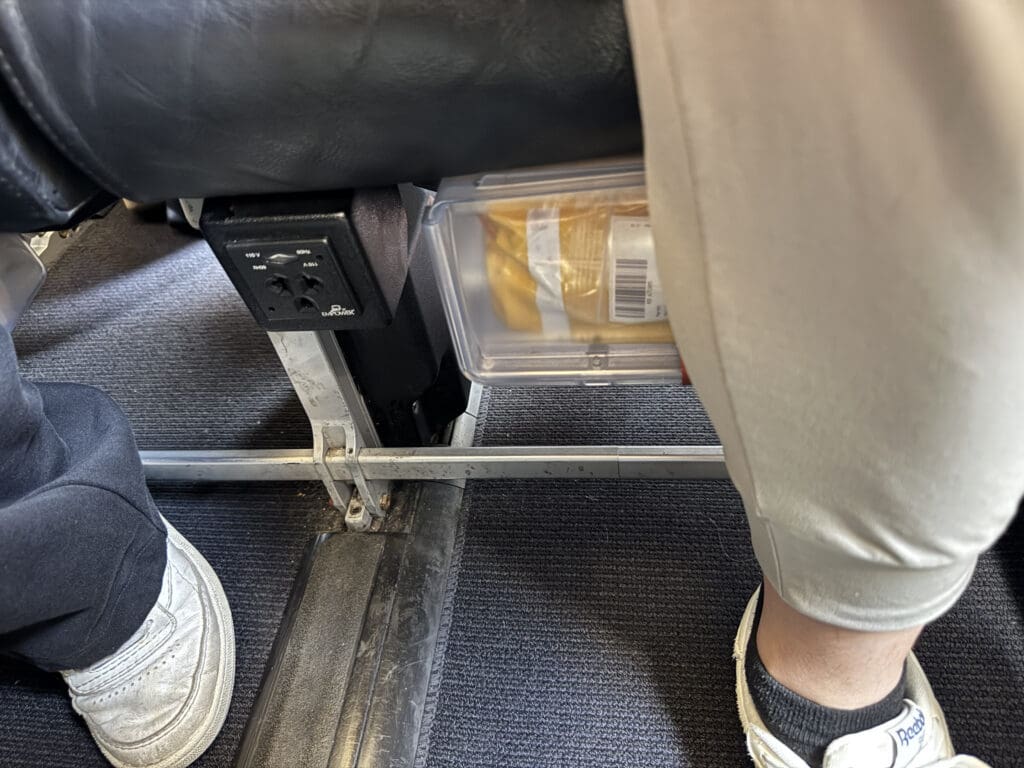
There’s also shared power between seats. Obviously it would’ve been nice to have a universal power outlet, though I understand why that’s a tall order for a plane that flies domestically – my seatmate didn’t mind me using the outlet to charge my devices throughout the flight, though I found the charging speed to be on the slow side. There was also a USB-A port next to the TV screen (not pictured).
StarFlyer A320 Power Port
The design of the seat is nice and all. 34″ seat pitch is really nice especially if you’re tall, though you’ll still have to clamber over your seatmates to use the bathroom, and I’d argue that level of seat pitch would be appreciated more on a longhaul flight (where airlines such as ANA have 34″ pitch). The footrest was appreciated, though on a shorthaul flight I’d be lying if I said it made that much of a difference.
StarFlyer’s A320neos don’t have PTVs (which I’ll get into in a bit), and crucially some of the seats only have 32″ pitch, especially at the back of the plane. However, those planes have universal power outlets, free WiFi, more recline, and a separate storage nook as well – they also retain the footrest. Dare I say – I’d probably forego the two extra inches of legroom for these extra features, given that those are much more in line with what I’d personally look for on a flight.
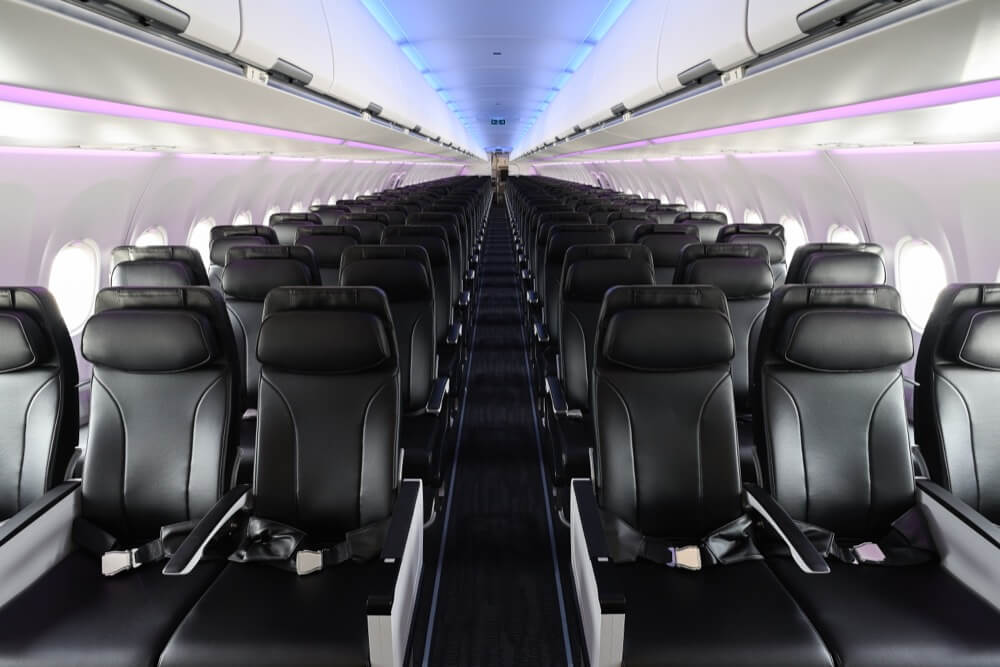
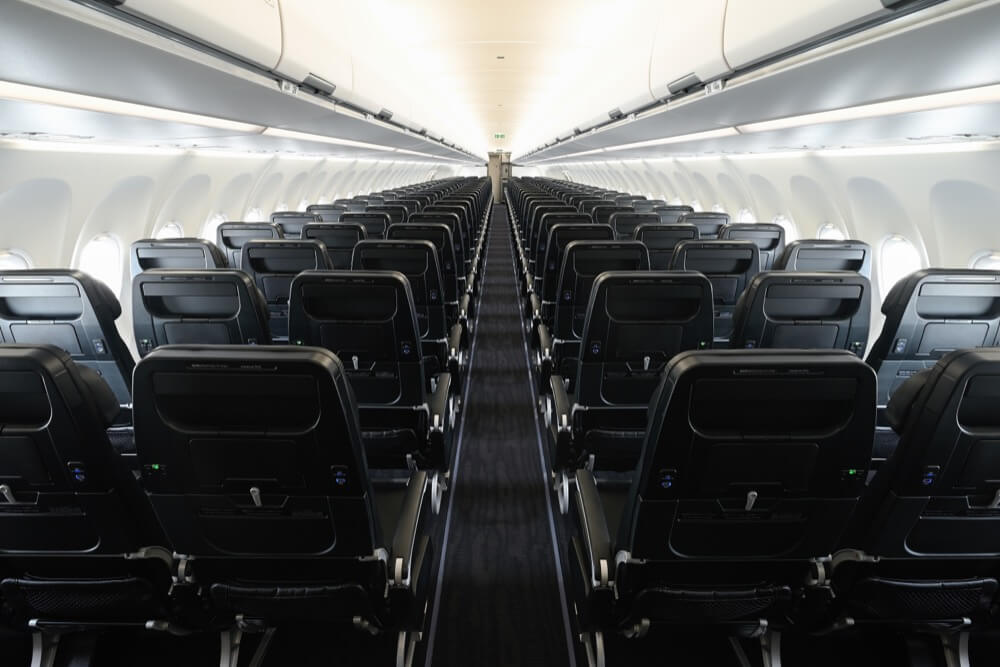
StarFlyer A320neo Cabin (credit: StarFlyer)
StarFlyer A320 Amenities
StarFlyer quite obviously puts in effort into some of the amenities they offer at each seat. At my seat I found a fresh copy of “The Flight Essence”, which features the onboard menu, duty-free shopping, as well as some other reading.
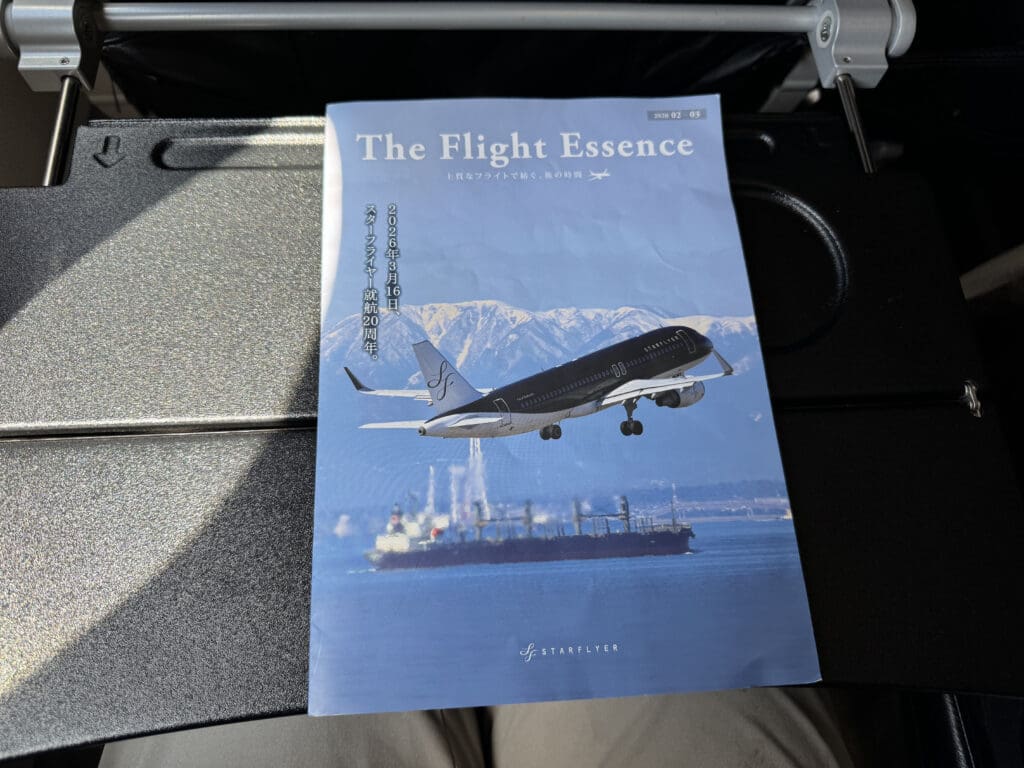 StarFlyer A320 Inflight Magazine and Menu
While the menu is bilingual (I’ll show a picture of it later on in the review), most of the magazine is in Japanese, fitting the airline’s target market. Still, it felt like a very well-put together magazine, fitting with the airline’s branding.
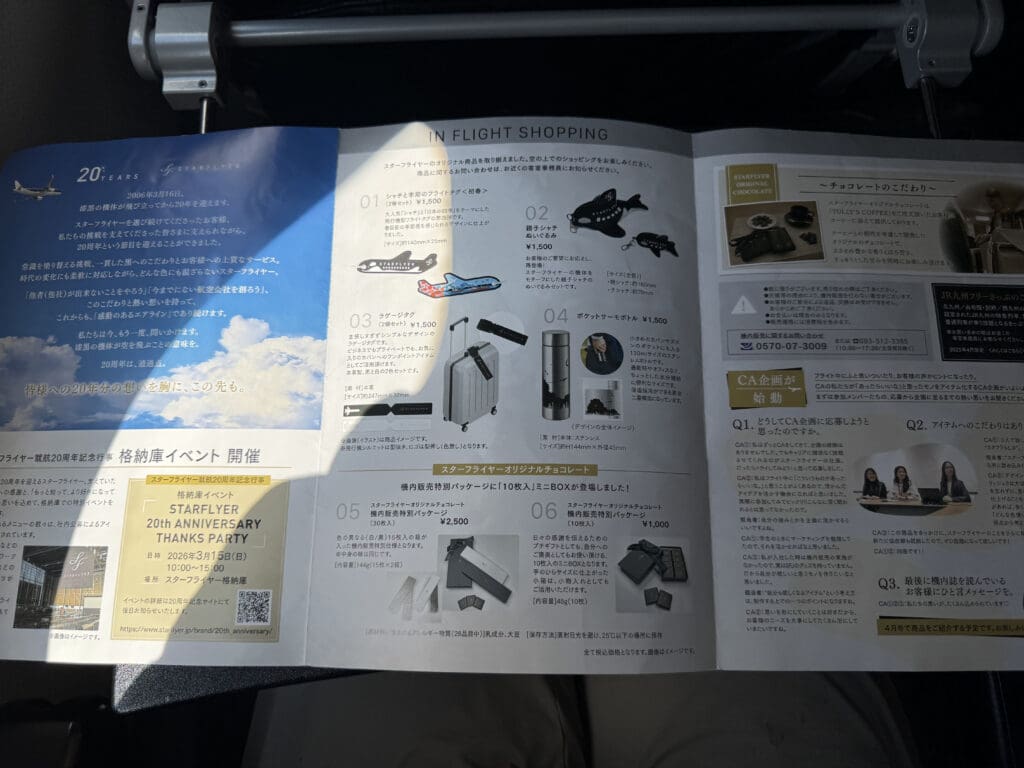
StarFlyer A320 Duty Free Items
Similarly, there was the most elegant safety card I’ve ever seen, which was folded accordion-style. While I appreciated the premium card paper that it was printed on, is it just me that thinks that unfolding this in an emergency isn’t the most practical thing in the world?
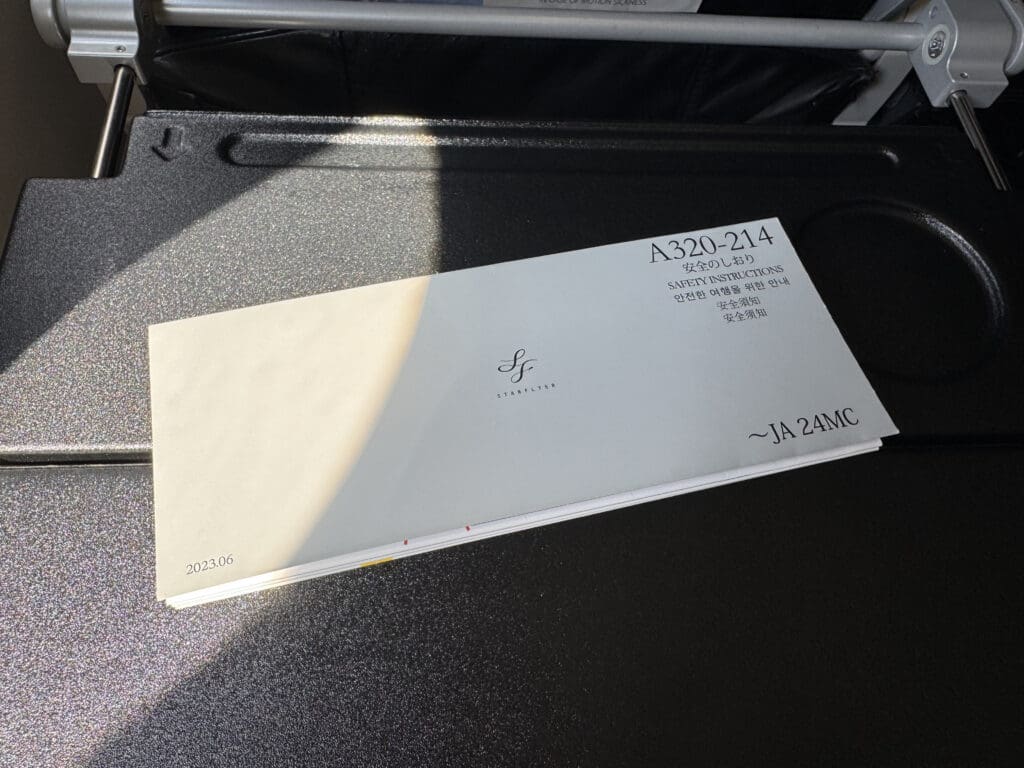
StarFlyer A320 Safety Card
Crucially missing from the suite of amenities onboard this StarFlyer A320 is onboard WiFi. The airline’s newer A320neos do have it, and it’s meant to be fast and free. Given that StarFlyer regularly undercuts Japan Airlines and ANA (both featuring free onboard WiFi) on these domestic trunk routes, their A320neos could really hit the sweet spot. However, that wasn’t the case today.
There also weren’t any amenities such as a pillow or blanket on this flight, even upon request.
Taking off from Haneda Airport
This flight was full, though the 150-seat A320 was boarded in under 15 minutes. Soon the safety video was screened, which was brought to us by “Star Flyer Man”, a robot that is “the embodiment of StarFlyer Airlines”. This was only screened in Japanese, with English subtitles.
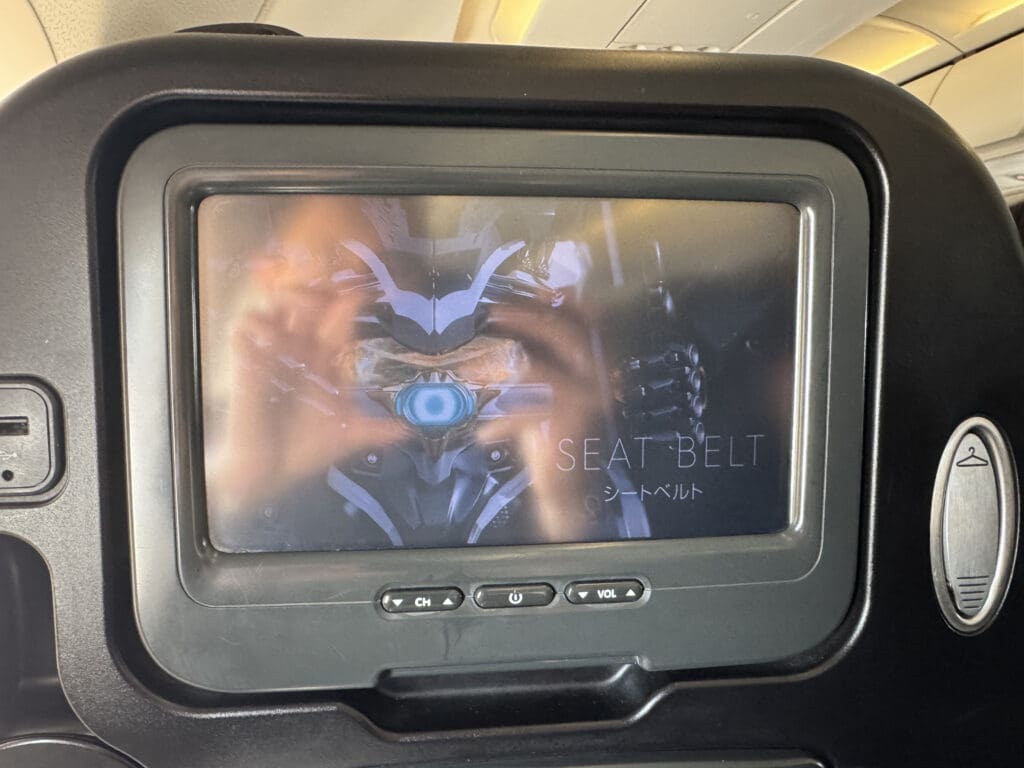
StarFlyer A320 Safety Video
It was a beautiful day at Haneda Airport, and I had my eyes glued to the window during my first ever domestic Japanese flight. As we pushed back, another StarFlyer A320neo pulled into the gate next to us.
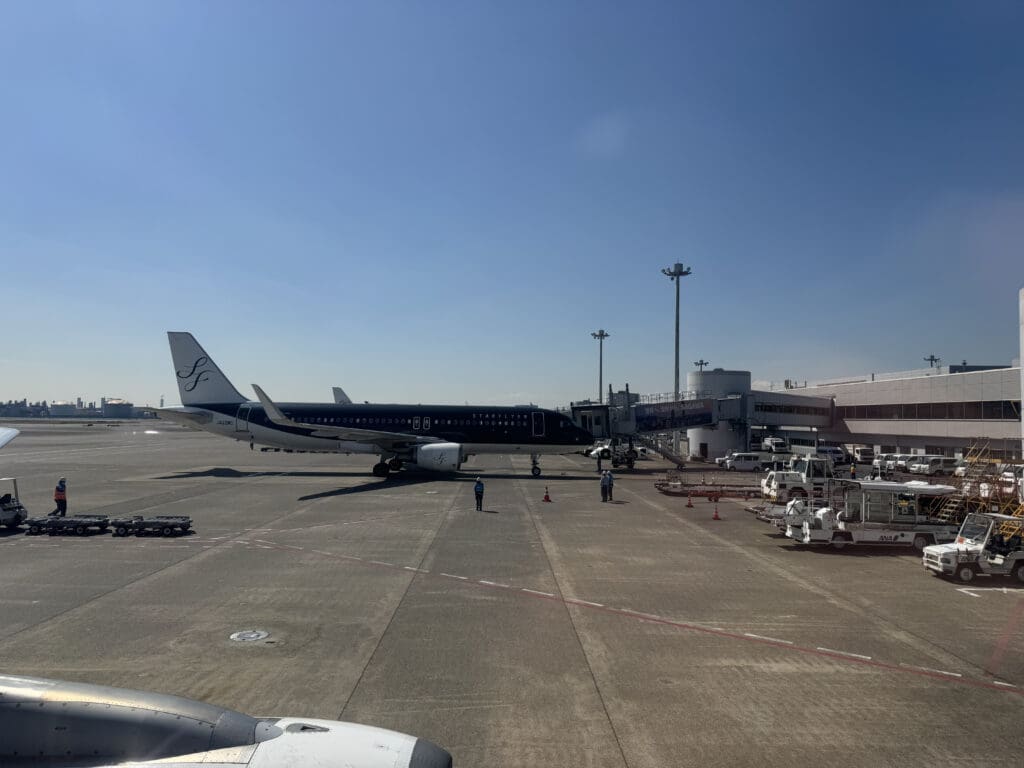
StarFlyer A320neo at Haneda Airport
Unlike what you’d expect for domestic flight operations, StarFlyer actually is in the minority when it comes to operating narrowbody aircraft. Most of the popular domestic trunk routes between Haneda and Sapporo, Osaka, Fukuoka, etc. are operated by widebody 777s, A350s, and 787s, which are some of the densest aircraft you’ll find out there. Many of these were parked at Terminals 1 and 2, which we had a good view of on the way to our departure runway.
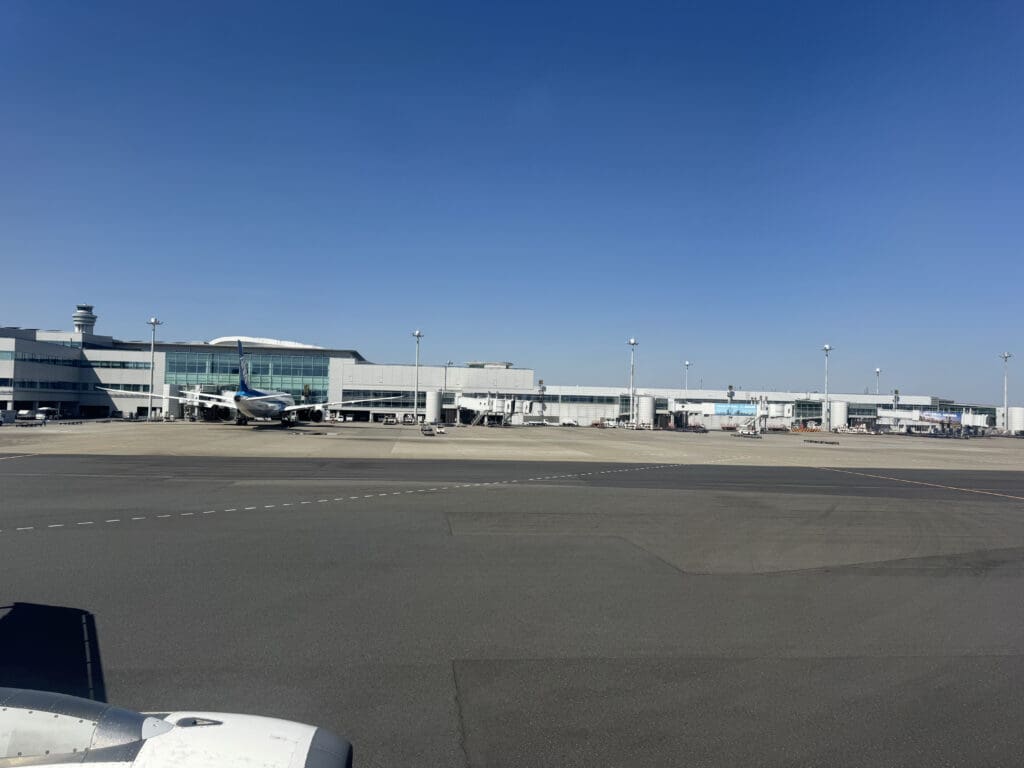
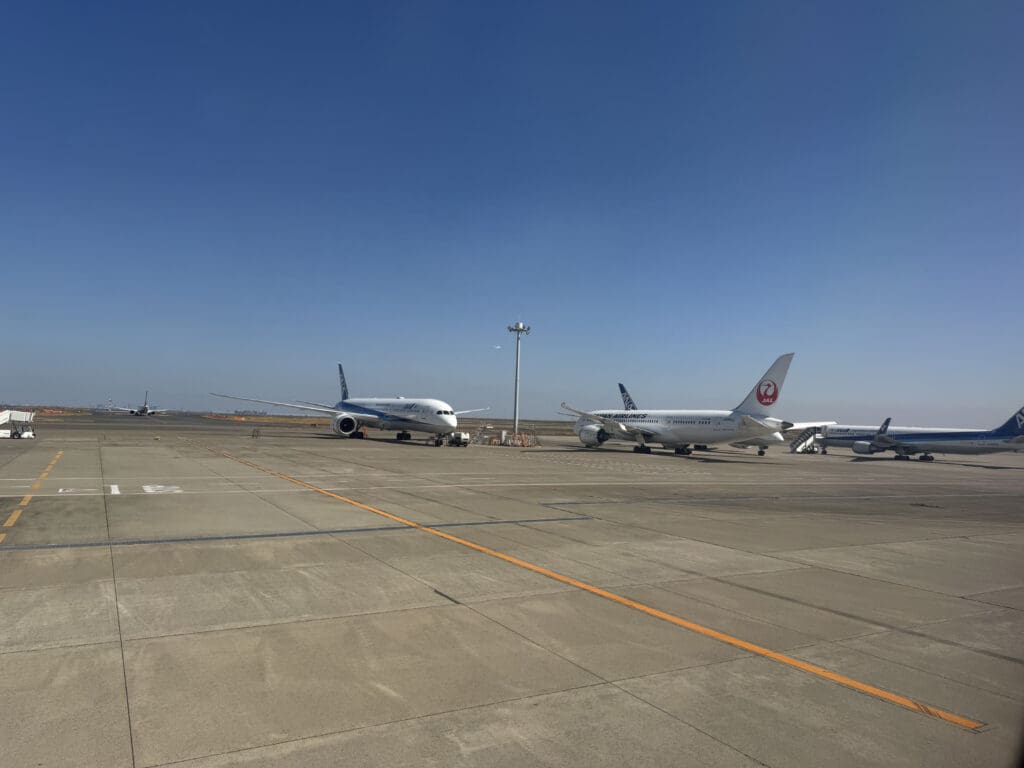
Taxiing at Haneda Airport
We took off just short of 12:40 PM, after a 20-minute taxi. We took off from runway 05, and did a 180° turn in order to head southwest towards Fukuoka, where we’d be travelling the length of the country. I was able to catch some views of downtown Tokyo in the distance, albeit the fact that we didn’t fly directly over.
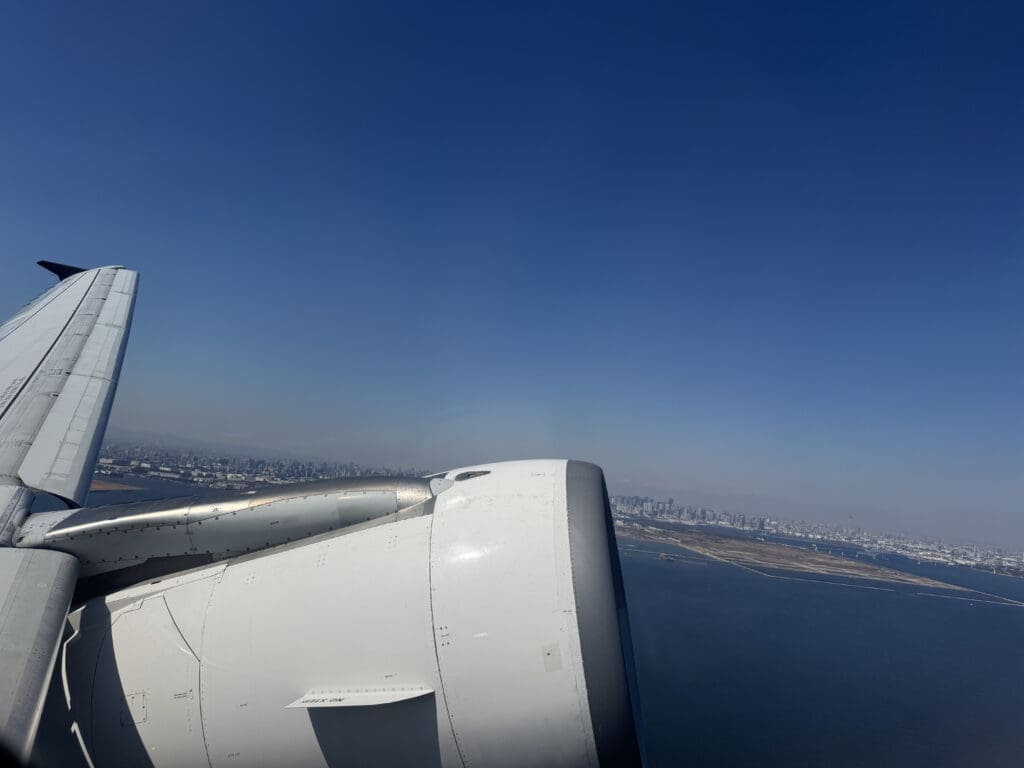
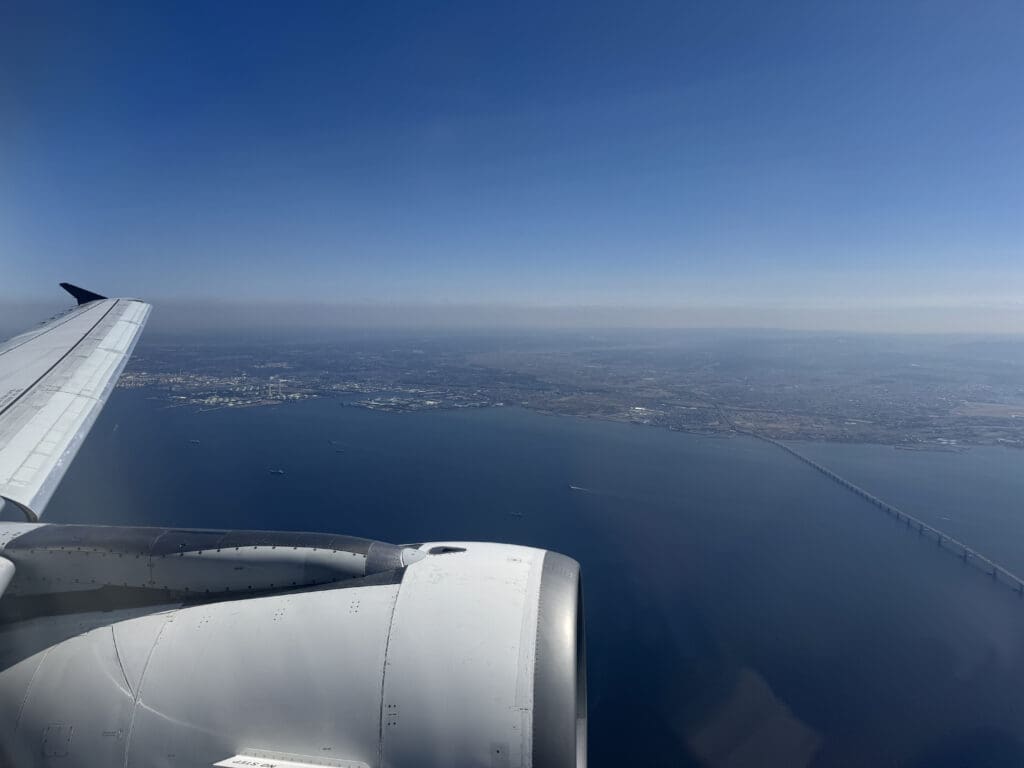
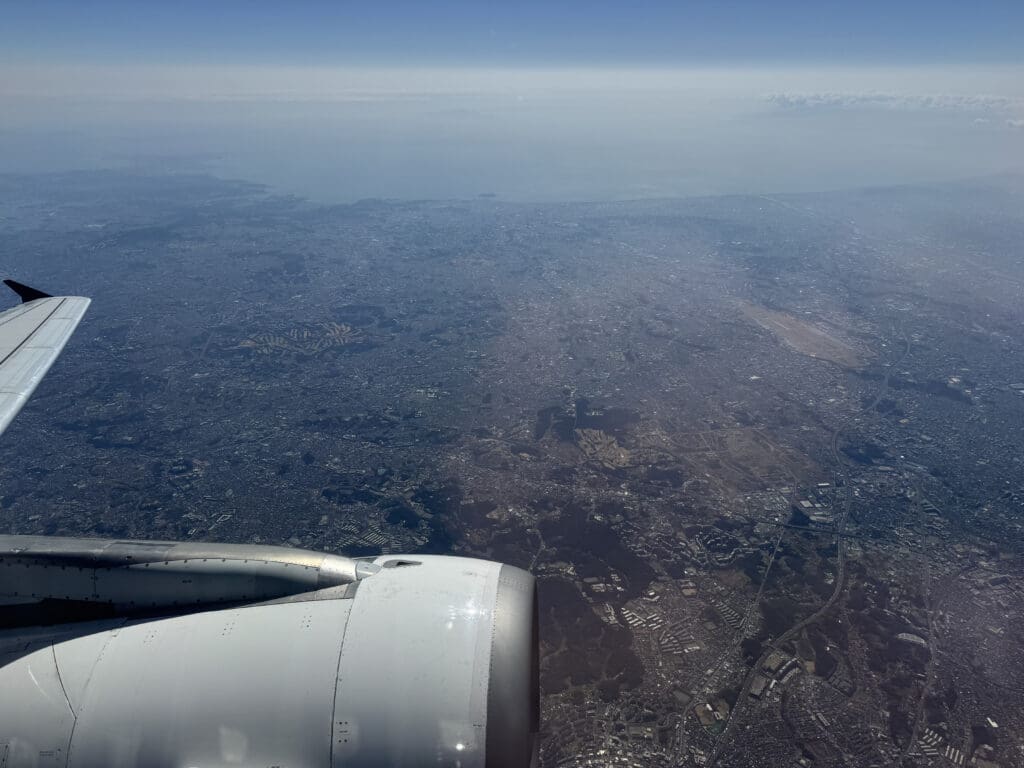
Taking off from Haneda Airport
StarFlyer A320 Entertainment System (?)
The StarFlyer entertainment system was activated after we took off, and there was a prompt to click on the (rather unresponsive and dated) LCD monitor. Given that StarFlyer’s newer fleet don’t feature PTVs, I was interested to know what their entertainment system would look like.
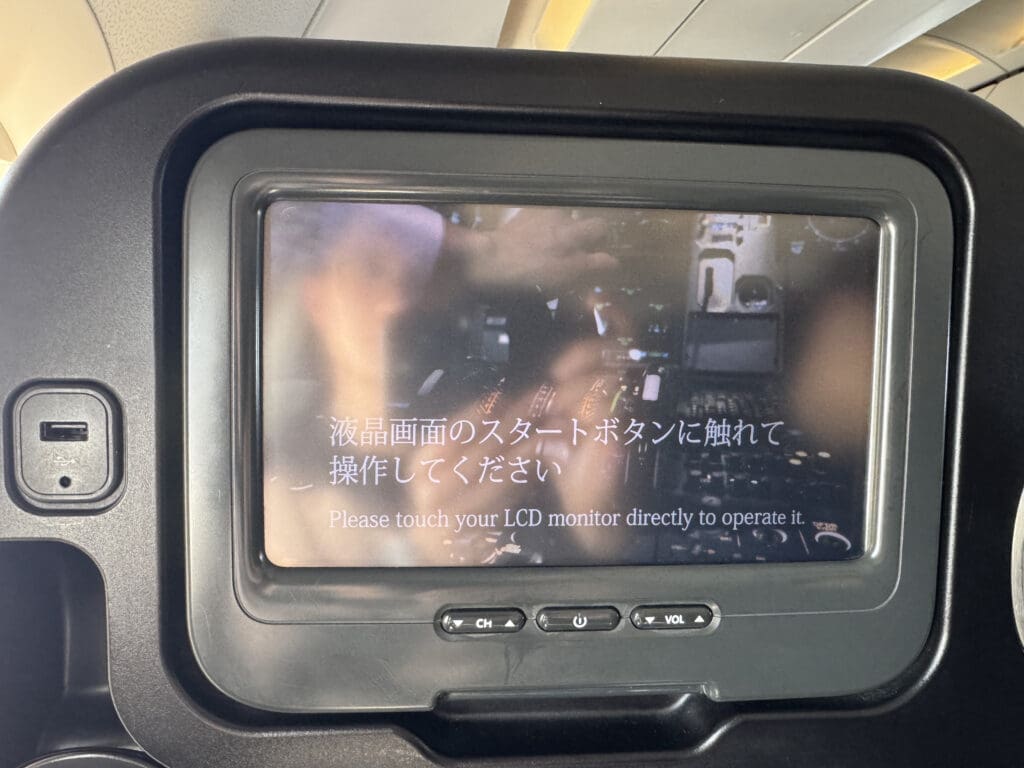
StarFlyer A320 Entertainment System Video
Turns out that this was quite lame – there isn’t audio or video on demand, but rather you can just click from a range of 20 video channels, or a small selection of audio channels. Not only this, but many of the channels didn’t even work. So this probably isn’t the way you’d choose to spend your time, unless you don’t mind what TV you end up tuning into on your shorthaul flight.
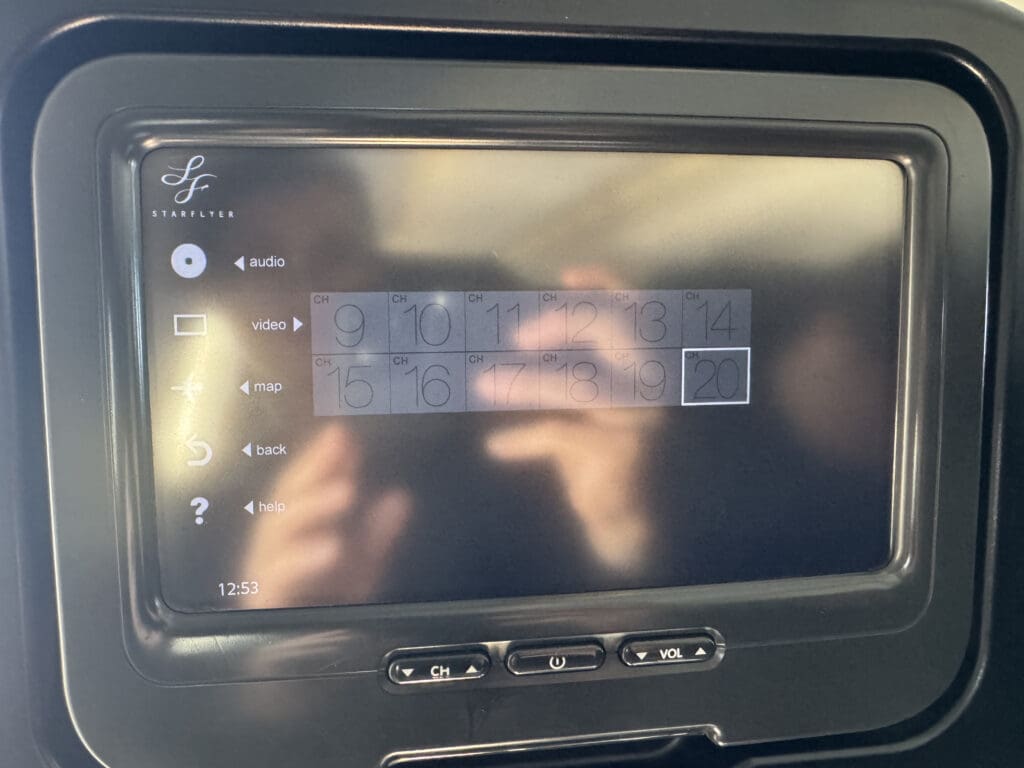
StarFlyer A320 Entertainment System
Instead I just had the moving map up, where I tracked my own progress as we headed towards Fukuoka.
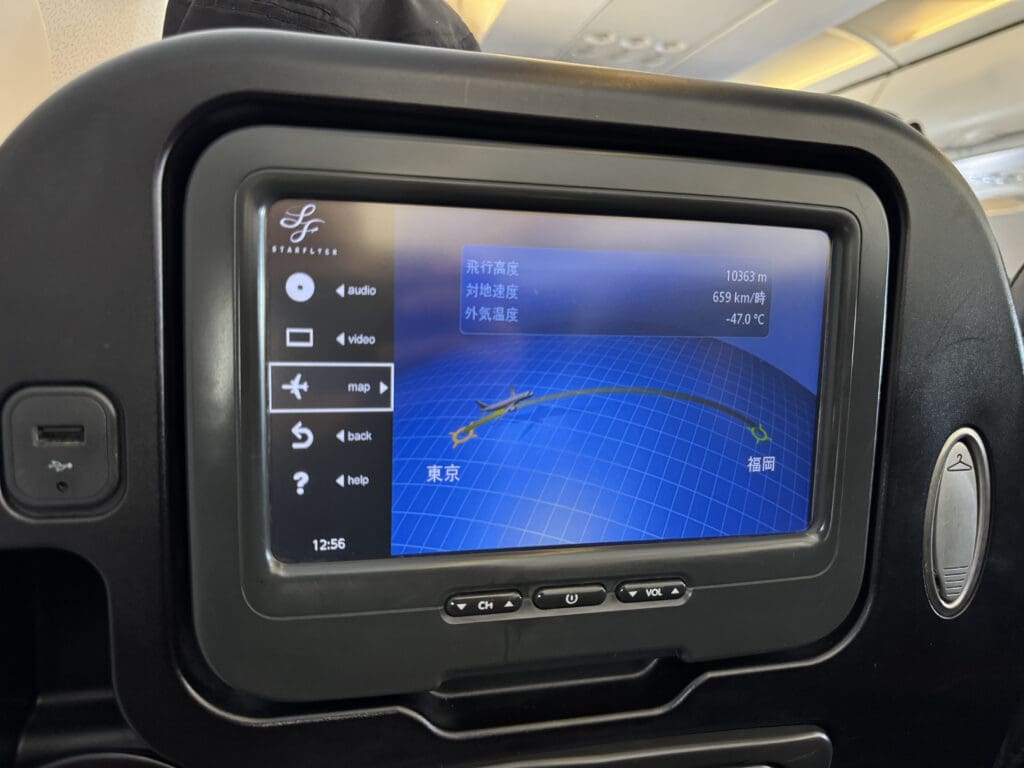
StarFlyer A320 Moving Map
Between the dismal inflight entertainment options, lack of WiFi, and an uncomfortably warm cabin (to the point where my phone wasn’t happy to charge), I really felt the short flight drag out.
Now, it’s worth noting that the airline competes on price with Jetstar Japan and Skymark, neither of which feature WiFi at the moment (nor any form of seatback entertainment, so technically StarFlyer has more in the way of inflight entertainment). However, I’d consider the seatback entertainment to be a moot point on these aircraft, and not a competitive advantage at all. I’d do everything in my power to find a flight operated by the airline’s newer A320neos, which would offer free WiFi at a similar price point.
Trying to spot Mount Fuji onboard StarFlyer’s A320
When researching the route from Tokyo to Fukuoka, I knew that we’d be passing by Mount Fuji, and would be able to see it if the sky wasn’t too overcast. Although it was a cloudless day at Haneda, the cloud cover increased as we travelled further down the country. I had used Japan Airlines’ “Which Side is Mt. Fuji?” tool to identify that we’d be passing over Mount Fuji on our left, and picked a seat on the left side accordingly.
We did indeed pass very close to it, and while there was cloud cover, I could sort of see the famous mountain. It was sad to see how many people kept their window shades closed during this time – perhaps it’s such a common sight for many on this route that people aren’t too excited by it anymore.
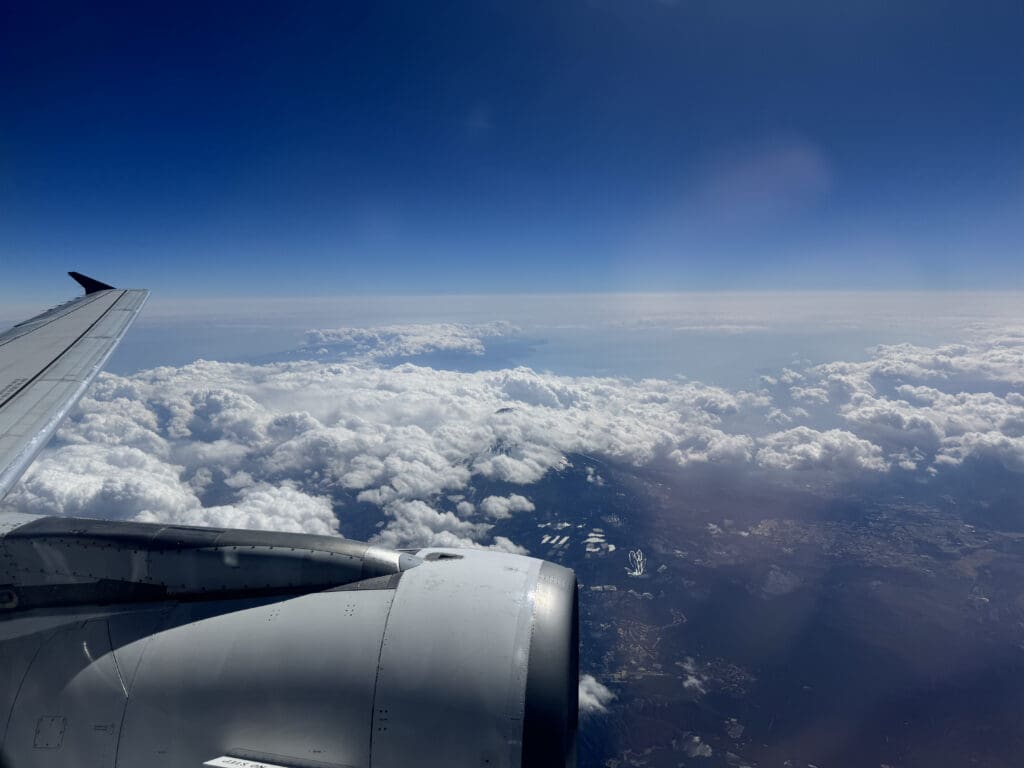
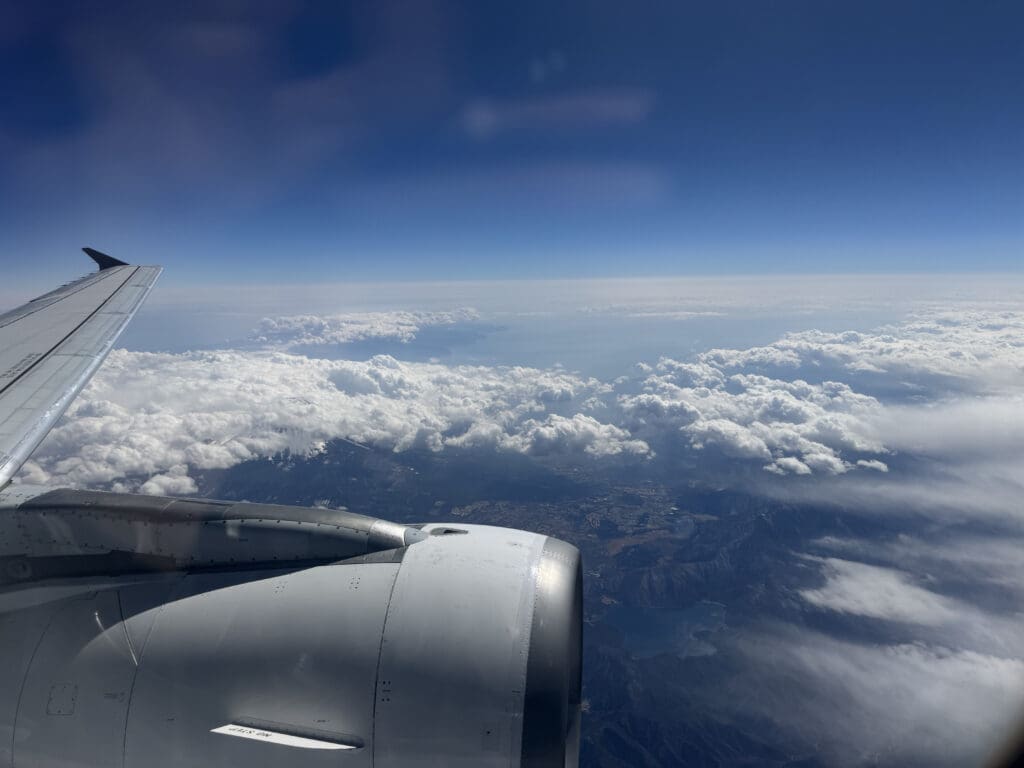
Trying to spot Mount Fuji from StarFlyer A320 route
Here’s the best view I could get of Mount Fuji, after I zoomed in a bit. Pictures really don’t do this moment justice.
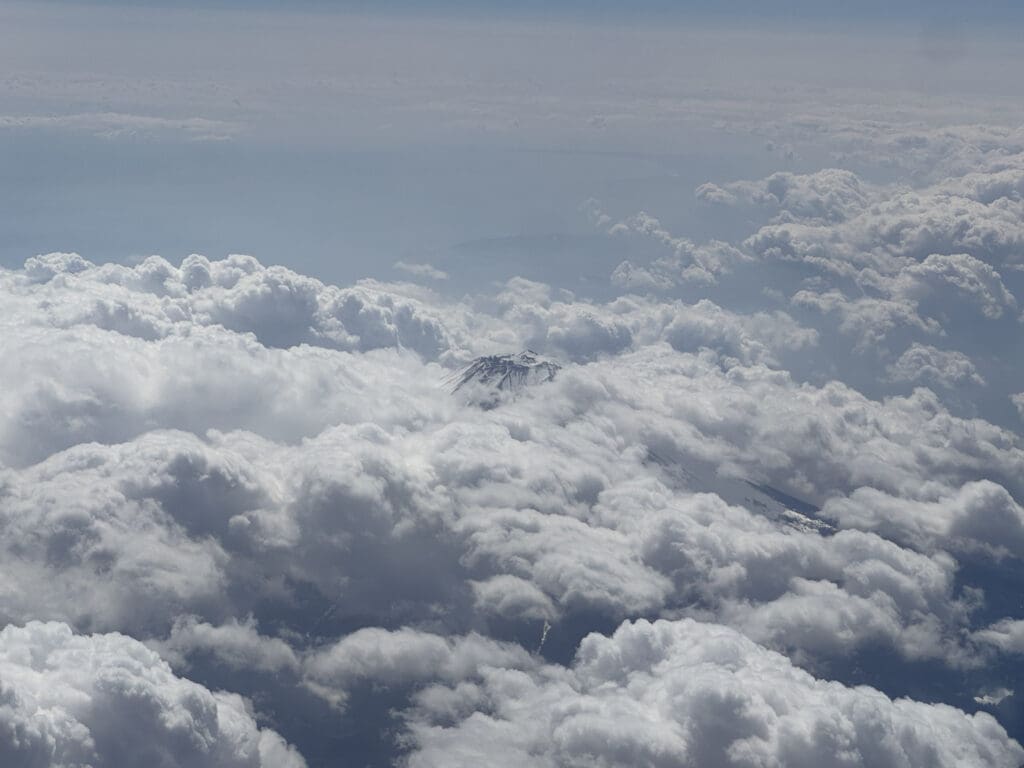
Sort of seeing Mount Fuji from StarFlyer A320 route
StarFlyer A320 Drinks Service
When flying domestically within Japan, it’s quite common for flights to only provide a drinks service in economy, and StarFlyer was no exception.
Let me call things out as they are – that’s not competitive in the grand scheme of things. In countries such as China, you’ll get a full hot meal on a similarly timed flight; there are lots of regional routes that clock at under our flight did. This 2h 5m flight was actually (believe it or not) blocked at marginally longer than the flight from Seoul I’d just done that morning, which featured a hot meal. Even domestic flights within the U.S. feature a small snack alongside a drinks service, so technically they have a more extensive offering for domestic economy passengers (hear me out here – there are a lot of other reasons why I’d prefer domestic flying in Japan over the U.S.). However, that’s a reflection of the Japanese domestic aviation market, and not StarFlyer – I presume that people are much less likely to prioritise a full meal onboard their flight, and much more likely to want some undisturbed time to rest and get work done.
Anyway, the bilingual menu was provided as part of the inflight magazine, and read as follows:
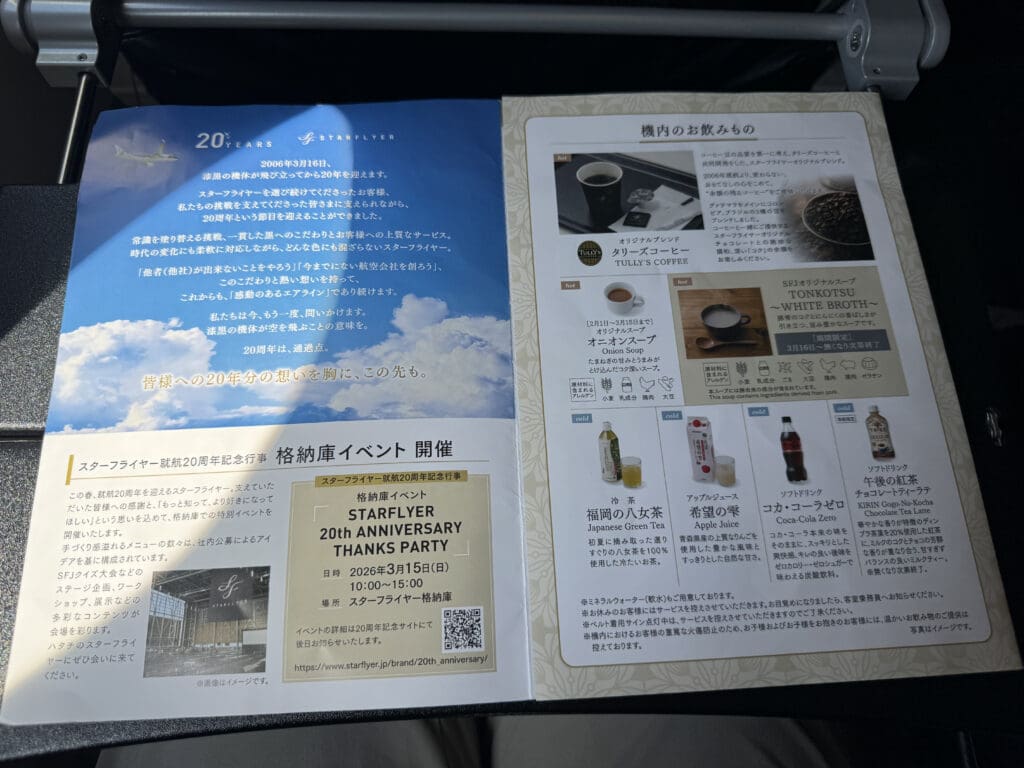
StarFlyer A320 Menu
Apart from the “KIRIN Gogo-No-Kocha Chocolate Tea Latte”, there isn’t much differentiation between this and what you’ll get on other carriers in Japan. If StarFlyer really wanted to feel upmarket, I feel like they could’ve invested in their drinks service – maybe offer more types of (bottled) tea, a greater selection of juices or consommés, or even a small but thoughtful snack for each passenger.
Anyway, while I thought the “Tonkotsu White Broth” looked the most enticing, unfortunately we were a few days too early for that to be an option. So I had the onion soup, which in fairness, was very good – it was mouthwateringly savoury, and served in a black paper cup. This was served 20 minutes after takeoff.
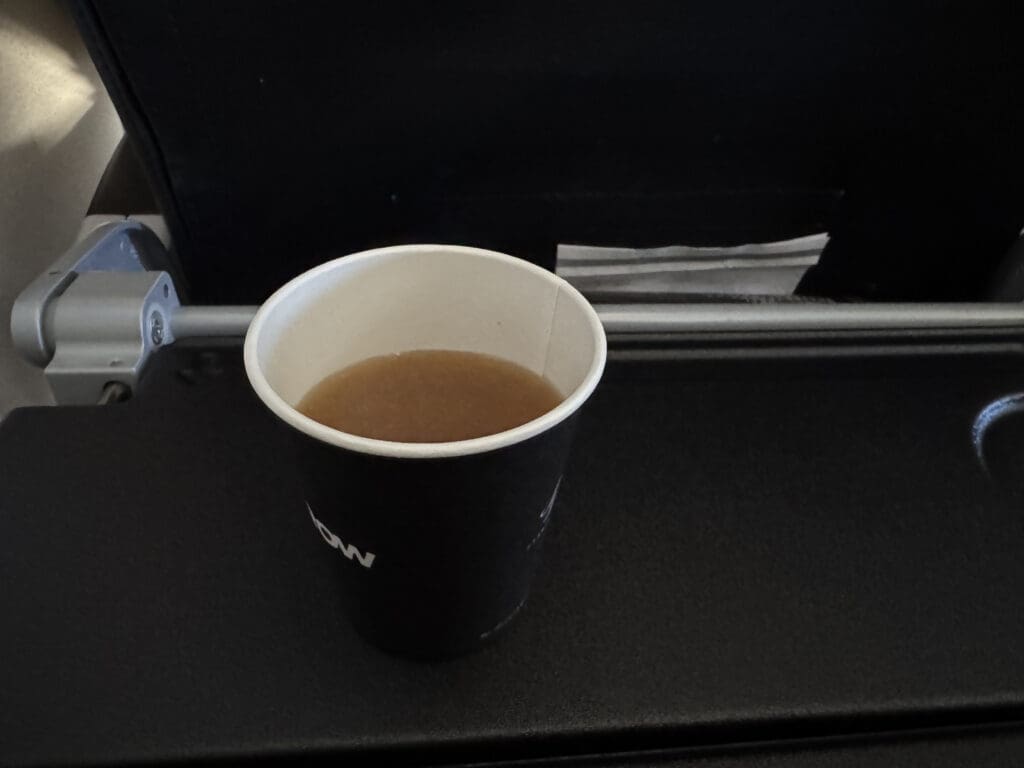
StarFlyer A320 Drinks Service
There are many investments into the passenger experience at StarFlyer, and I wish some spending could’ve been reallocated towards a marginally elevated drinks service. However, I’d still consider the overall experience to be on par with other carriers.
Side note – I’ve heard that StarFlyer does operate an elevated bento meal service on their flights between Japan and Taiwan, and I’d love to check those out. Perhaps I’d come back with a very different impression than I did on this flight.
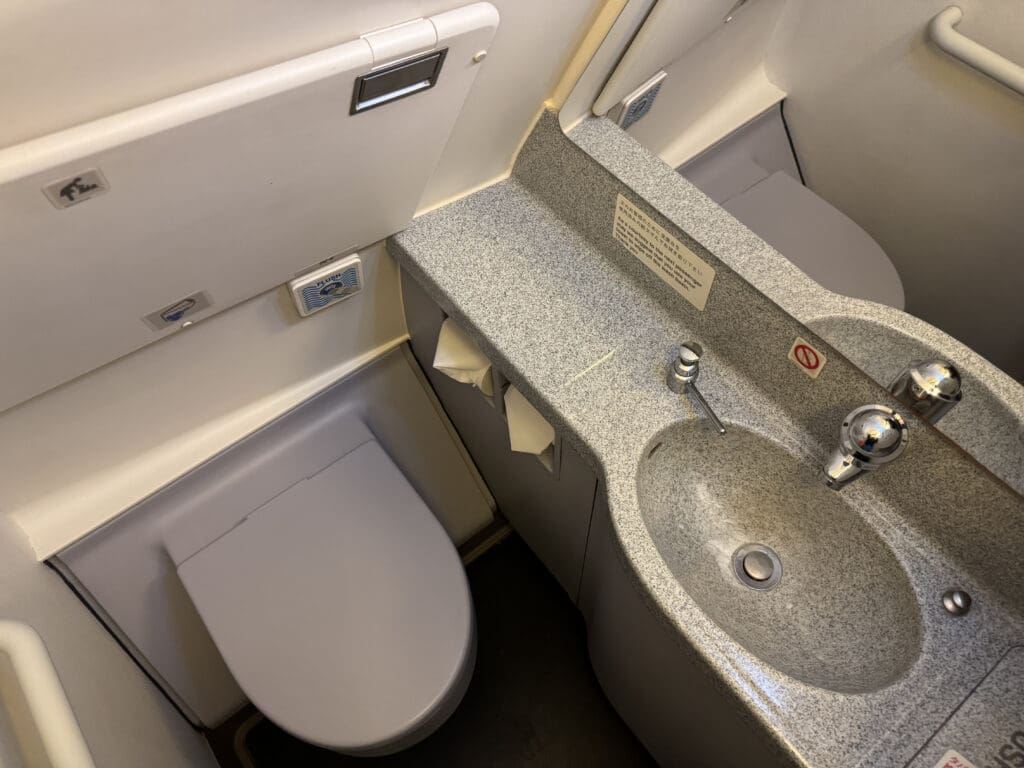
StarFlyer A320 Lavatory
After the drinks service, I excused myself to my two seatmates and asked if I could use the lavatory. StarFlyer’s lavatories are extremely standard, though of course since there are fewer passengers, the passenger to lavatory ratio is better than other airlines in narrowbody economy class – there are three lavatories with one in front and two at the back, so it was a 50:1 passenger to lavatory ratio, and never much of a wait.
StarFlyer A320 Lavatory
Landing into Fukuoka Airport
This flight had a block time of 2h 5m, though in reality we were in the air for 1h 35m. Due to the lack of WiFi (/good IFE), a warm cabin, a very slow charging port, and growing pangs of hunger, I looked forward to our landing at Fukuoka Airport.
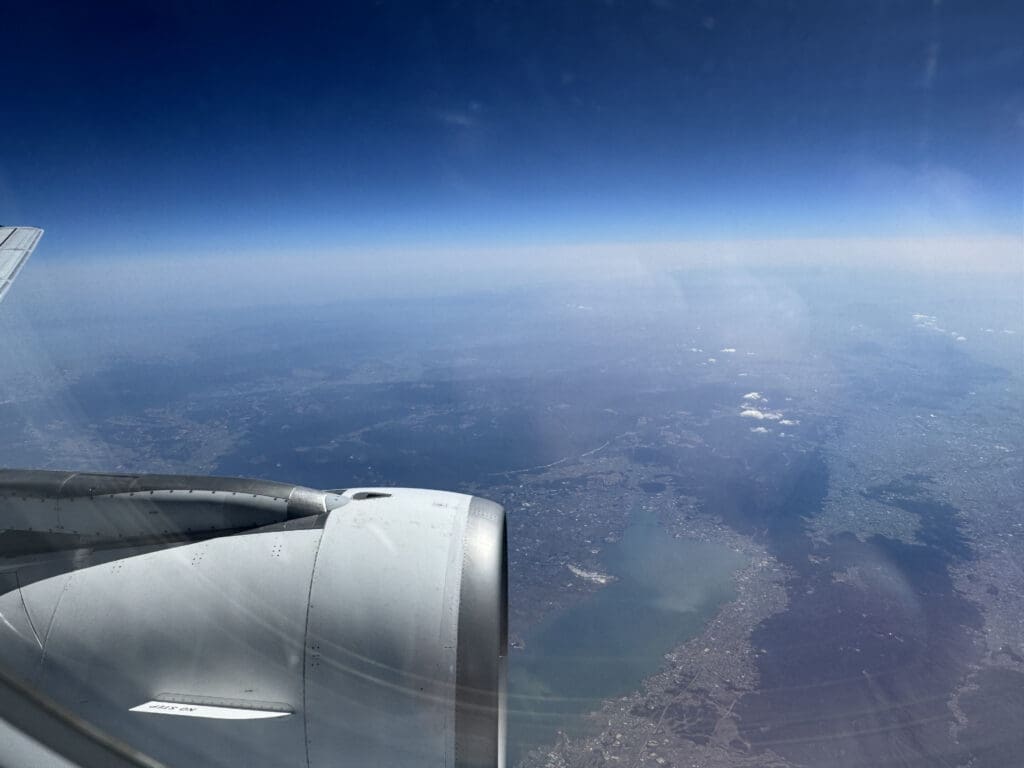
View upon cruising into Fukuoka Airport
The last time I’d been to Fukuoka was 2014, and while I was more or less doing a direct turn, I was excited to spend a few hours here. My eyes were glued to the window as I saw our coastal approach into the airport.
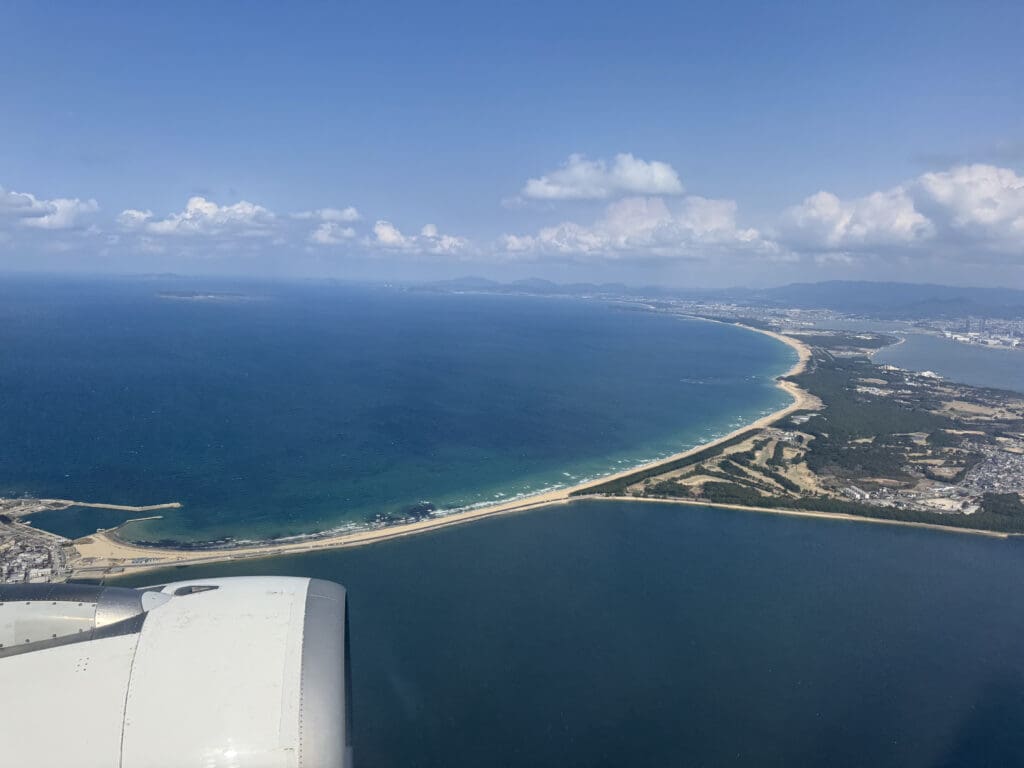
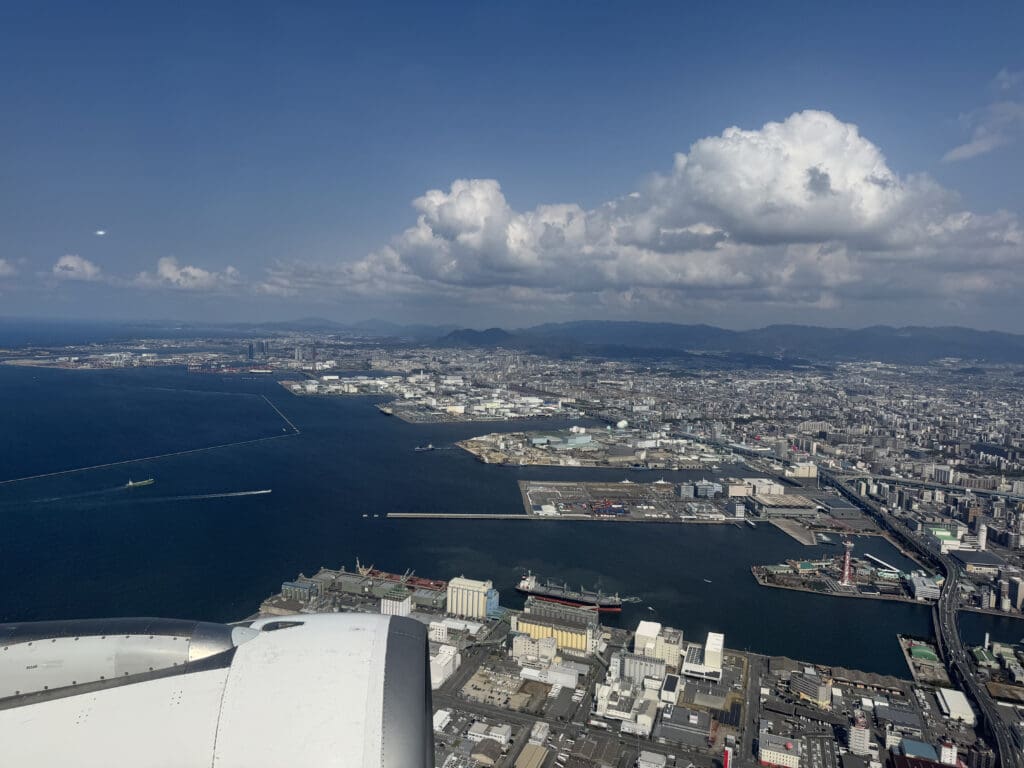
Approach into Fukuoka Airport
Our final approach was wild, as I saw us flying past the airport when we were quite close to the ground. We must’ve been no more than a few hundred feet in the air when we did a sharp left turn (from FlightRadar24 information and a quick Google Search, this looks like quite a common approach, with many equating it to what it felt like landing in Hong Kong back when Kai Tak Airport was still open).
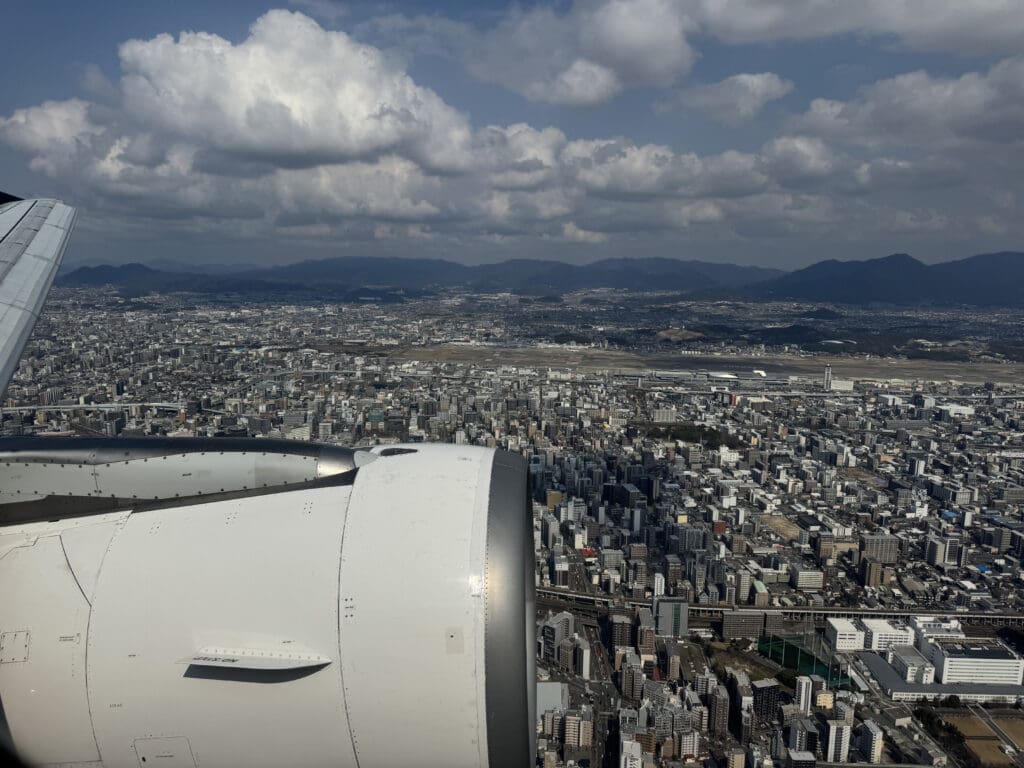
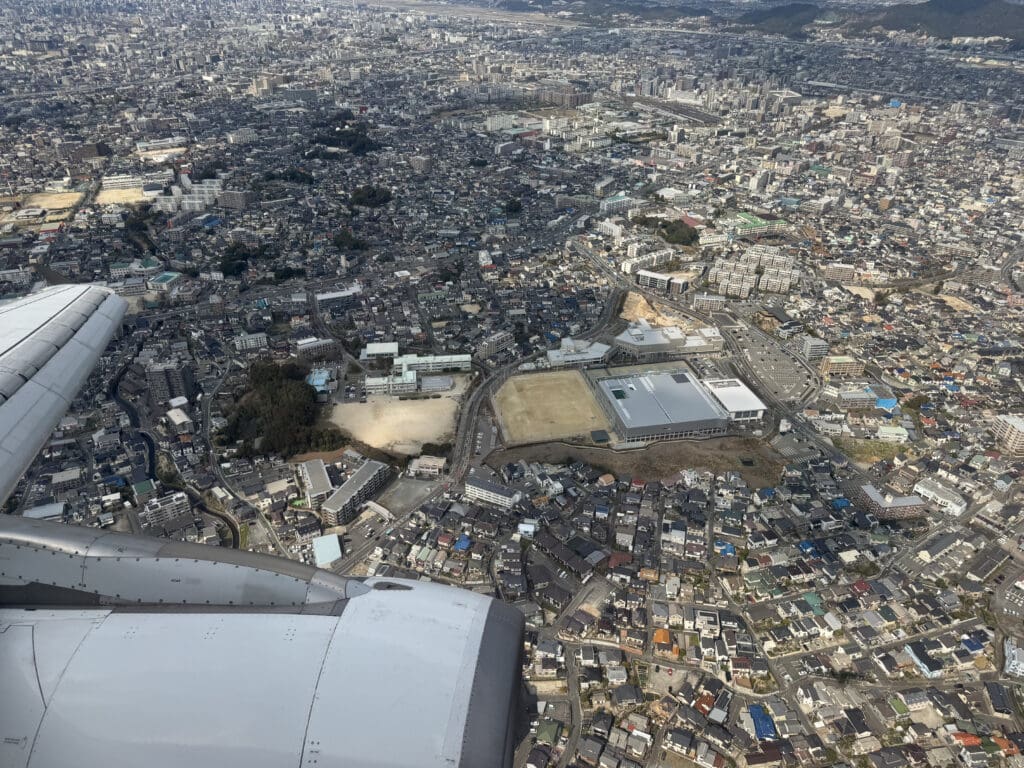
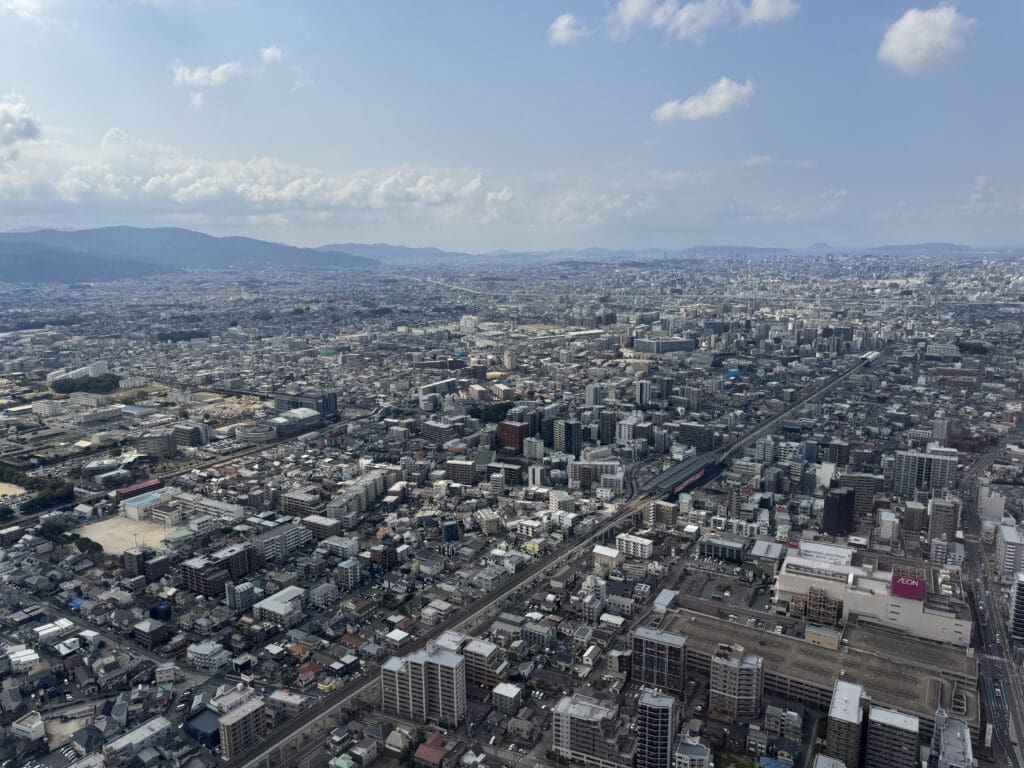
Landing into Fukuoka Airport
We aligned with runway 34L, and were wheels-down at 2:15 PM, 10 minutes before our scheduled arrival time. We then had a very short taxi to the gate, arriving 5 minutes ahead of schedule.
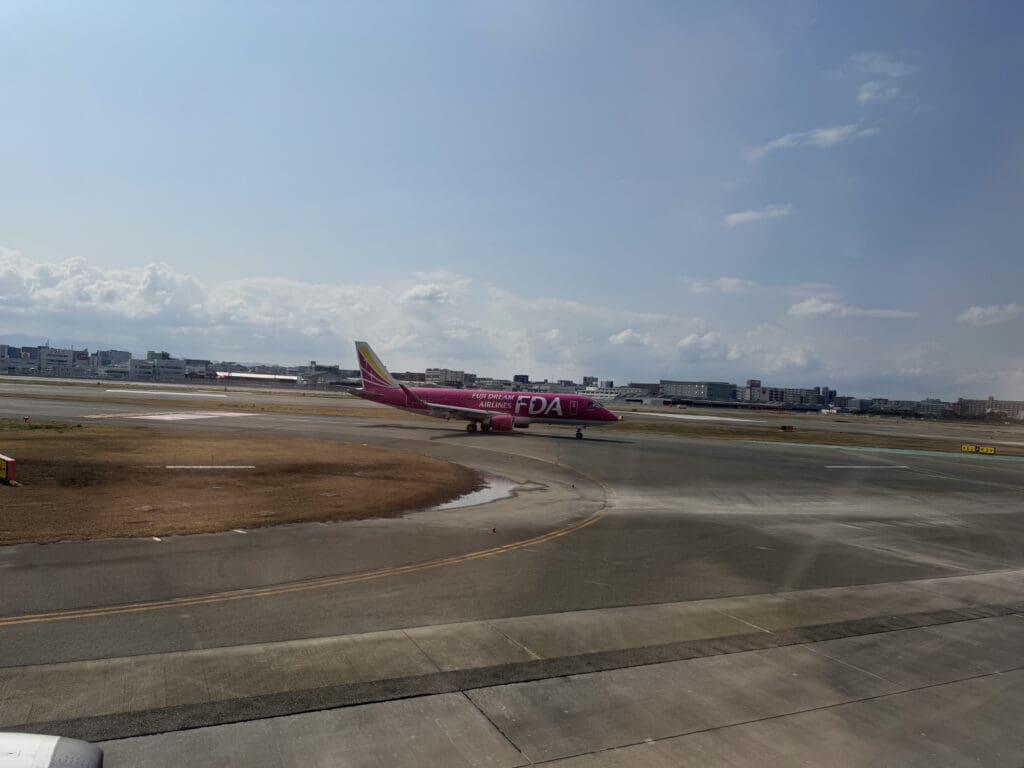
Taxiing at Fukuoka Airport
We parked at gate 6, next to a Peach A320.
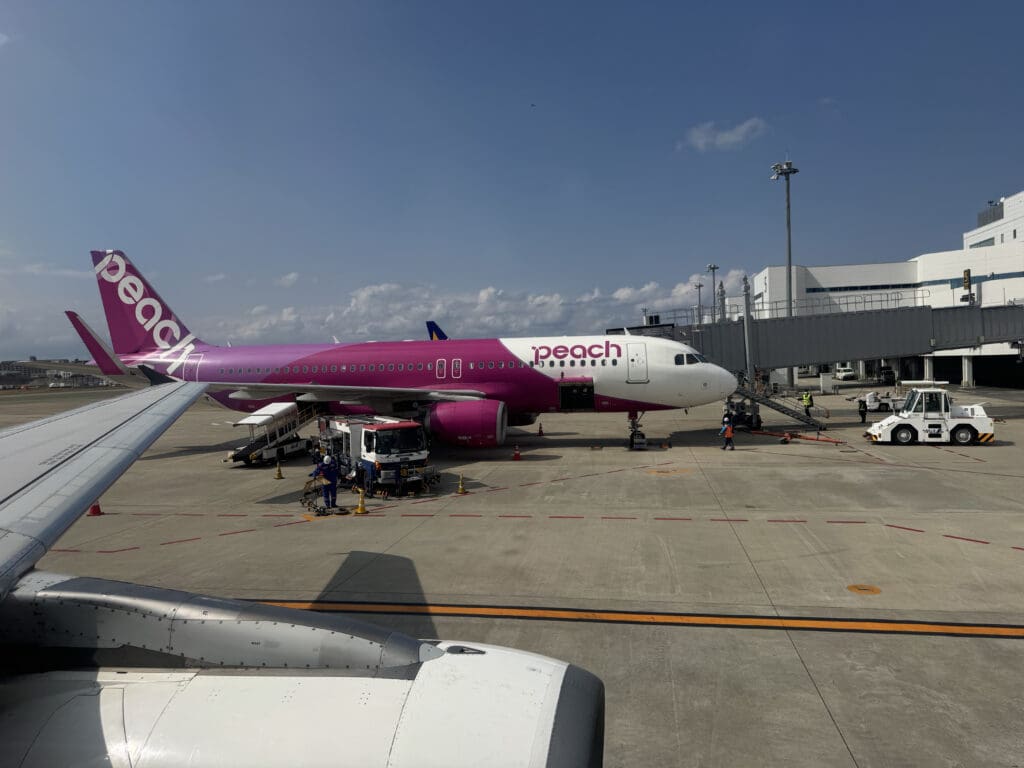
Landing at Fukuoka Airport
When deplaning, I was able to catch a view of our A320, with a stunning new ANA 787-10 in the distance (which reminded me that I could’ve taken that flight on this leg, which would’ve included inflight WiFi, a more modern seat with better charging options, and a better entertainment system).
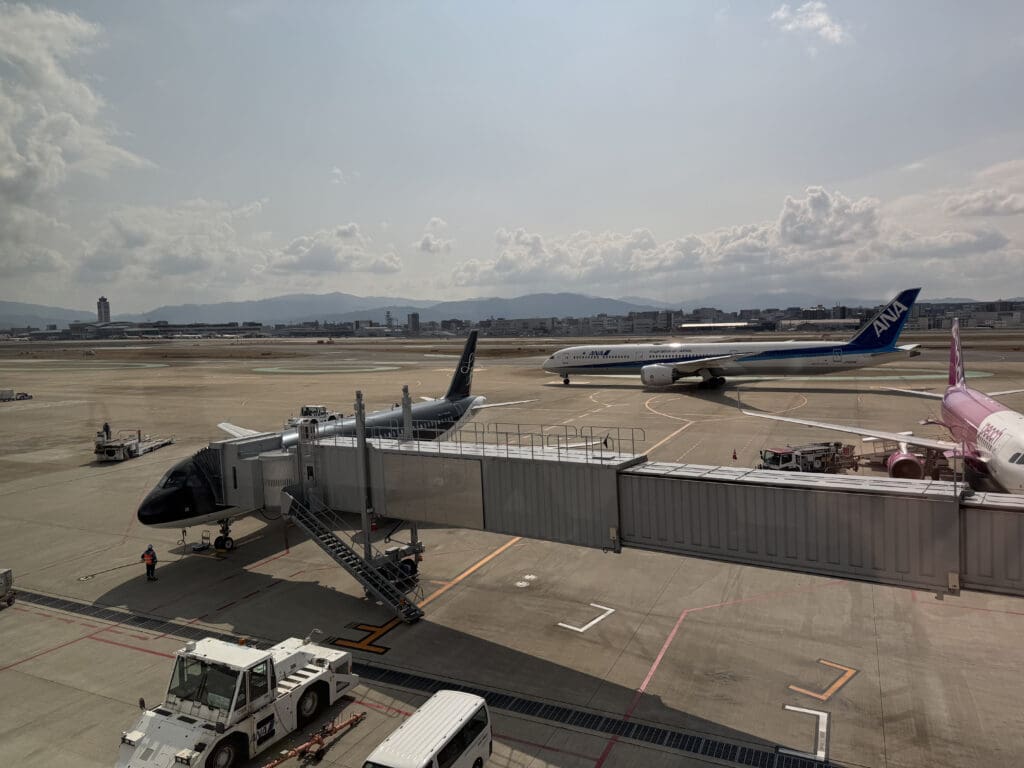
StarFlyer A320 at Fukuoka Airport
Conclusion: My Flight on StarFlyer
Part of me wants to be harsh to StarFlyer. In many ways, I found their brand to be quite try-hard and overhyped. They also didn’t deliver what I’d personally value on a shorthaul flight, particularly when flying on business – there was no WiFi whatsoever, the IFE that they did offer was way outdated and below par, and the drinks service wasn’t any better than on other carriers.
However, I received everything as promised – from music at the boarding gate, to Star Flyer Man on the safety video, to a sleek black plane with jet black seats, 34″ seat pitch and a footrest, to a safety card printed on thick paper, they do deliver an experience some may find elevated. Their target market may really enjoy the premium touches – those touches are just not for me. I’d much rather be on a modern JAL or ANA aircraft, with reliable charging ports and free WiFi (not to mention better mileage crediting opportunities), even with less legroom.
I also have to recognise that StarFlyer undercuts the competition in domestic Japanese air travel. Their philosophy is to cut costs everywhere “except for where it matters”. We may be misaligned on the parts of the passenger experience that matter, though they do offer a better experience than Jetstar Japan and Skymark, which they match from a pricing perspective.
I think their A320neo is the sweet spot here. There’s no awful outdated IFE, there’s free WiFi, and while there’s a legroom cut, there are still footrests and adjustable headrests. Maybe StarFlyer’s brand would resonate with me more on those aircraft.