

|
THE ALVIATOR'S VERDICT
I like Japan Airlines' premium economy as a whole. Some bits of their "hybrid" approach were unfamiliar to me (e.g. they offer lounge access, but save the same meal as they would in economy) and the seat doesn't beat out competitors, though overall this ended up being an extremely pleasant premium economy flight |
4.5
|
In January 2026, the opportunity arose to fly Japan Airlines’ A350 premium economy class from Tokyo Haneda to Paris. I’ve flown quite a few premium economy products, and am trying to find the best premium economy class in the world. Given how much I’d heard about Japan Airlines’ premium economy product, I went out of my way to take advantage of this opportunity.
Japan Airlines clearly invested a lot in their premium economy class seat – they have industry-leading seat pitch (42″), have the world’s only premium economy seat with motorised controls, and also are the only airline to have a premium economy seat where the legrest goes up all the way to an 180° angle. At the same time, practically the seat didn’t feel more comfortable than other premium economy seats I’ve flown on the market. From a soft product standpoint, the airline is one of two airlines in the world to offer premium economy passengers lounge access (the other being their main competitor ANA), and catering was delicious, though there’s some of the least service differentiation from economy class that I’ve seen onboard any carrier so far.
I’m judging the experience based on how good it is compared to other carriers’ premium economy, and not how different it is compared to their own economy class. With that in mind, Japan Airlines has a very strong premium economy product. There are a couple of quirks, though I would consider this one of the top five premium economy class products I’ve flown so far (I’m waiting until I fly a few more premium economy airlines later this year before I publish a ranking).
Booking Japan Airlines’ A350 Premium Economy
I booked my Japan Airlines A350 premium economy flight using AAdvantage miles. I booked the following itinerary for 52,500 AAdvantage miles plus £58.90 (HK$623) in taxes:
07/01 Japan Airlines JL45 Tokyo Haneda – Paris dep. 08:25 arr. 14:55 (Premium Economy)
07/01 British Airways BA315 Paris – London Heathrow dep. 18:30 arr. 18:45 (Economy Class)
Why Paris, when Japan Airlines also flies their A350 to London? That’s purely because of award space – the airline releases much more award space to Paris, Frankfurt, and Helsinki than they do to London (this is a reflection of how premium the Tokyo-London route is). Paris was operated by an A350 every day in January, though do note that the airline will operate the route with a 777 every other day starting from March 29th, 2026.
One thing to note: Japan Airlines uses married segment logic, which means that they release award availability for a certain itinerary, as opposed to each individual flight. This meant that if I tried to find an award seat from Tokyo to Paris (without going onwards to London), this showed up as unavailable on the AAdvantage website.
While I connected onwards home to London, I won’t be reviewing the Paris to London segment, as I’ve reviewed British Airways’ shorthaul economy class before. This means that this flight review will be the last review in this trip report series.
Japan Airlines’ Premium Economy Ground Experience at Tokyo Haneda
Japan Airlines is one of two airlines to offer lounge access to premium economy passengers. Actually, they’re the only airline to offer lounge access to all premium economy passengers, as far as I’m aware – while rival airline ANA offers lounge access to premium economy passengers, they failed to secure contracts at some airports to allow their premium economy passengers to access lounges, such as Frankfurt Airport. From my research, it doesn’t seem like Japan Airlines has such an issue at any airport (though you’ll be subject to worse lounges at some airports – for example, at Helsinki Airport, business class passengers can use the lovely Finnair lounge, whereas premium economy passengers use the less nice Plaza Premium lounge).
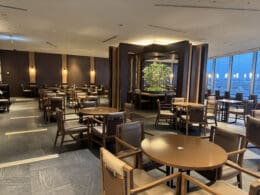
At Haneda, Japan Airlines allows premium economy passengers to access both their main business class lounge, as well as their “overflow” Sky View lounge (my reviews of these lounges linked). Neither of these are amazing business class lounges by international standards, though they’re definitely a treat to visit as a premium economy passenger. So I headed to Haneda Airport in the morning to review both of these lounges.
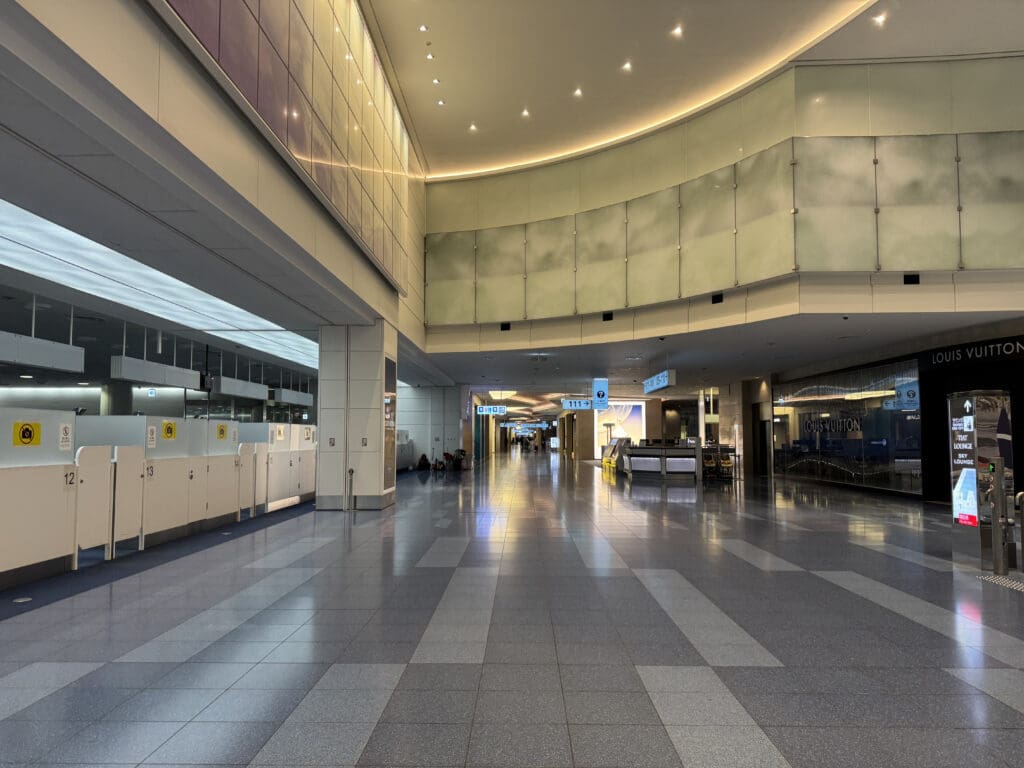
Tokyo Haneda Terminal 3
Despite the fact that this was a 239-seat A350, Japan Airlines published a boarding time of 8 AM ahead of our 8:25 AM flight – easily the most efficient out there. Premium economy passengers boarded with group 3, after first class, business class, and Oneworld elite passengers.
At 7:40 AM, the gate agent introduced herself by name. She stated that the seatbelt sign might be on for longer than usual, and that the captain has suggested that passengers use the restroom before boarding.
I actually got paged for a document check prior to boarding, though still made it in the nick of time to be the first Group 3 passenger onboard. Boarding was extremely civilised, and the gate area was never crowded.
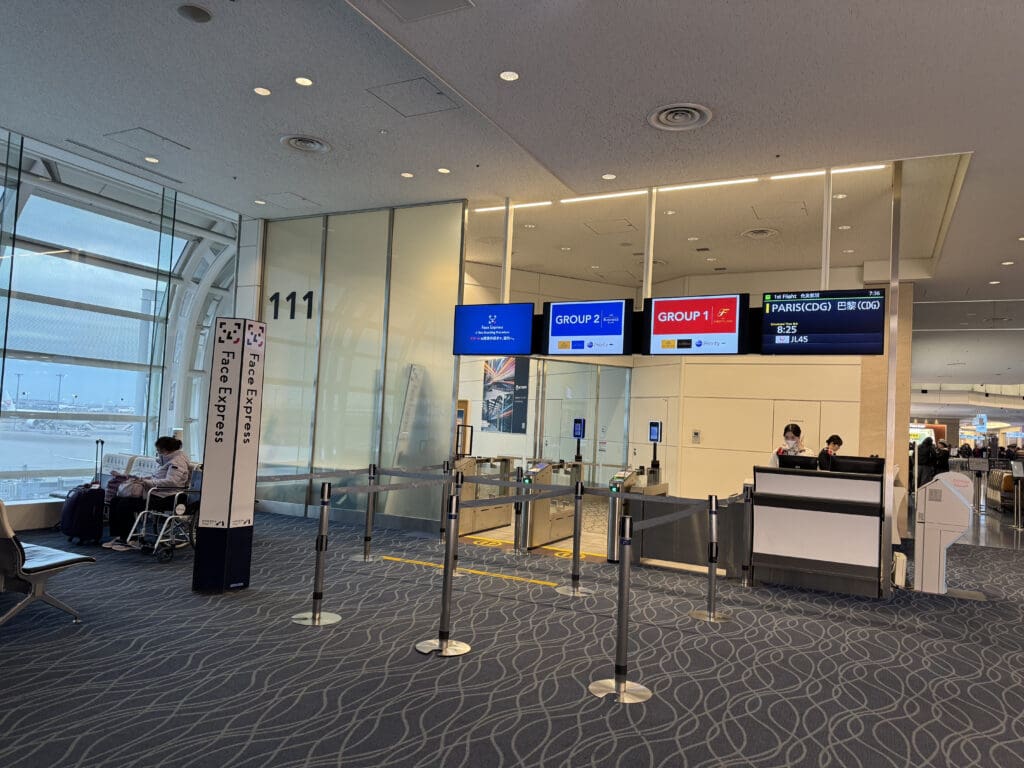
Japan Airlines boarding gate at Tokyo Haneda Airport
Today we were flying JA05WJ, a one-year-old A350. While Japan Airlines has among the simplest liveries out there, it still is a very beautiful plane!
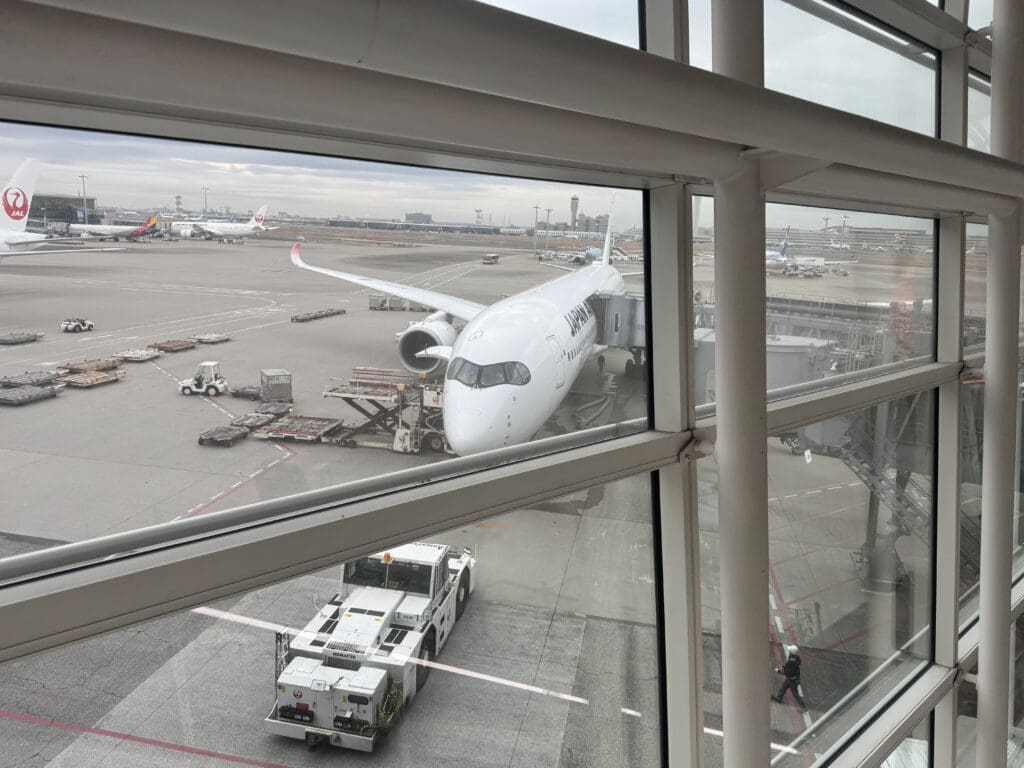
Japan Airlines A350 at Haneda Airport
Japan Airlines Flight JL45
Wednesday, January 7, 2026
Origin: Tokyo Haneda (HND) T: 3 Gate: 111 Dep: 08:25 (08:25)
Destination: Paris (CDG) T: 2E Gate: L34 Arr: 14:55 (16:30)
Duration: 14 hr 30 min (16 hr 5 min)
Aircraft: Airbus A350-1000 Reg: JA05WJ
Seat: 19A (Premium Economy)
The entire plane was boarded through the second set of doors, and I made my way towards my seat, first passing through the airplane’s rear business class cabin.
Japan Airlines’ A350 Business Class
On the way to the premium economy cabin, I passed through Japan Airlines’ rear business class cabin. Japan Airlines’ A350 business class is known for being one of the world’s best. While they’re much stingier with award space compared to premium economy, they represent a really good deal, costing just 75,000 miles one-way with AAdvantage from Asia to Europe, or 70,000 miles from Asia to the U.S.. That’s a far lower number of miles than what other carriers tend to charge for business class.
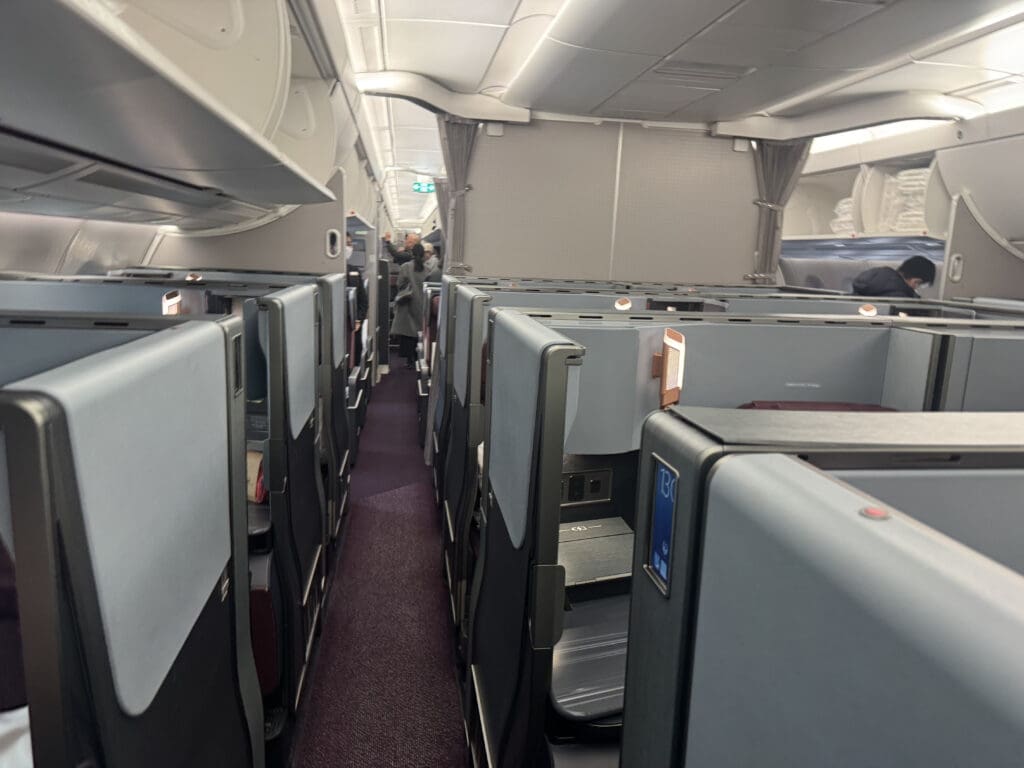
Japan Airlines A350 Business Class
The seats feature individual suites with doors, and look to give Qatar Airways’ QSuite a run for their money. In fairness, their competitor ANA’s new “The Room” business class looks stellar as well.
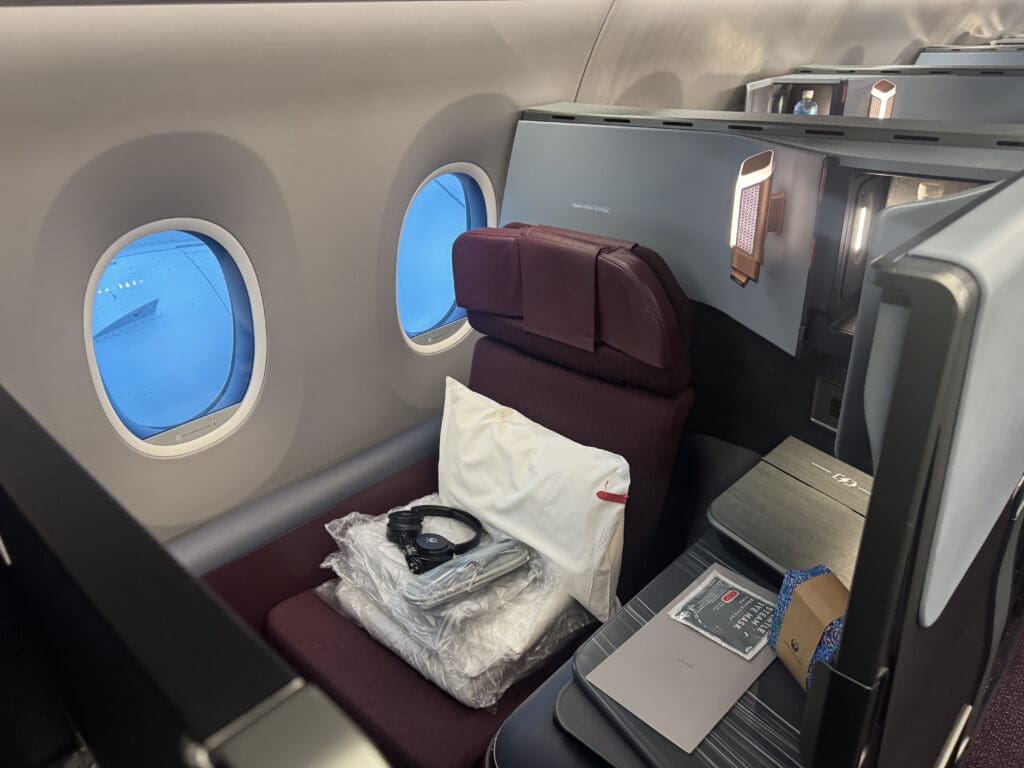
Japan Airlines A350 Business Class
I’d love to review this cabin someday, though as of today I was headed one cabin behind, to the airline’s intimate 24-seat premium economy cabin.
Japan Airlines’ A350 Premium Economy Cabin and Seat
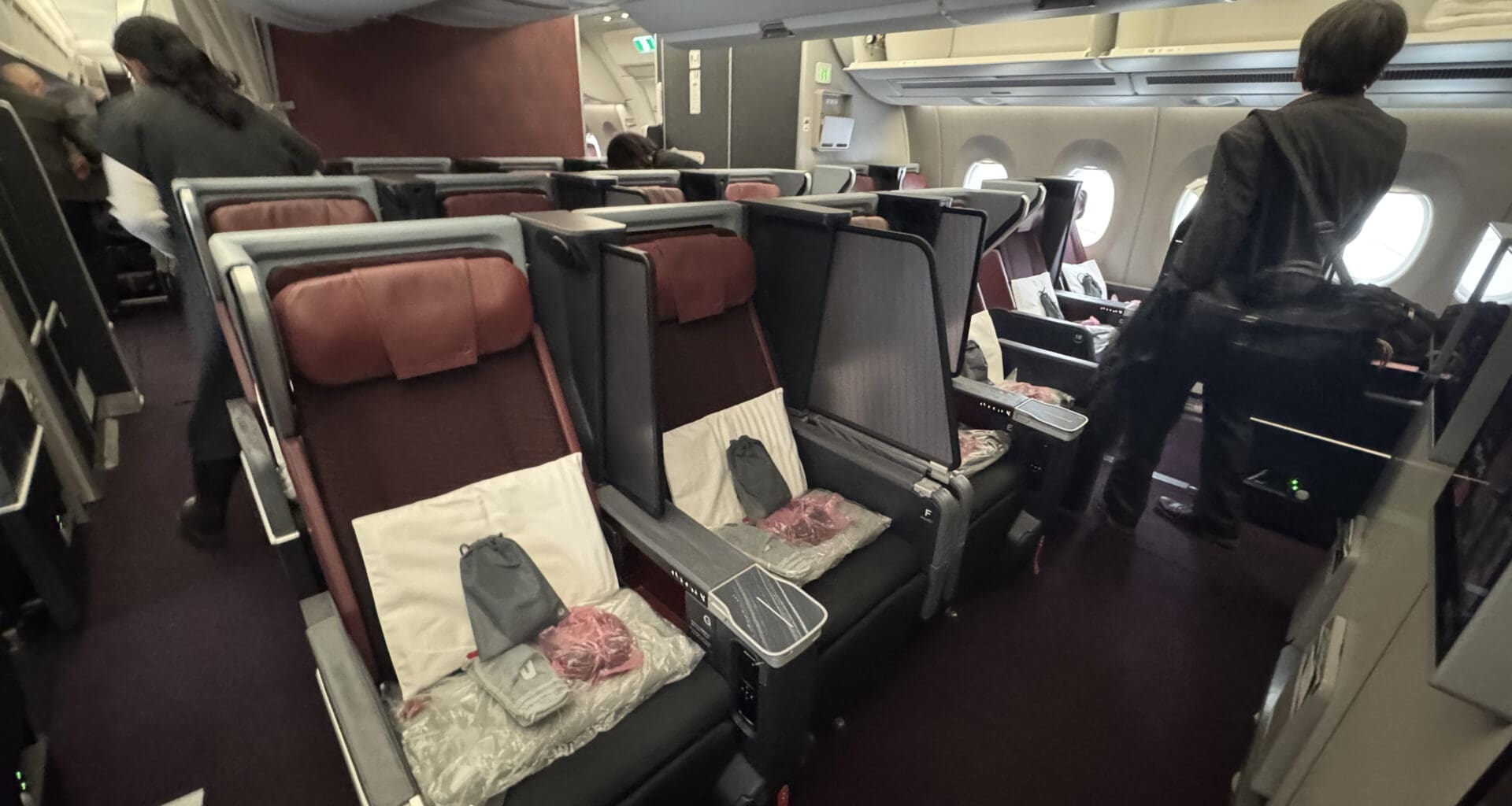
Japan Airlines’ A350 premium economy cabin consists of 24 seats in a 2-4-2 configuration, spread across three rows. These are “shell” seats, which mean that your reclining doesn’t affect the person behind you.
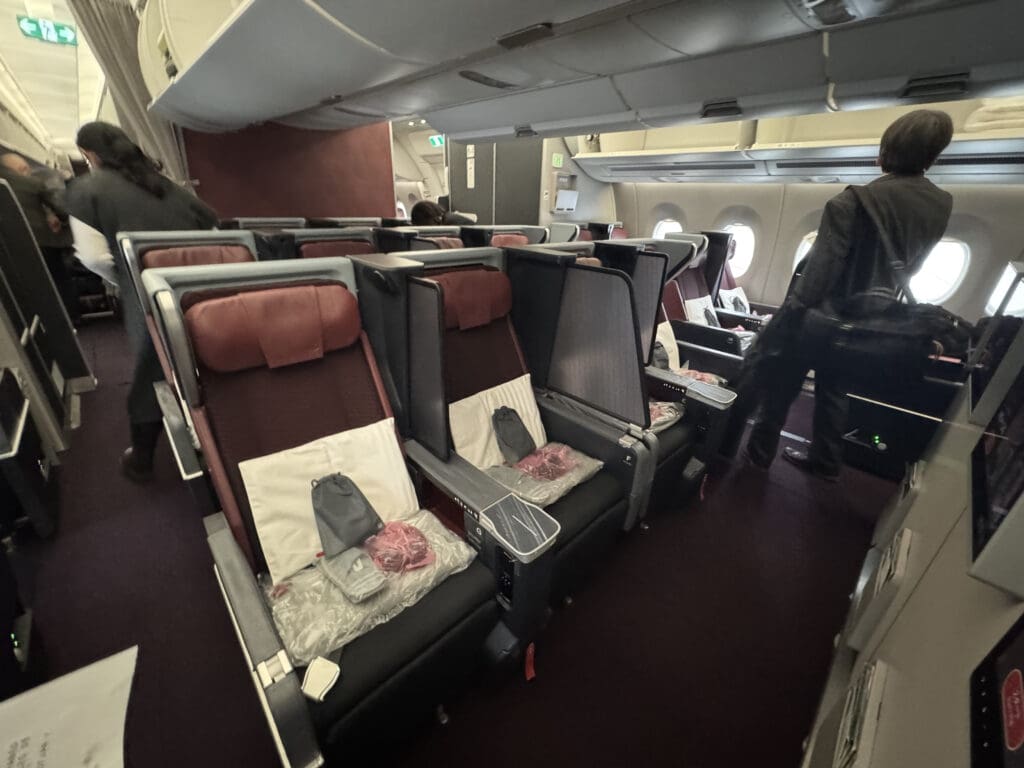
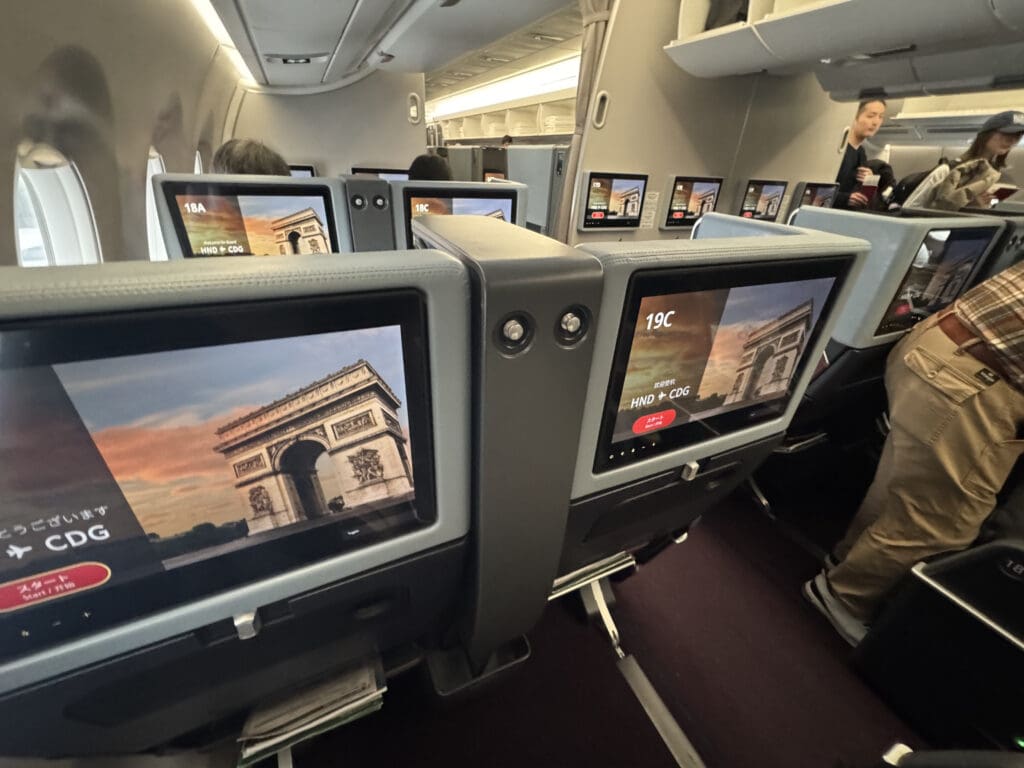
Japan Airlines A350 Premium Economy Cabin
There are four centre seats, and there’s even a massive partition between the two middle seats, which can’t be retracted. That’s something to note if you’re travelling as a family of four.
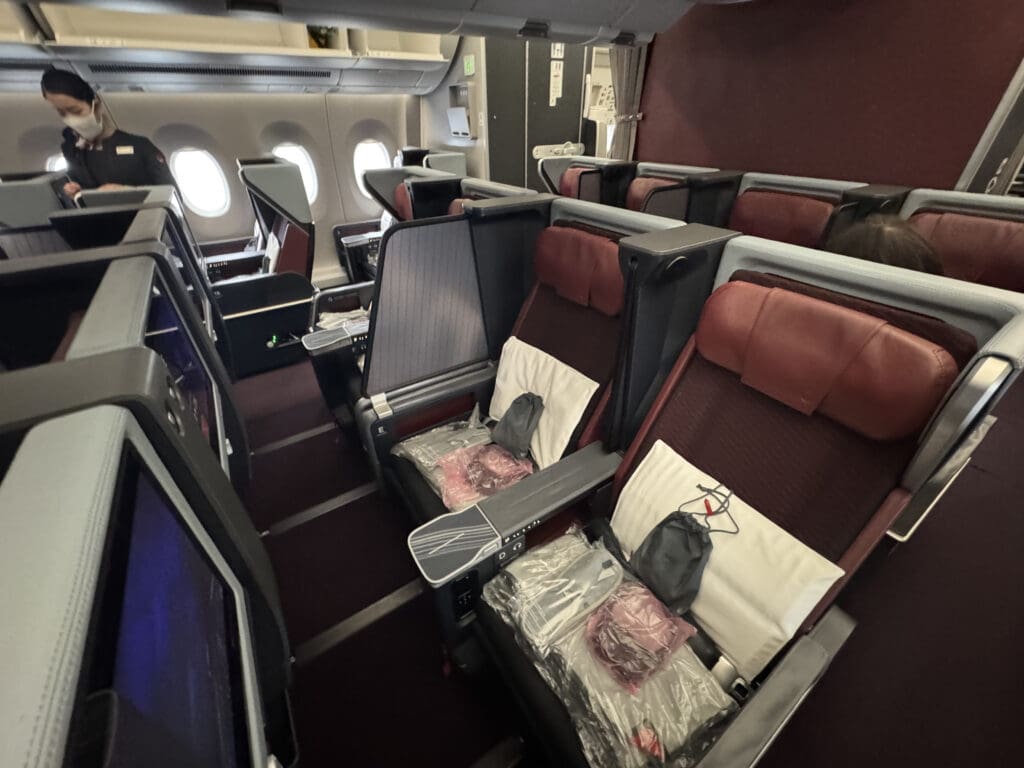
Japan Airlines A350 Premium Economy Center Seats and Partition
I’d selected seat 19A, the left window seat in the last row of the premium economy cabin. Generally I prefer the last row so I can recline shamelessly during the flight, though in this case that was a moot point, since seats don’t recline into the space of the person behind in this configuration. Still, I liked being in the back row, as it gave me a good vantage point of the cabin throughout the flight.
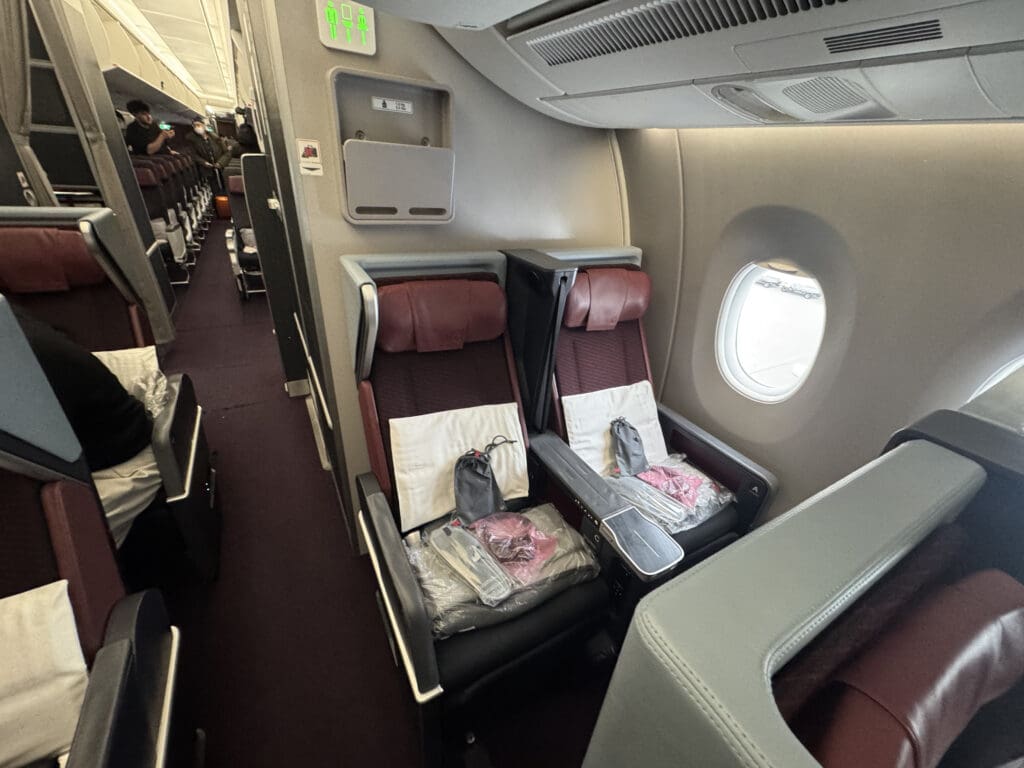
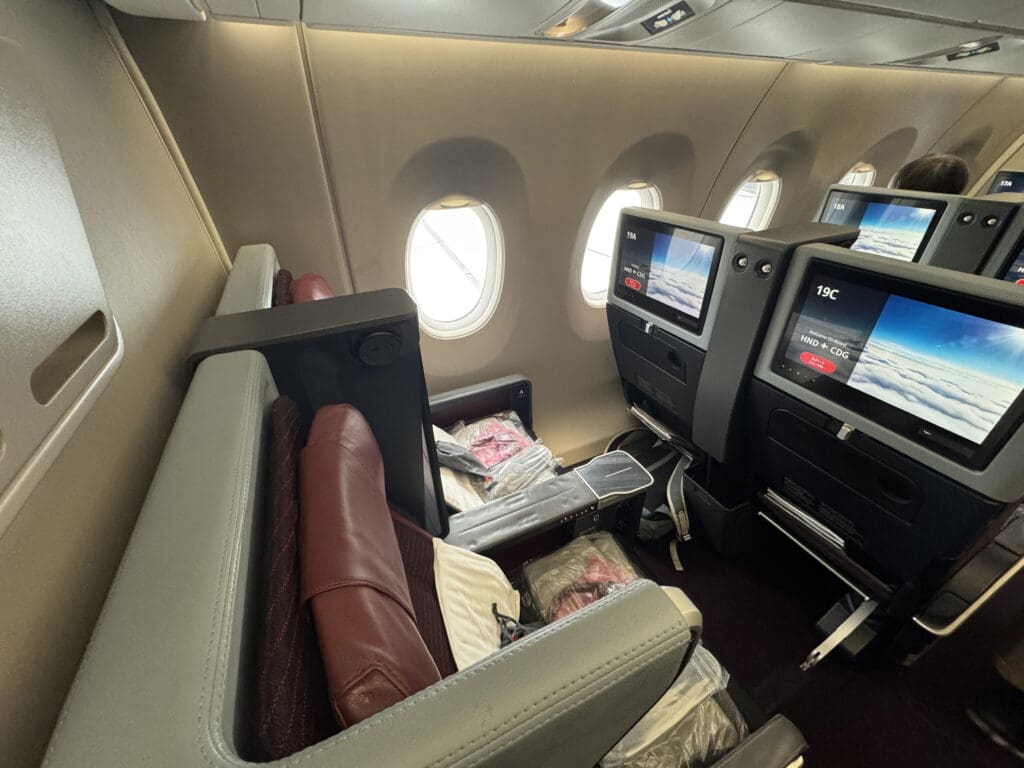
Japan Airlines A350 Premium Economy Seats 19A and 19C
While Japan Airlines isn’t the only airline to have a shell design in premium economy, they definitely have a unique seat amongst their competitors. These seats were designed by Safran (they’re a heavily modified version of the Z535i product), and there are three unique modifications that aren’t featured by any other airline:
- Firstly, there are privacy partitions between seats – these are some of the largest privacy partitions I’ve seen on any airline in premium economy. While the partitions don’t block out light, I did feel like I was in a nice cocoon when the privacy partition was extended. There’s also a wing between the aisle seat and the aisle, though there’s less privacy
- Secondly, Japan Airlines’ A350s have the world’s only electronically controlled seats – the recline and legrest are motorised. Obviously this was pretty slick and meant that there was zero effort needed to recline my seat, though was a bit more of a “style over substance” feature
- Lastly, the airline elected to make their legrests go up all the way. I mean, it was nice to have the option, though unless I bent my legs I couldn’t really make full use of this feature either
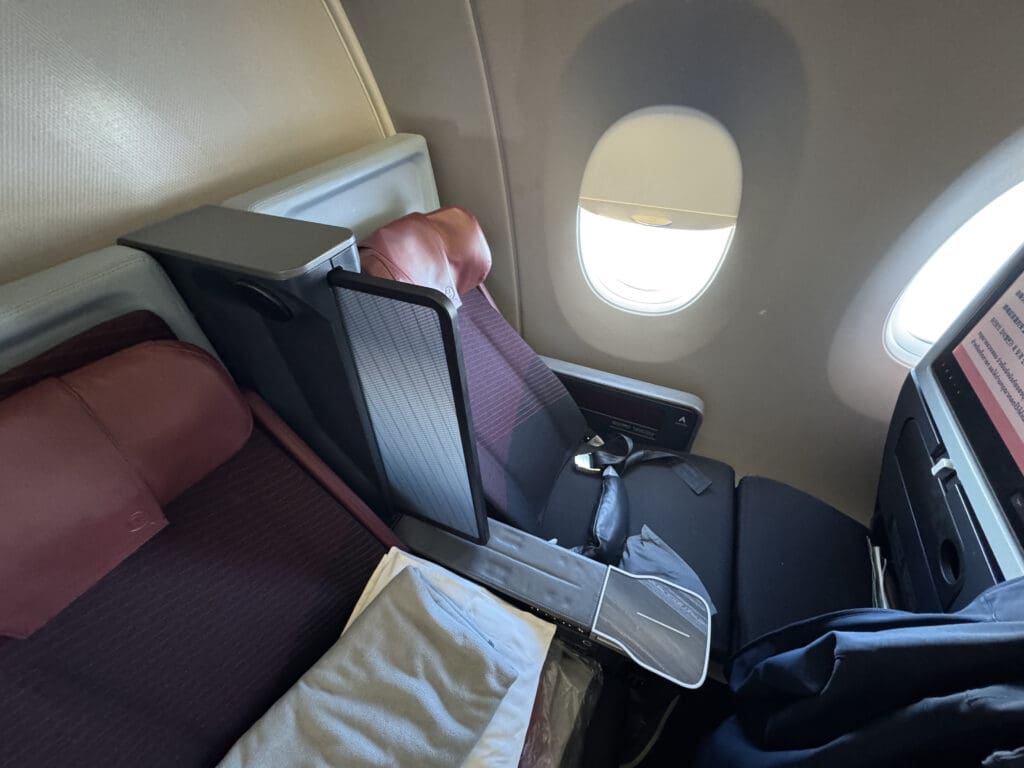
Japan Airlines A350 Premium Economy Recline
In this case the privacy partition was a bit of a moot point, since I had an empty seat next to me.
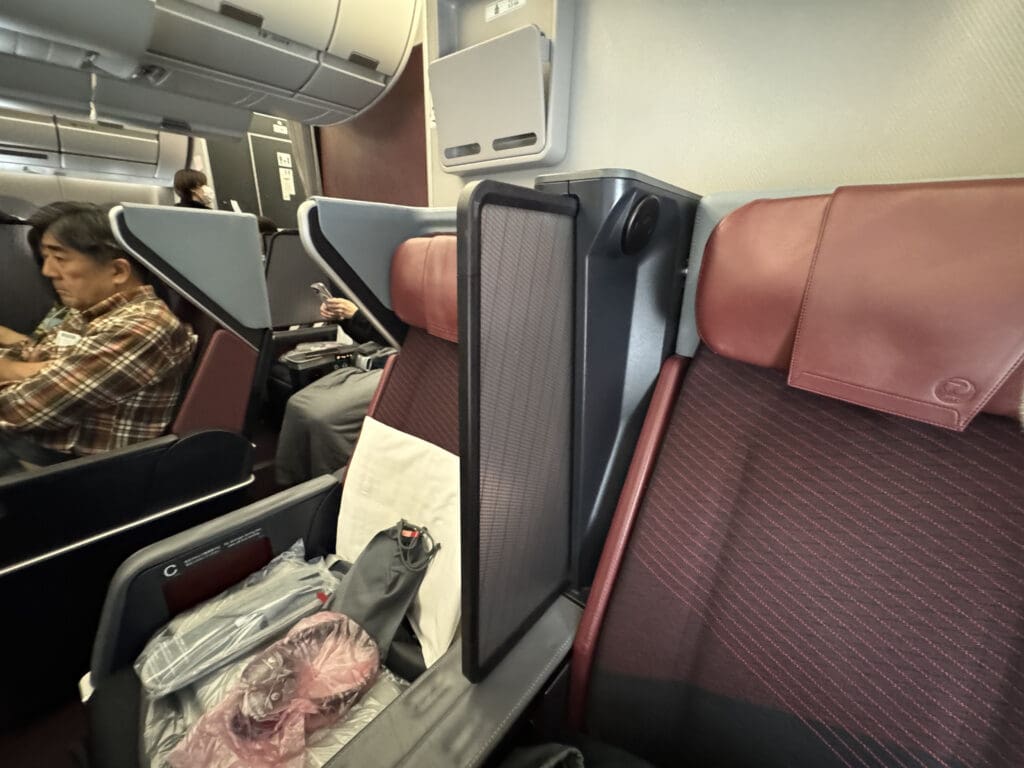
Japan Airlines A350 Premium Economy Privacy Partition
The airline clearly doesn’t expect everyone to put their legrest up at a full 180° throughout the flight, as there’s also a fold-down footrest, which proved handy at times when I just wanted to sit in a “normal” reclined position and get comfortable.
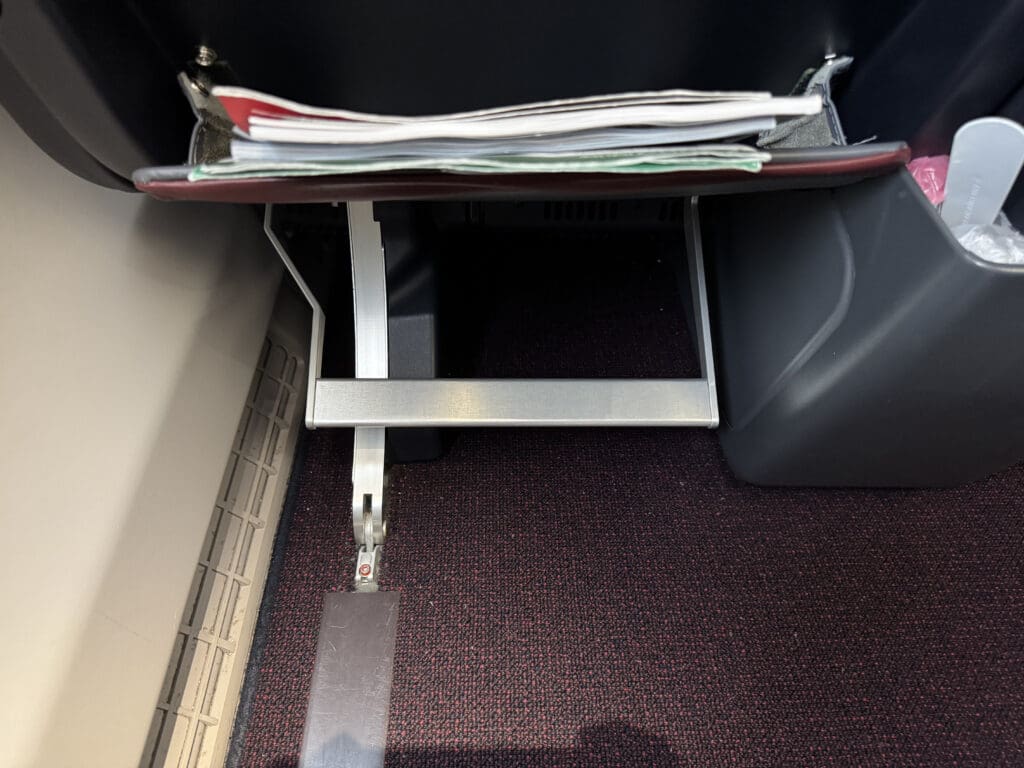
Japan Airlines A350 Premium Economy Footrest
To my right were the seat controls, which were similar to what you’d get in a modern regional business class product. There was a takeoff function, and the seatback and fold-up legrest could be controlled individually.
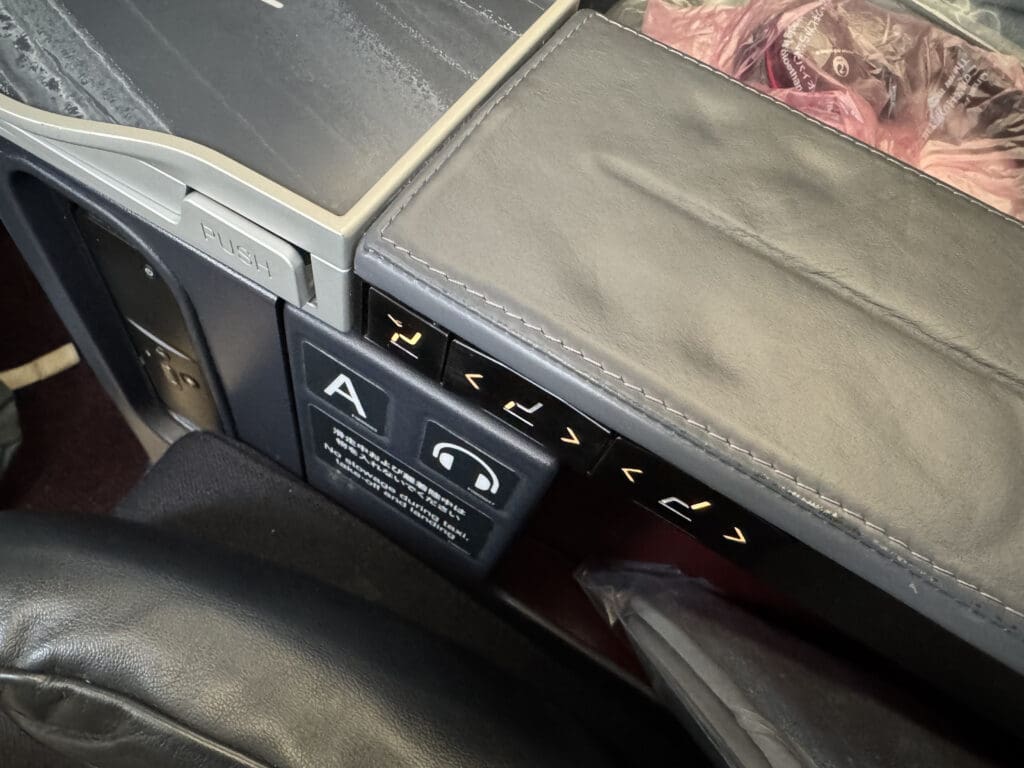
Japan Airlines A350 Premium Economy Seat Controls
Seat pitch is an industry-leading 42″, and indeed I felt like there was a lot of space. The entertainment system does jut out under the seat in front, though that actually didn’t bother me much, since there was still more than sufficient space for my legs.
What bothered me more, though, was the literature pocket. It wasn’t very sturdy, and crucially one of the buttons holding it up was broken, meaning that it would fold down every once a while and hit my legs while I was in the reclined position. I tried to put it back in position a few times, to no avail.
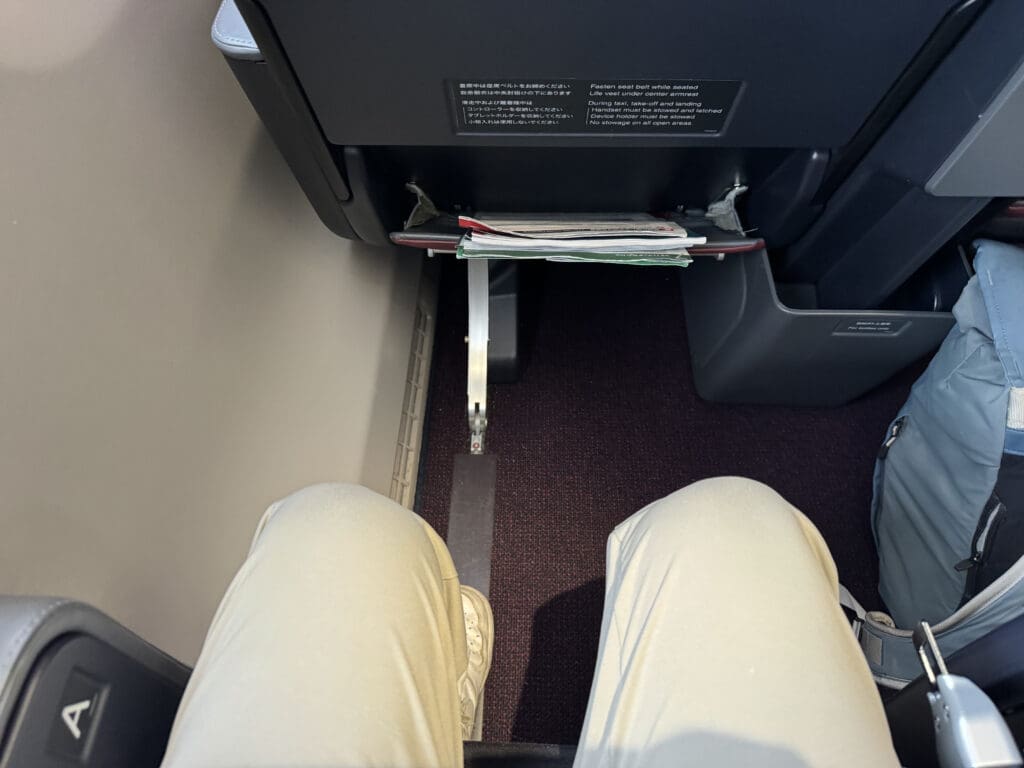
Japan Airlines A350 Premium Economy Legroom
There’s not a crazy amount of storage in this seat, so I appreciated the nook underneath each armrest, which could be used to store a phone, glasses, AirPods, etc..
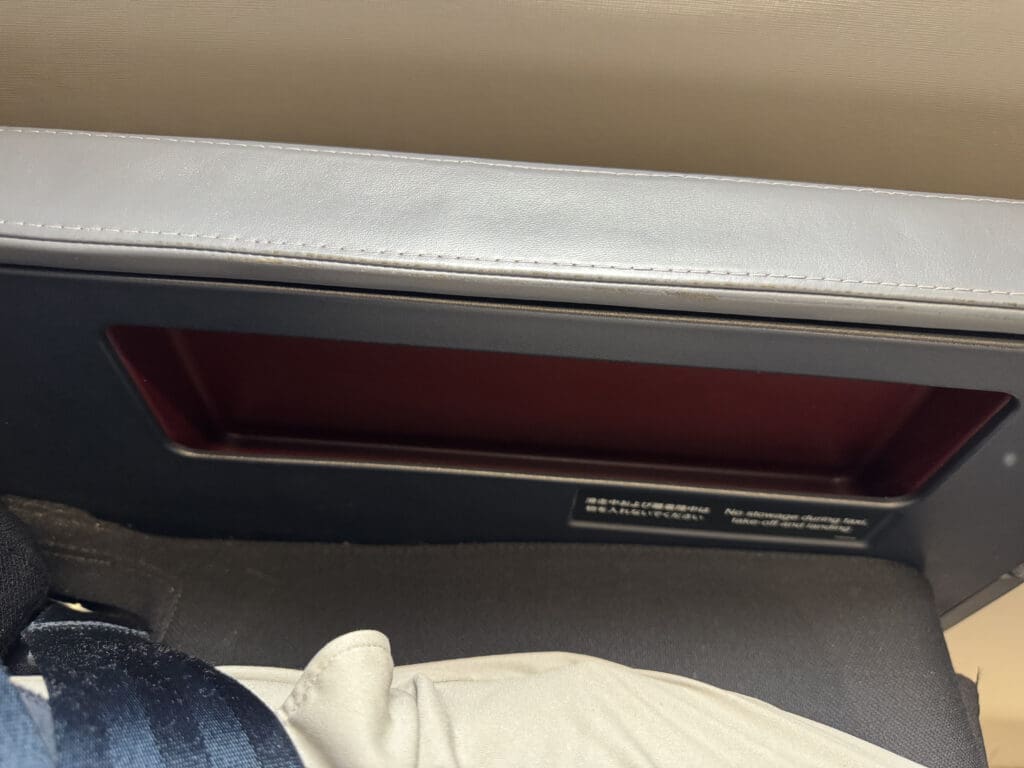
Japan Airlines A350 Premium Economy Storage Compartment
The nook under the right armrest also housed a 110V power port. If I had a “wall climber” power port I’d be quite irritated about the positioning of the power port, so I wish it was just placed normally between seats. In this area (not pictured – sorry) was also a USB-A and USB-C power port.
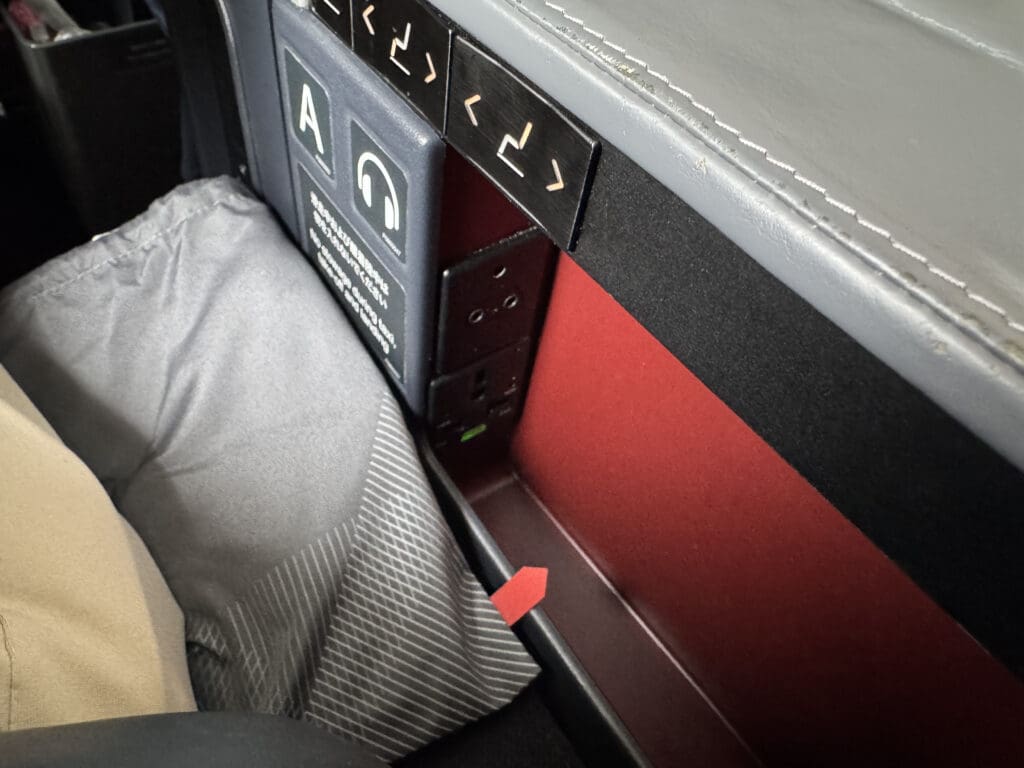
Japan Airlines A350 Premium Economy Power Port
Then to my feet I found an area where I could store a water bottle, umbrella, etc..
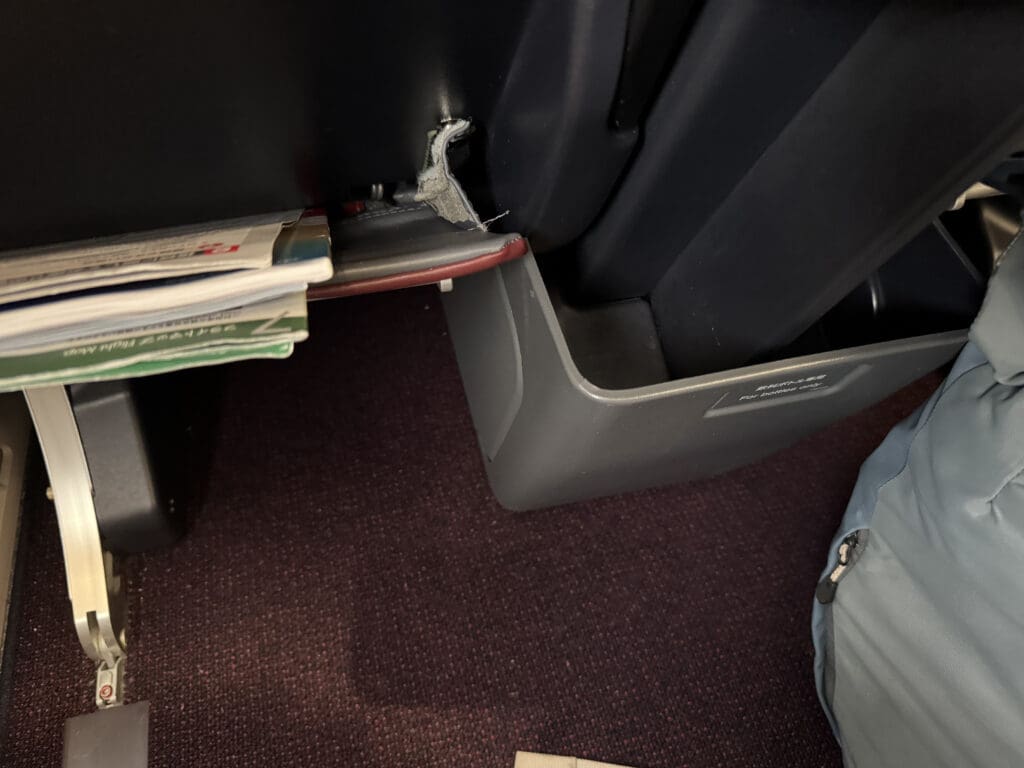
Japan Airlines A350 Premium Economy Storage
There was a tablet holder/cupholder that folded down from the seat in front. I wish that the seatback was configured a little differently to allow for a little extra storage space, though appreciate that this would’ve come at a cost of the size of the tray table.
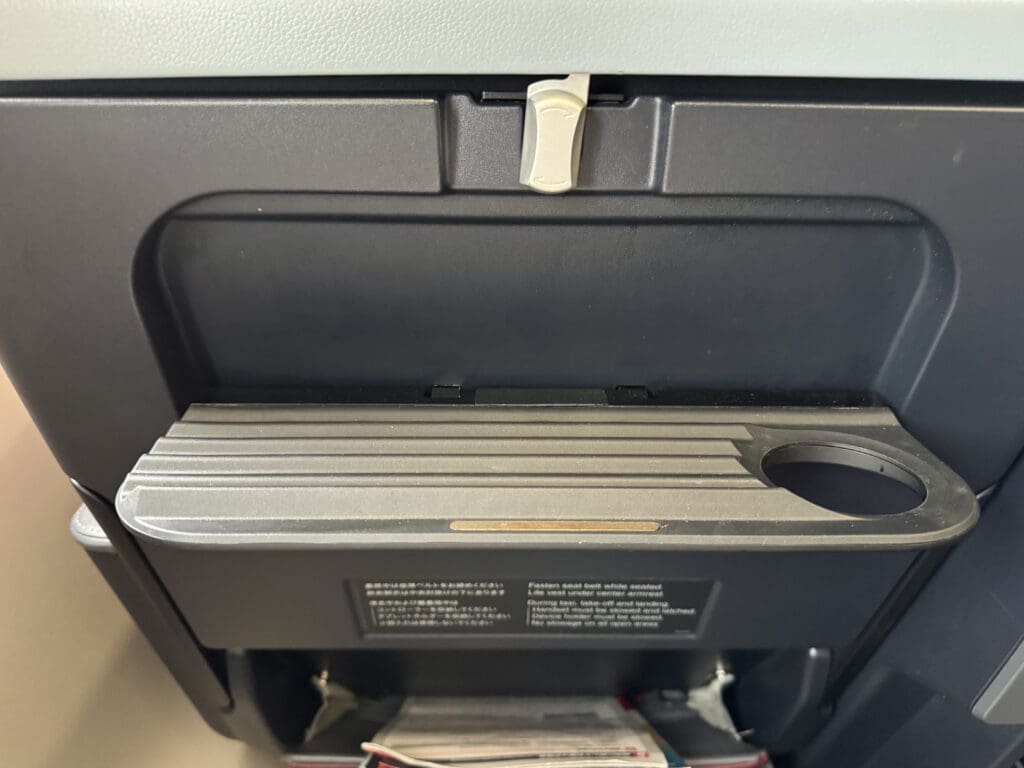
Japan Airlines A350 Premium Economy Tablet Holder
Speaking of the tray table, this was one of the largest and sturdiest tray tables I’ve seen in a premium economy cabin.
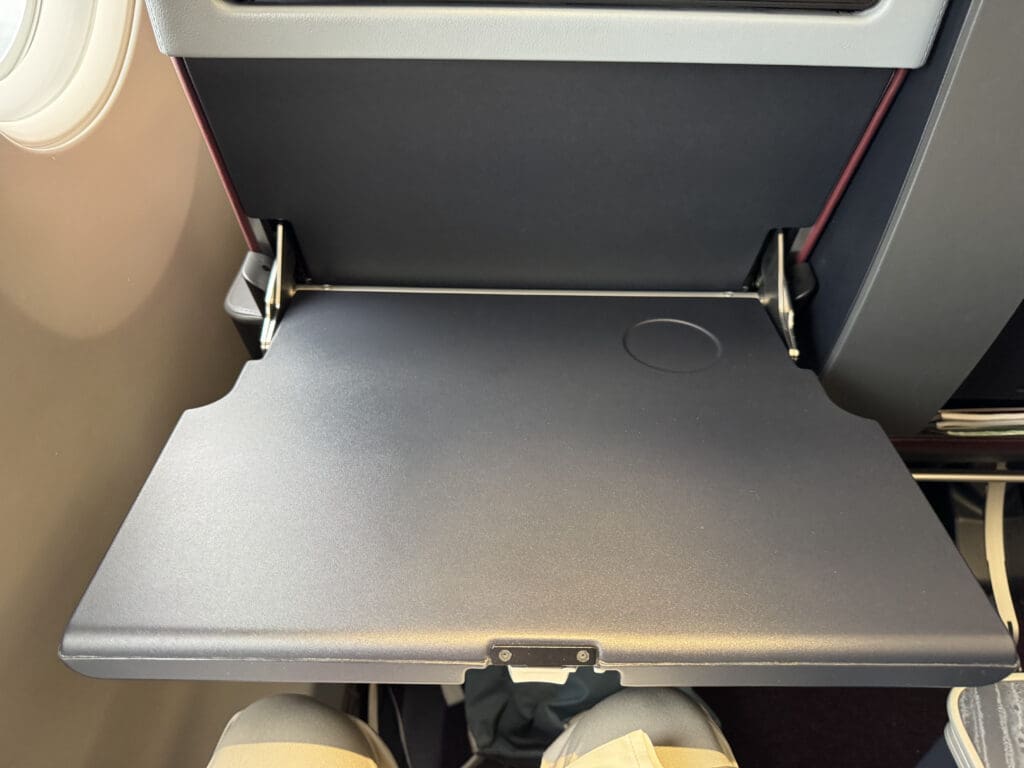
Japan Airlines A350 Premium Economy Table
Then to my right was a surface where I could store drinks, etc.. While this area looked a little bit like an apt location for a wireless charging port, there was no such luck, unfortunately.
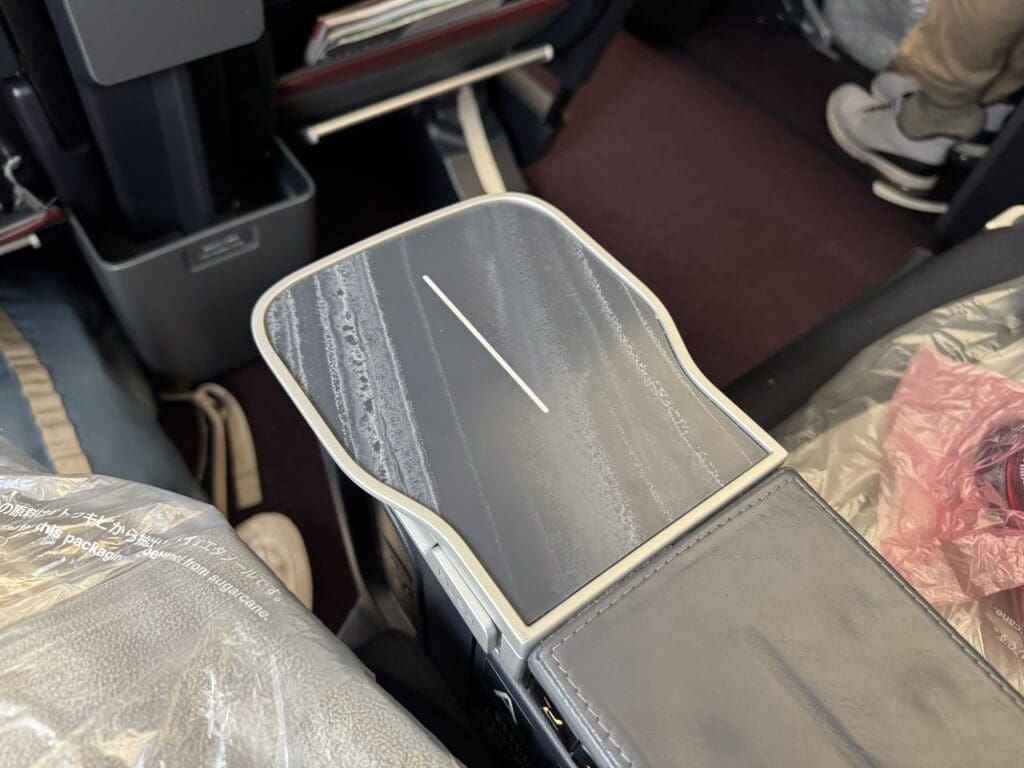
Japan Airlines A350 Premium Economy Armrest
There was even a further cocktail table that folded out of this armrest, though I bet this is very prone to spilling.
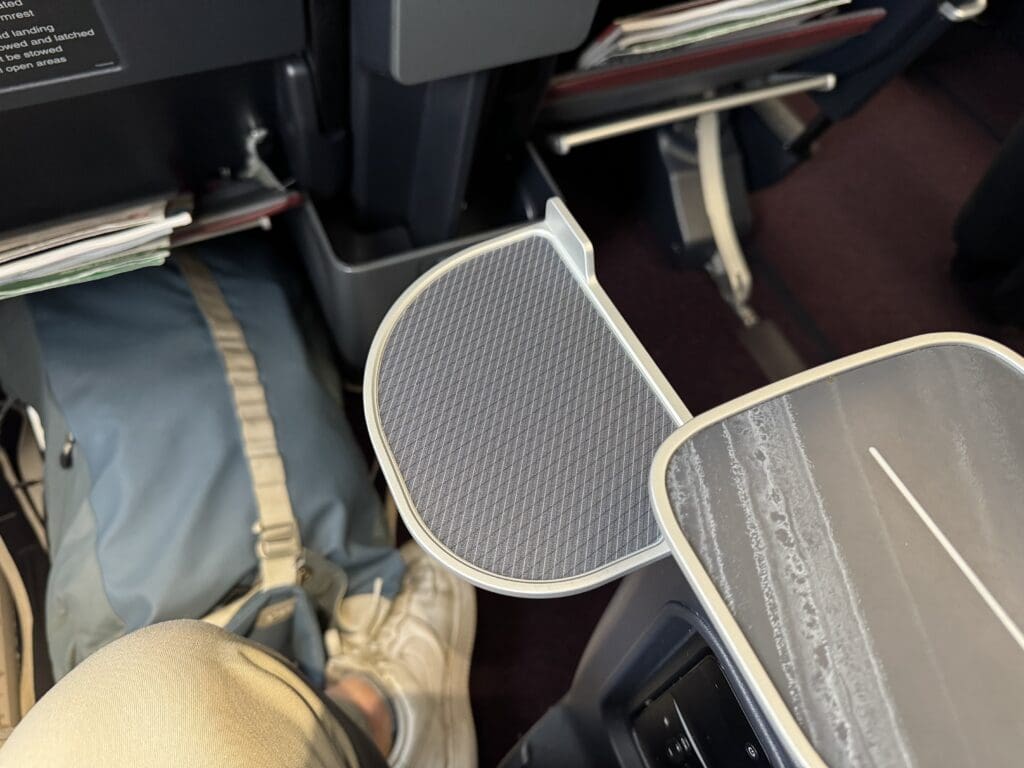
Japan Airlines A350 Premium Economy Cocktail Table
Then in front of me was a very large, high-definition TV screen. The touchscreen function was extremely responsive, and there was also a little bar to the bottom right corner which tracked the remaining flight time.
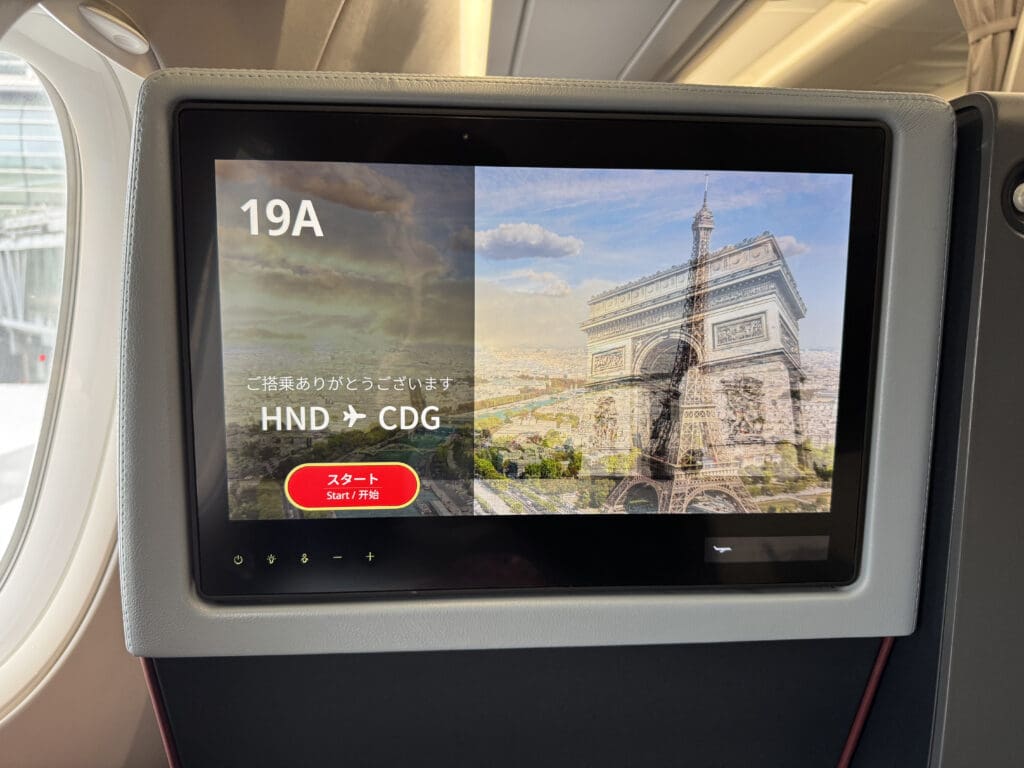
Japan Airlines A350 Premium Economy TV Screen
Finally, there was a reading light that flipped out of the centre console.
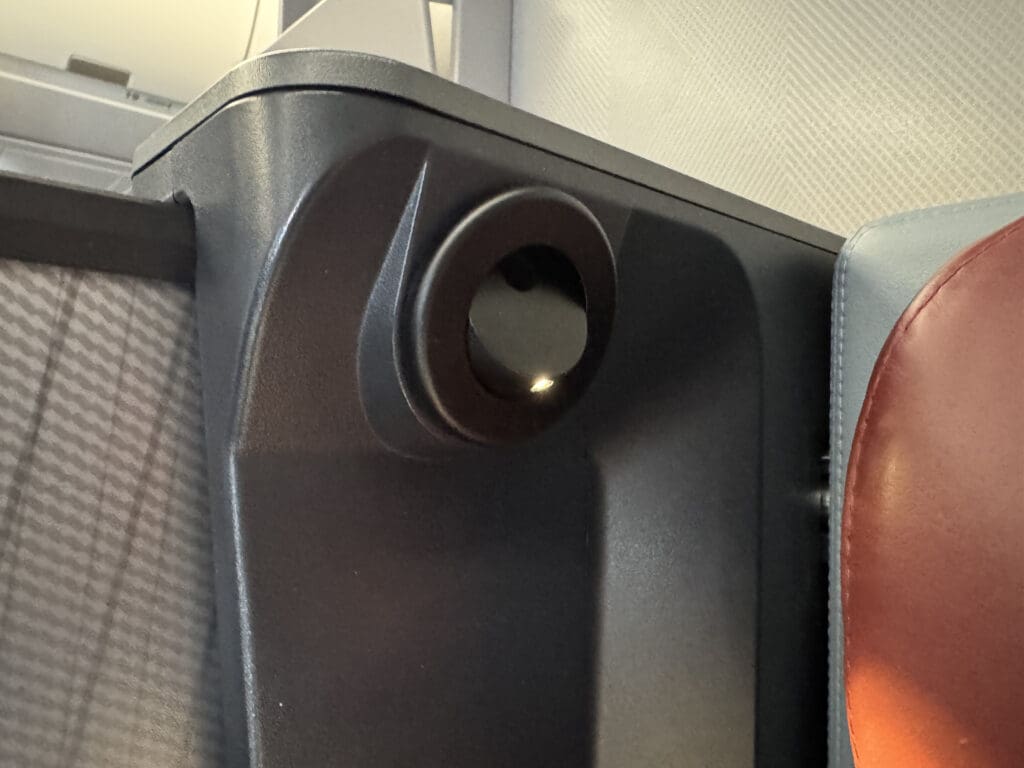
Japan Airlines A350 Premium Economy Reading Light
The seat was extremely well-equipped, and I appreciated that a lot of thought had gone into the design. I certainly found it to be one of the better premium economy seats that I’ve sat in.
However, I’m not sure if this is head and shoulders above the competition, and frankly I feel like the seat is a bit over-engineered – there are many premium economy products (Cathay Pacific comes to mind) that I find to be similarly comfortable and ergonomic, while having much fewer bells and whistles. In fact, I’m quite glad I didn’t have a seatmate, since I would’ve found the 180° legrest quite annoying to climb across if I needed to use the bathroom.
So I wouldn’t consider this seat to be a competitive advantage, despite the motorised seat controls and 42″ seat pitch. I still think that this is a good seat in line with the best of the competition, though.
Japan Airlines’ A350 Economy Class
I took the chance to peer into Japan Airlines’ economy class cabin behind. This is a very premium-heavy A350 – economy class is a single cabin, featuring 155 seats in a 3-3-3 configuration.
Japan Airlines’ A350 economy features Recaro CL3810 seats, with 33″ pitch. The seats feature 13″ 4K TV screens, which are known to be some of the largest in the industry. They did indeed look very large.
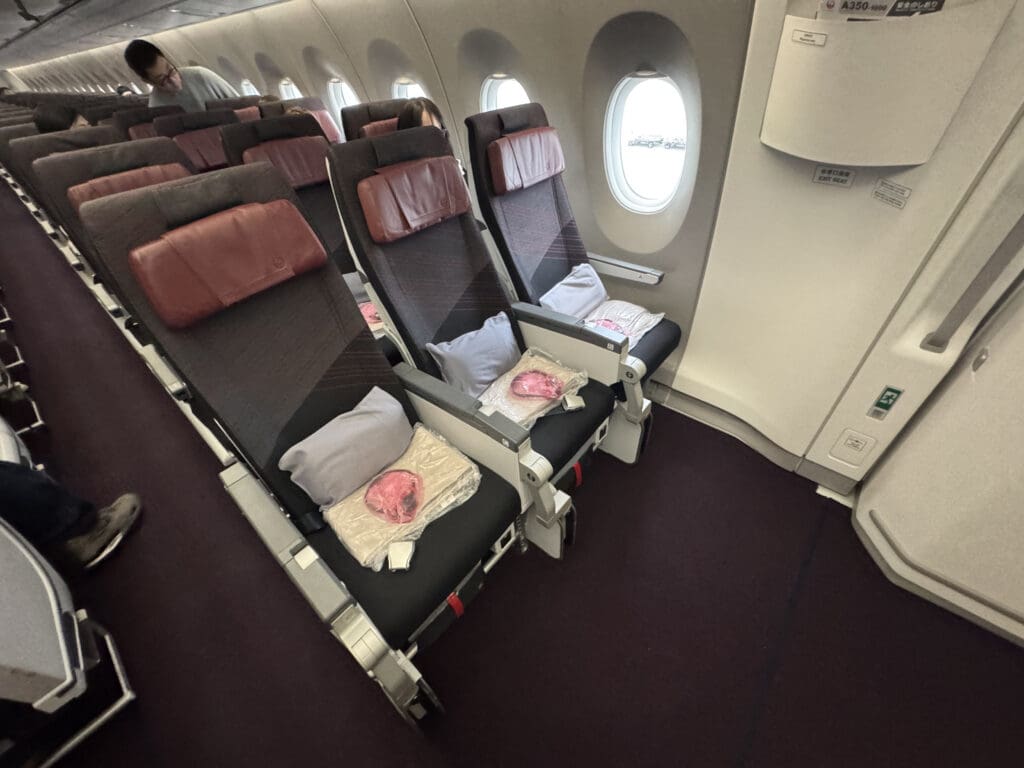
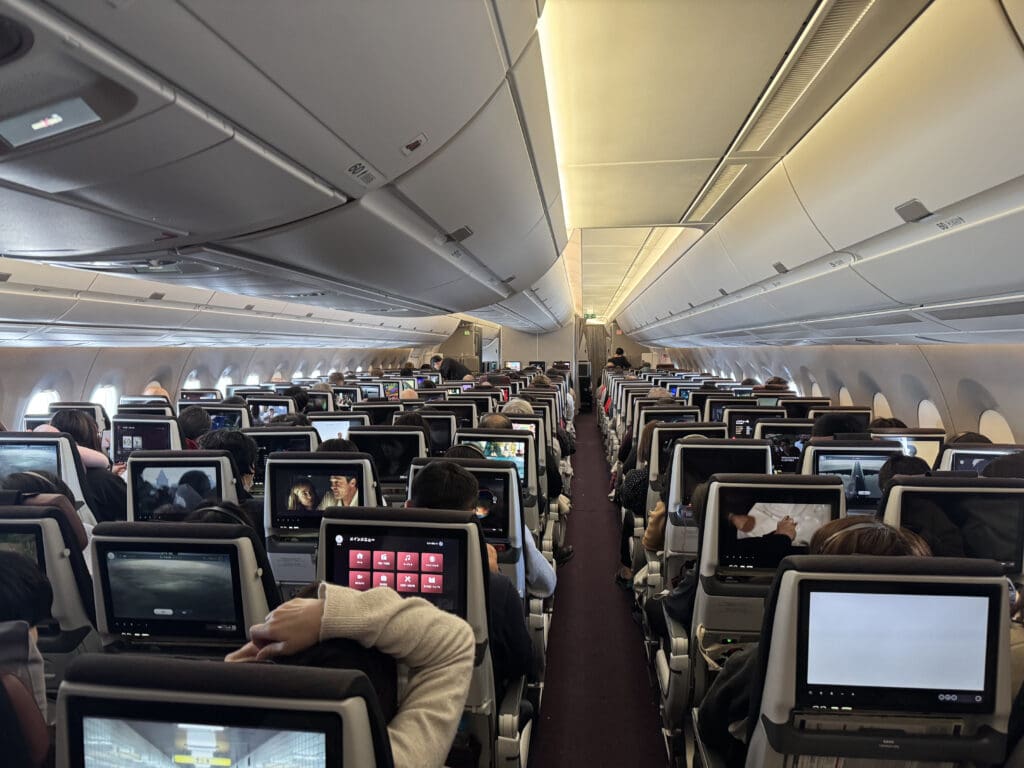
Japan Airlines A350 Economy Class
In fact, J flew this cabin a few days before I did, and mentioned that it was one of the best economy class experiences she’d experienced so far. So this is a cabin that generally receives great feedback, and I’d love to try it out at some point.
Japan Airlines’ A350 Premium Economy Amenities
Back at my seat, I found a pillow and blanket. While I’ve had cushier blankets in premium economy (and personally prefer a more duvet-like style, as you’ll find on Cathay Pacific or British Airways), this one felt substantial and was comfortable.
What I didn’t get was the pillow. Okay, so the pillow was memory foam – I appreciate the technology. However, the pillow must’ve been thinner than a sheet of paper. I had to roll up the pillow in order to get any use out of it (and also nabbed the one from the seat next to me, which was empty), and while it ended up being more functional than I was expecting, I would’ve far preferred another arrangement.
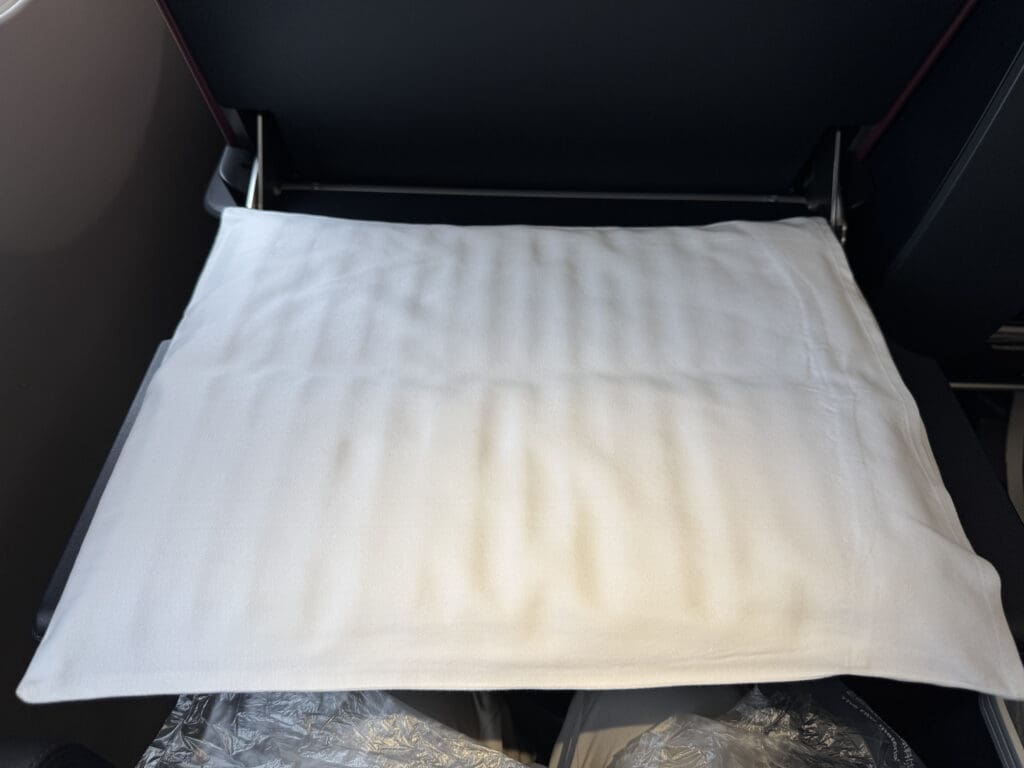
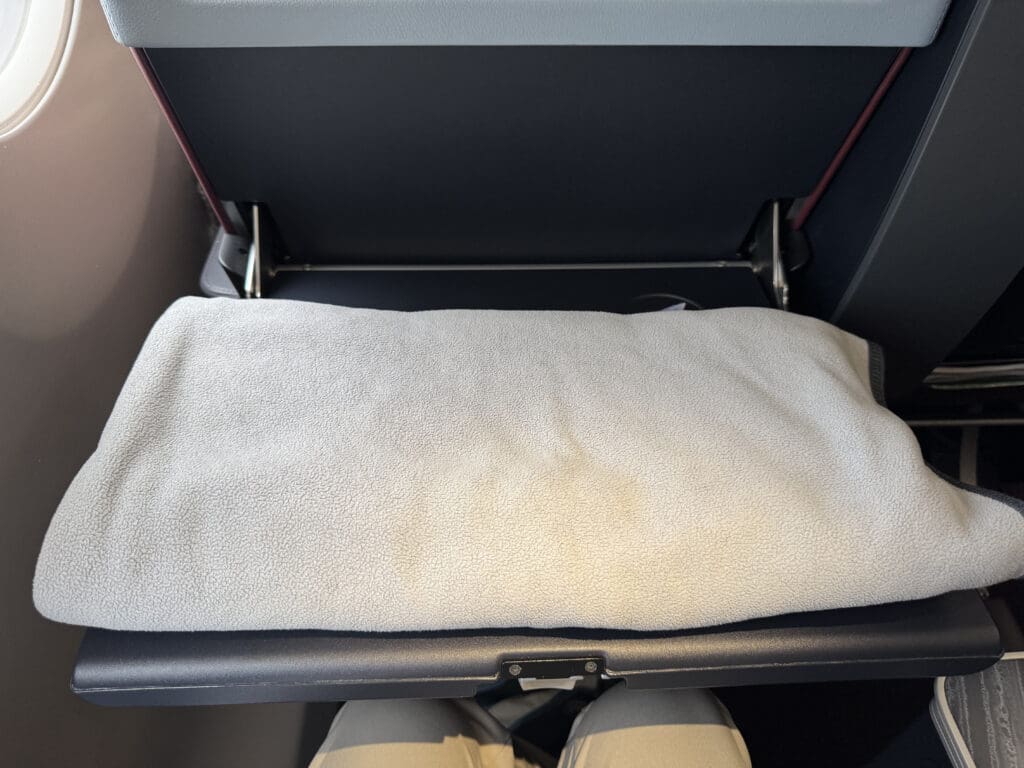
Japan Airlines A350 Premium Economy Pillow and Blanket
On the plus side, the headphones were active noise cancelling, and I found them to be very good. Despite the fact that Japan Airlines has Bluetooth audio within their entertainment system, I still found myself using these headphones instead.
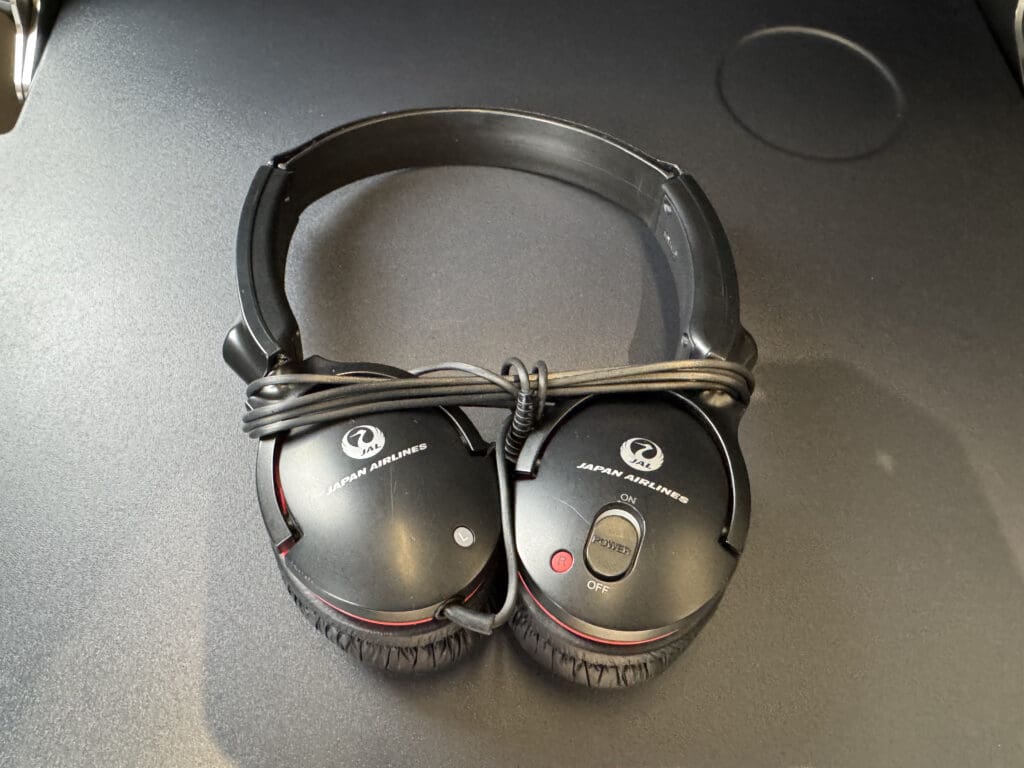
Japan Airlines A350 Premium Economy Headphones
Also waiting at my seat was an amenity kit. I wish the amenity kit was presented in a better pouch, as I don’t find the mini-drawstring bag to be as practical as the zipper pouches you get on some other airlines. The amenity kit featured the basic eye mask, earplugs, and dental kit, but also featured a moisture mask (this was literally just a face mask that you wore during the flight, which was designed in order to moisturise the air you breathed).
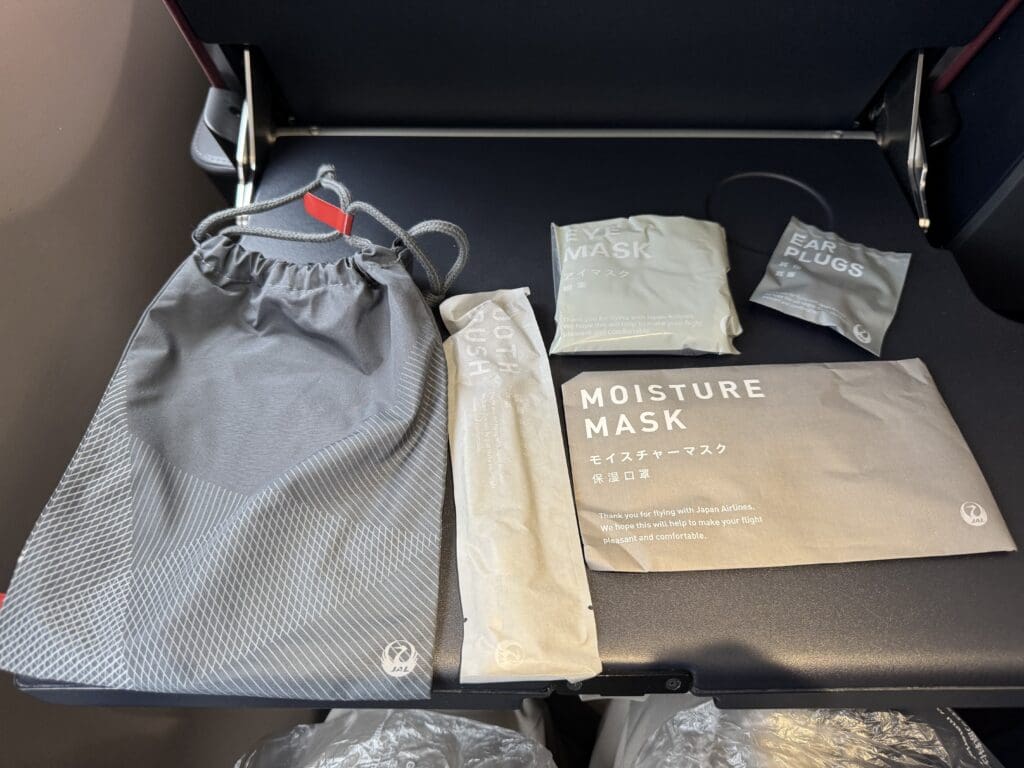
Japan Airlines A350 Premium Economy Amenity Kit
It was good to see a pair of slippers, which you don’t normally get on all airlines in premium economy class.
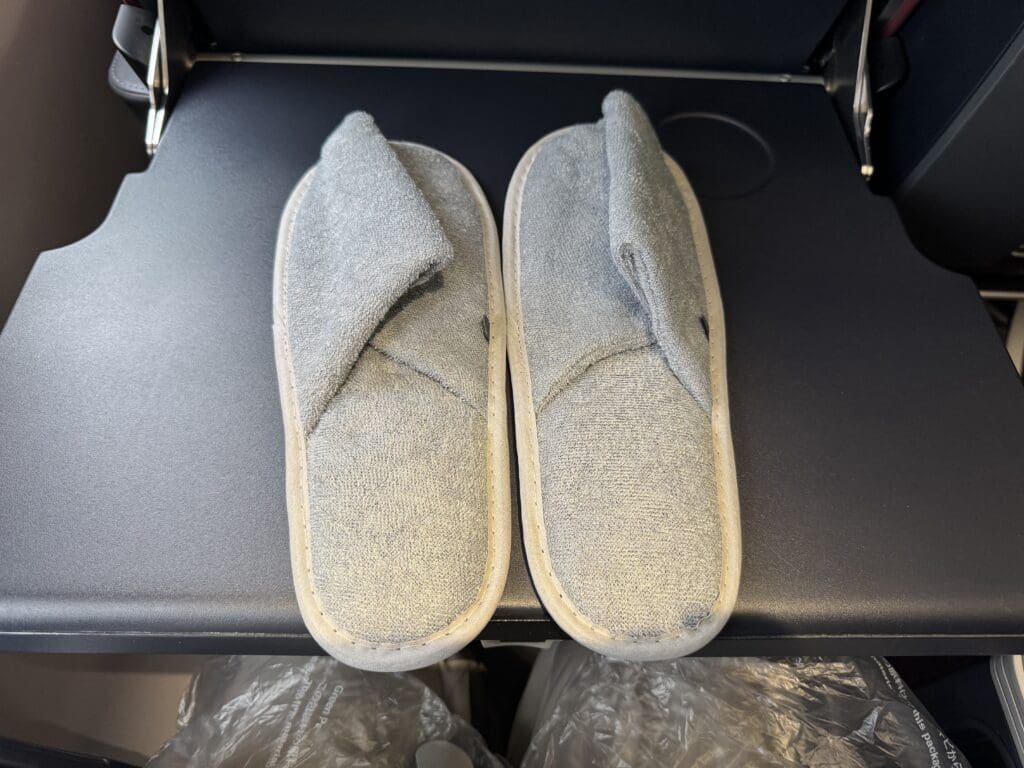
Japan Airlines A350 Premium Economy Slippers
Lastly, and somewhat amusingly, there was a shoehorn that was presented with the slippers available.
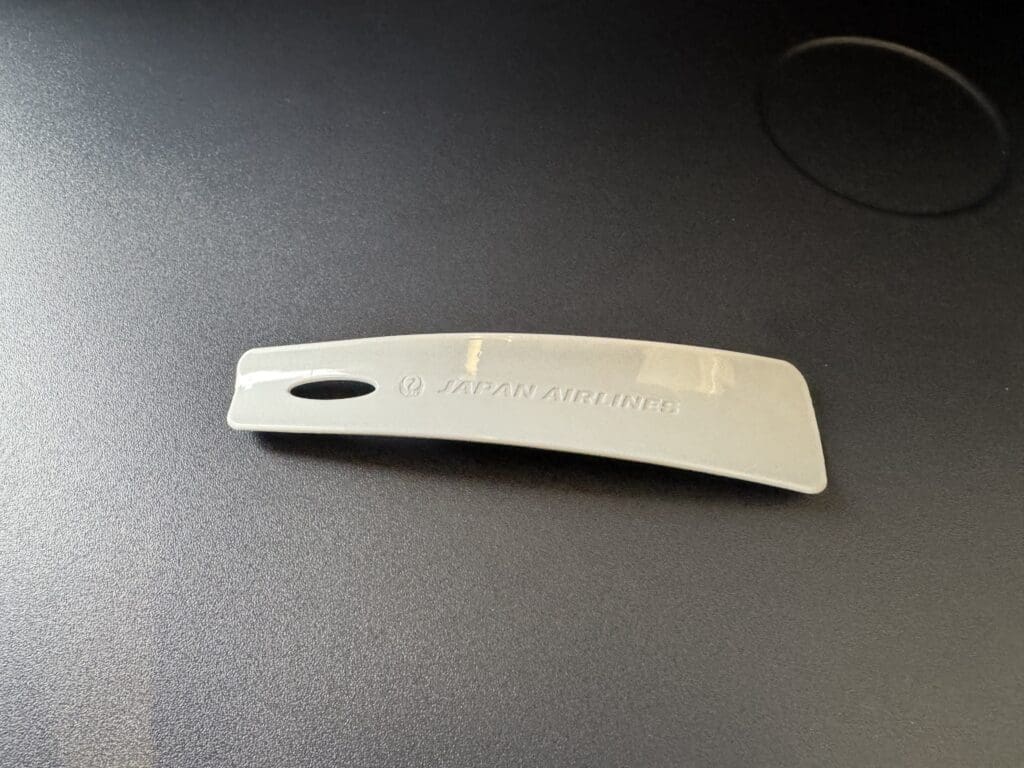
Japan Airlines A350 Premium Economy Shoehorn
My personal preference is to have a more plush arrangement in premium economy, more similar to what you’d be able to find in business class. However, I appreciated that these amenities were thoughtful in a different way, which I know other people may prefer. Personally, I particularly enjoyed the noise cancelling headphones and slippers, though wasn’t a fan of the pillow.
Japan Airlines’ A350 Premium Economy Entertainment System
Before takeoff, I had the opportunity to check out Japan Airlines’ entertainment system, which was activated while still on the ground. There was the option to log in and control the entertainment system with the JAL app, though I didn’t make use of this and don’t know how well it worked.
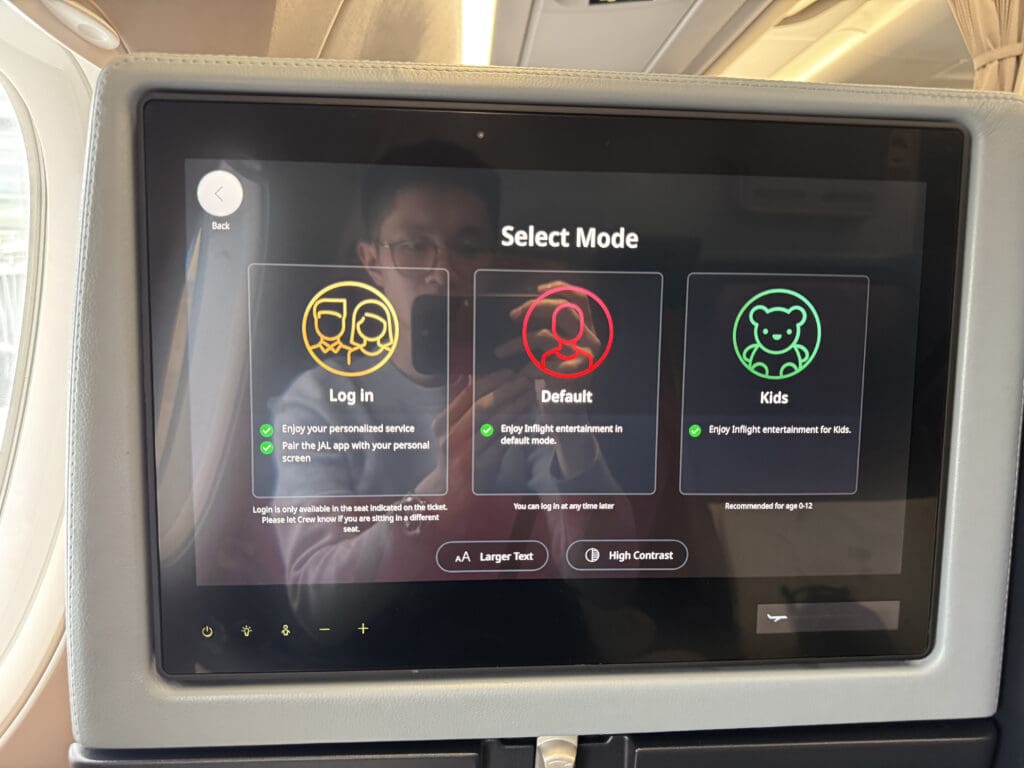
Japan Airlines A350 Premium Economy Entertainment System
While this wasn’t the most extensive entertainment system I’ve ever seen, I was pleasantly surprised to see a good range of movies and TV shows, including many recent favourites. There was also Bluetooth audio functionality, which worked well (though as aforementioned, the active noise cancelling headphones worked very well too). The system itself was also responsive and super easy to use.
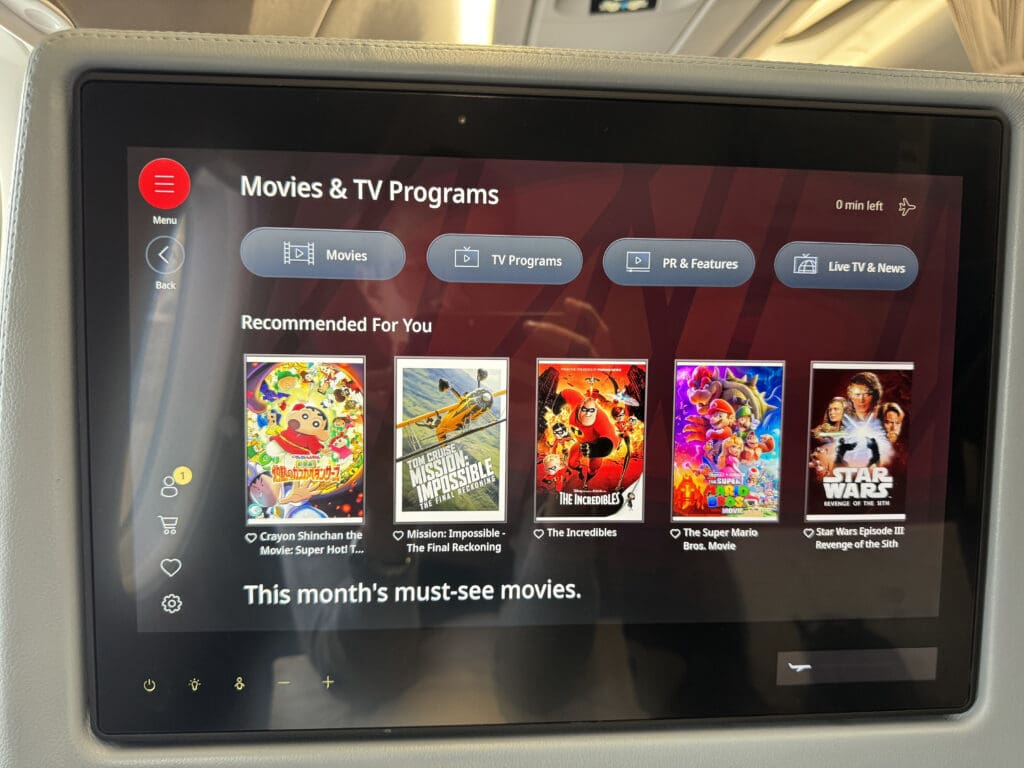
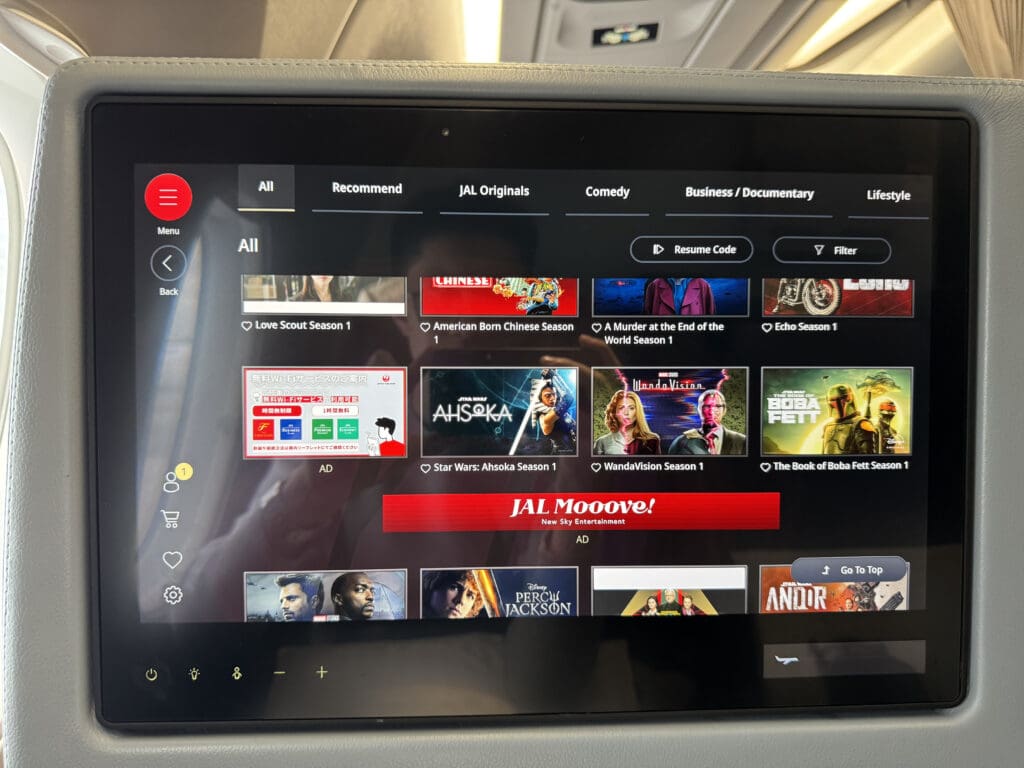
Japan Airlines A350 Premium Economy Entertainment System
In addition, we’d periodically get notifications through the entertainment screen as well.
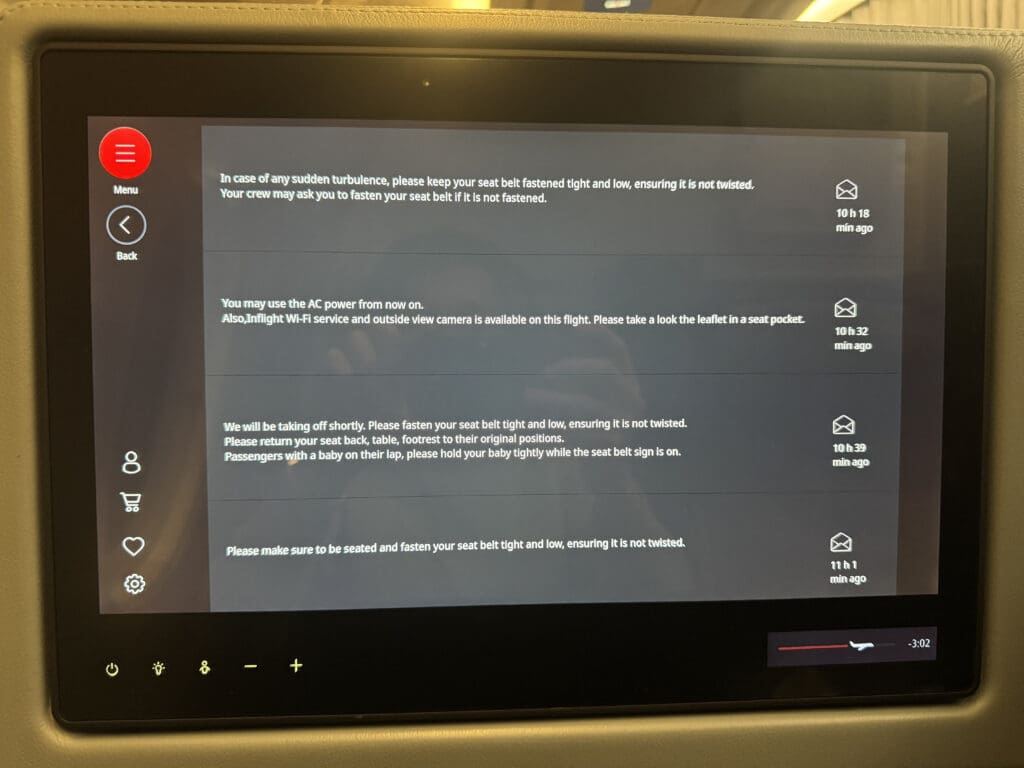
Japan Airlines A350 Premium Economy Entertainment System Notifications
As you’d expect, my favourite part of the entertainment system on this A350 was the tail camera. The A350 is such a beautiful aircraft to fly, and I love being able to watch the world go by from this perspective.
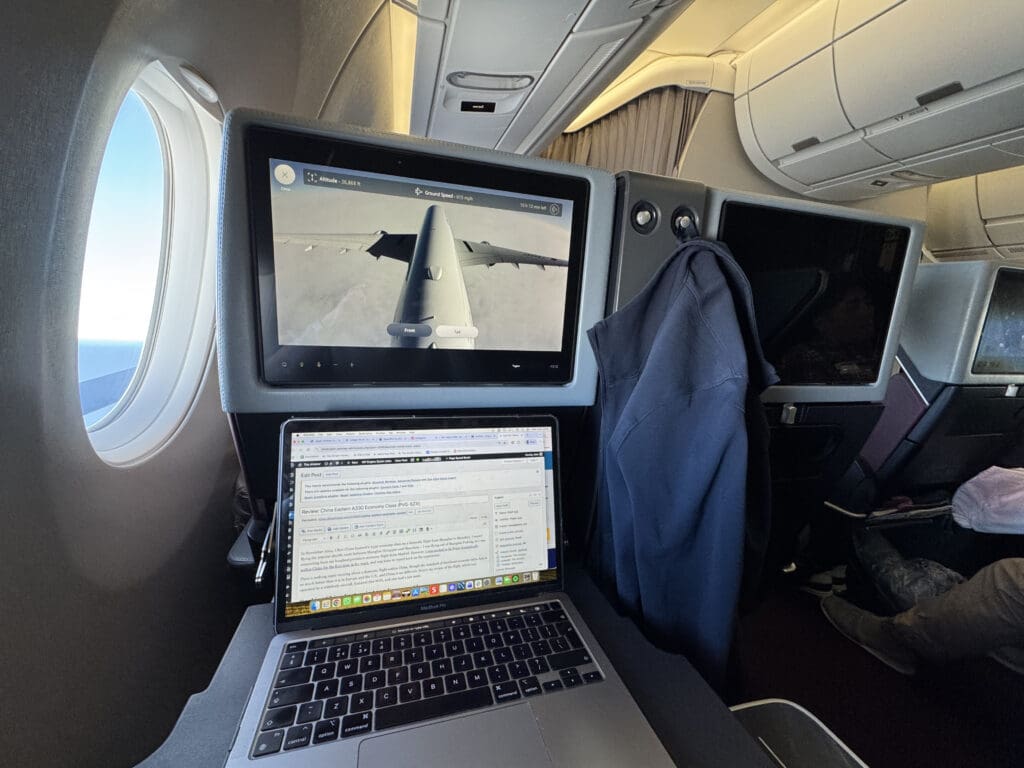
Japan Airlines A350 Premium Economy Tail Camera
Overall, while Japan Airlines’ entertainment system won’t win any awards, it was extremely intuitive to use with good tech, and I also thought the selection itself was better than I was expecting.
Taking off from Haneda Airport
On this overcast morning at Haneda Airport, we were expecting a flight time of around 14h. Boarding was indeed complete in within 20 minutes, and I was quite happy to see the seat next to me left free.
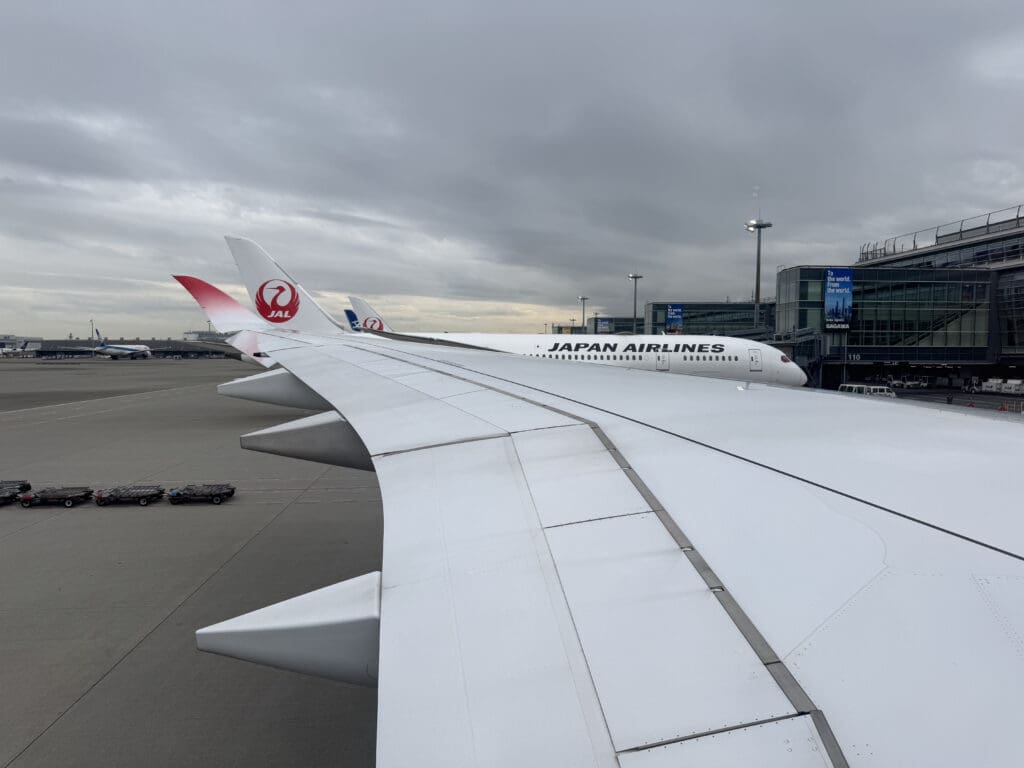
View from the Wing at Haneda Airport
The safety video played just after 8:25 AM.
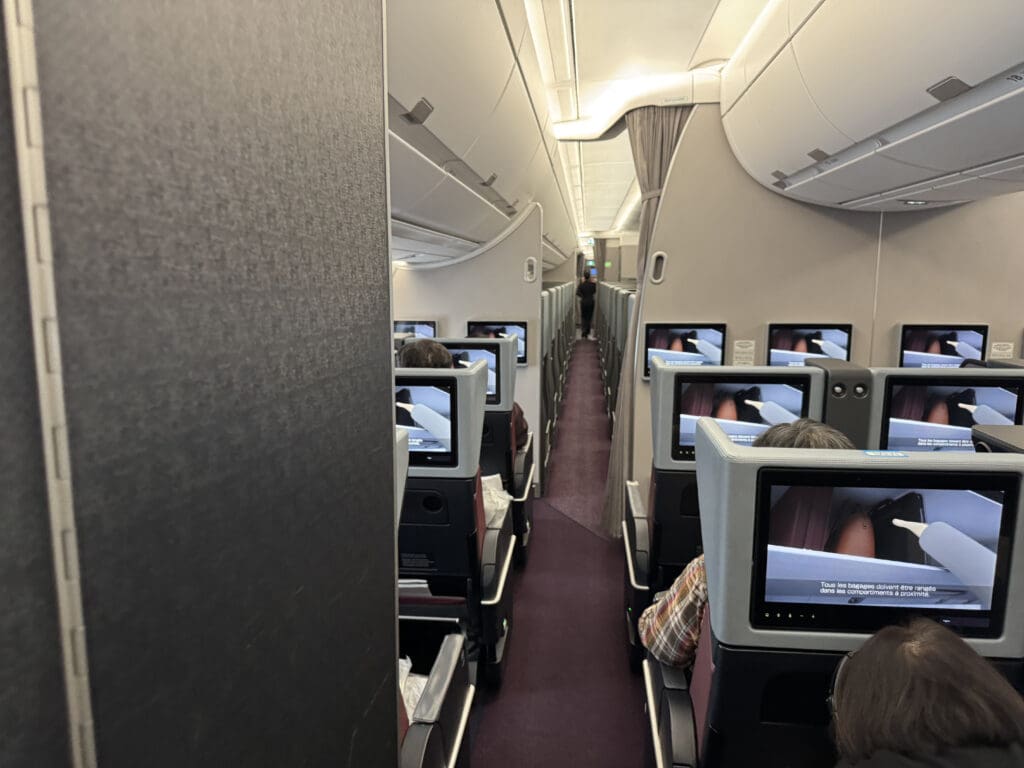
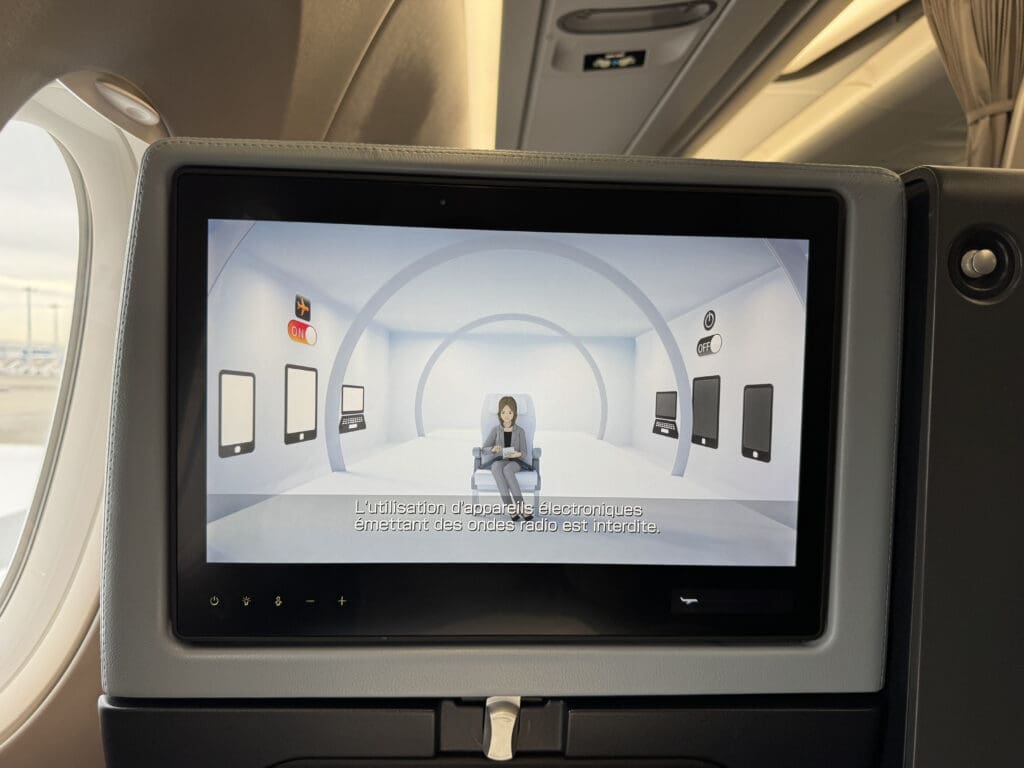
Japan Airlines A350 Premium Economy Safety Video
At this point, we pushed back from gate 111, ready to embark towards Paris Charles de Gaulle Airport. So far, we were doing impeccably well in terms of punctuality, given our scheduled departure time of 8:25 AM.
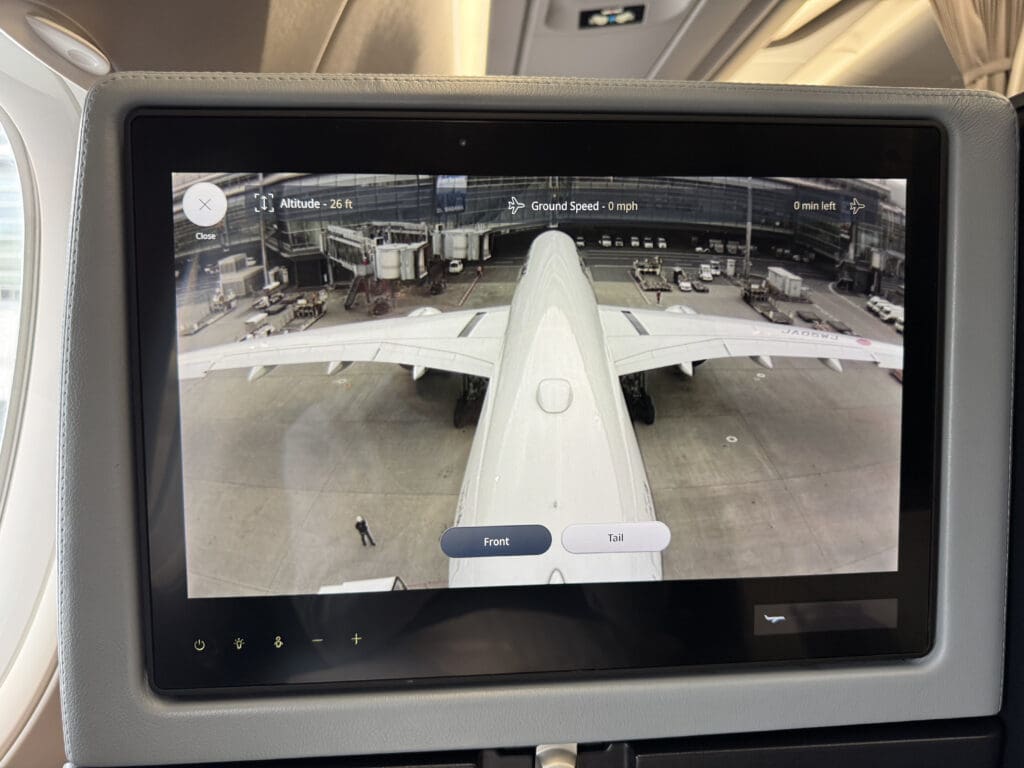
Pushing back at Haneda Airport
There wasn’t any pre-departure service in premium economy, though the cabin crew were friendly as they came to do their pre-departure safety checks.
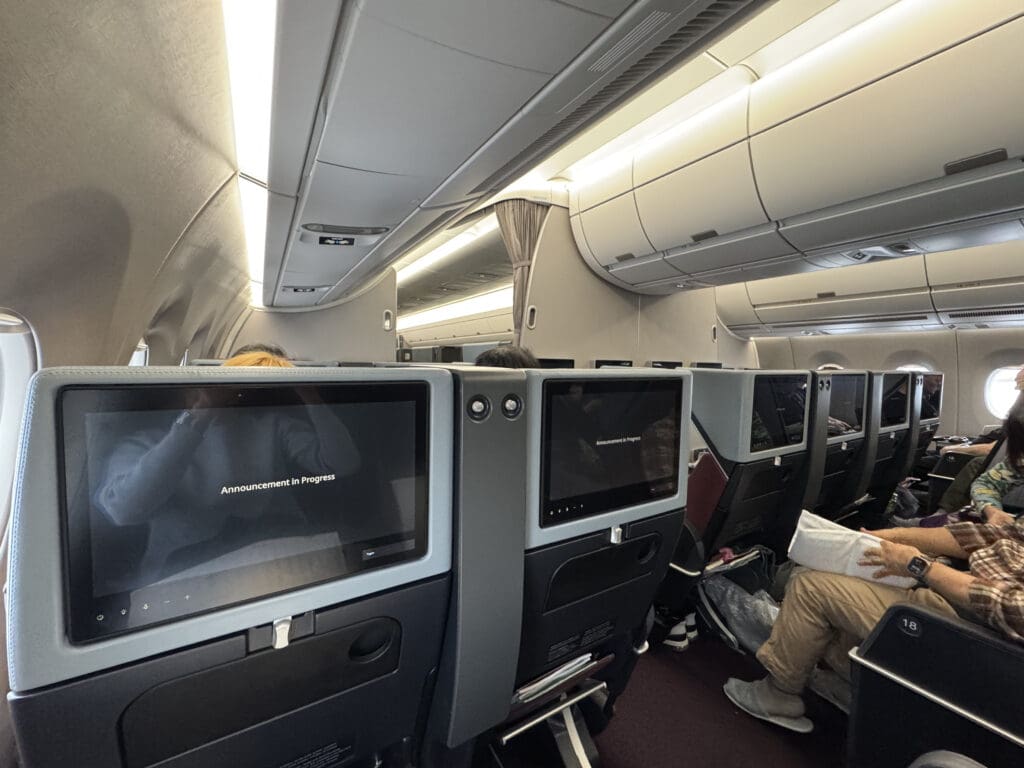
Japan Airlines A350 Premium Economy Cabin during Takeoff
Haneda Airport serves a plethora of flights for domestic business travellers, many of which depart in the morning. In addition, the airport also serves many European and U.S. destinations using morning flights. As a result, there was lots of interesting traffic to see as we taxied towards runway 34R, where we’d be taking off this morning.
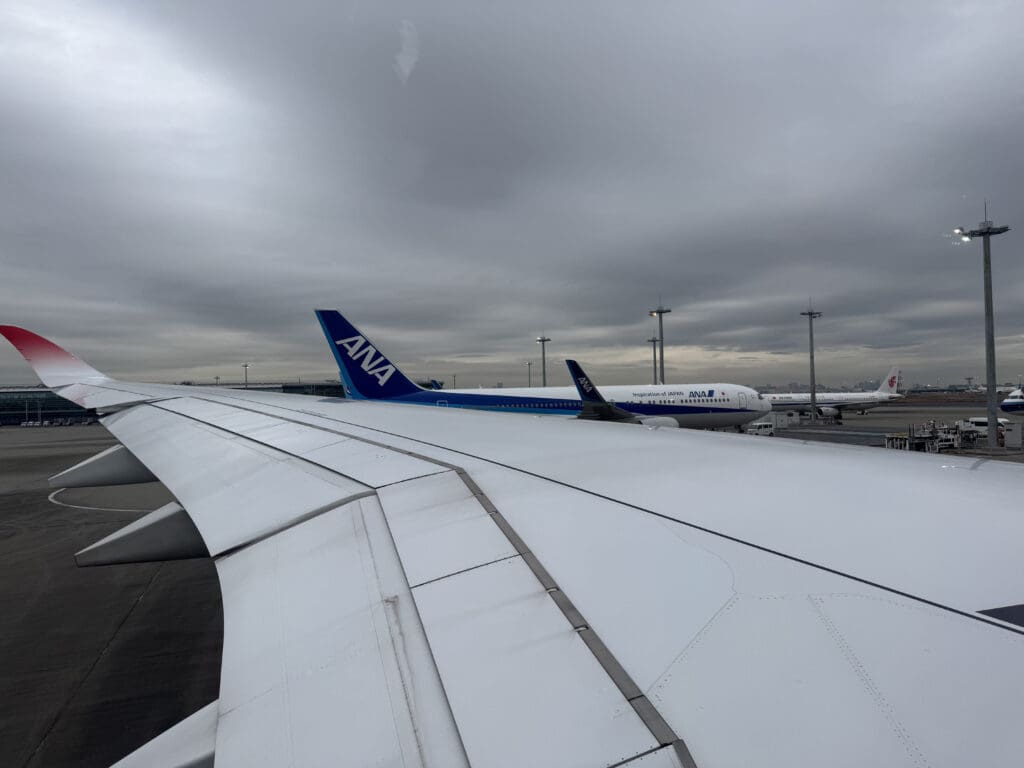
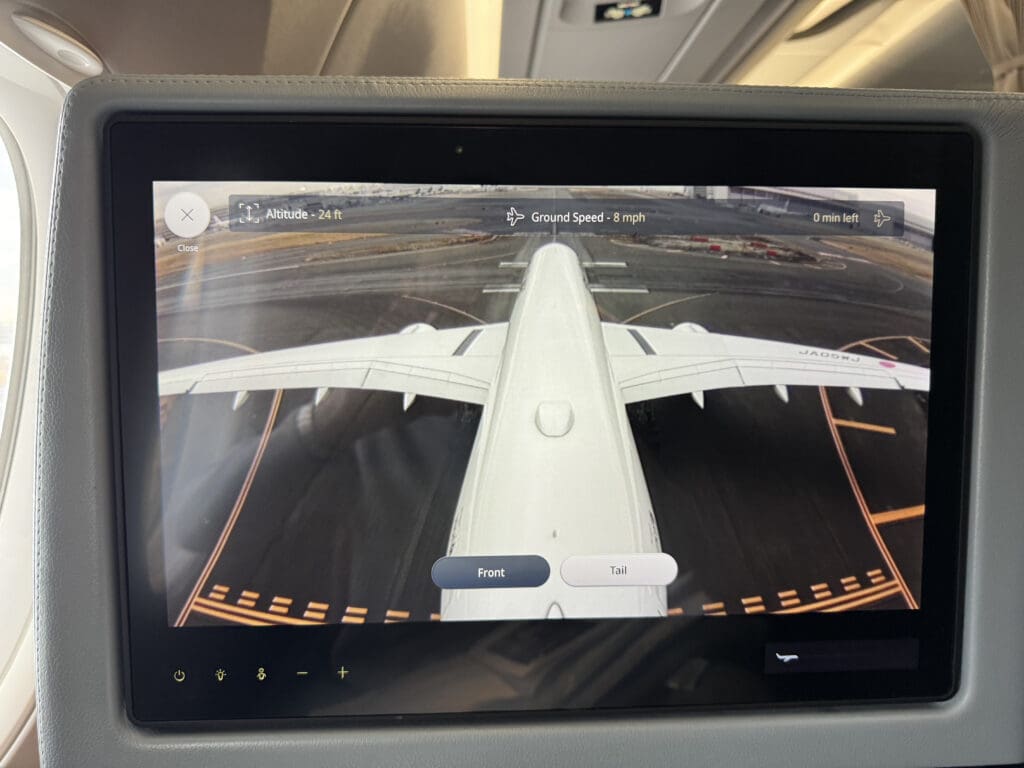
Taxiing at Haneda Airport
Our takeoff roll happened at around 8:45 AM, and there were views of Tokyo in the distance as we climbed out of Haneda Airport.
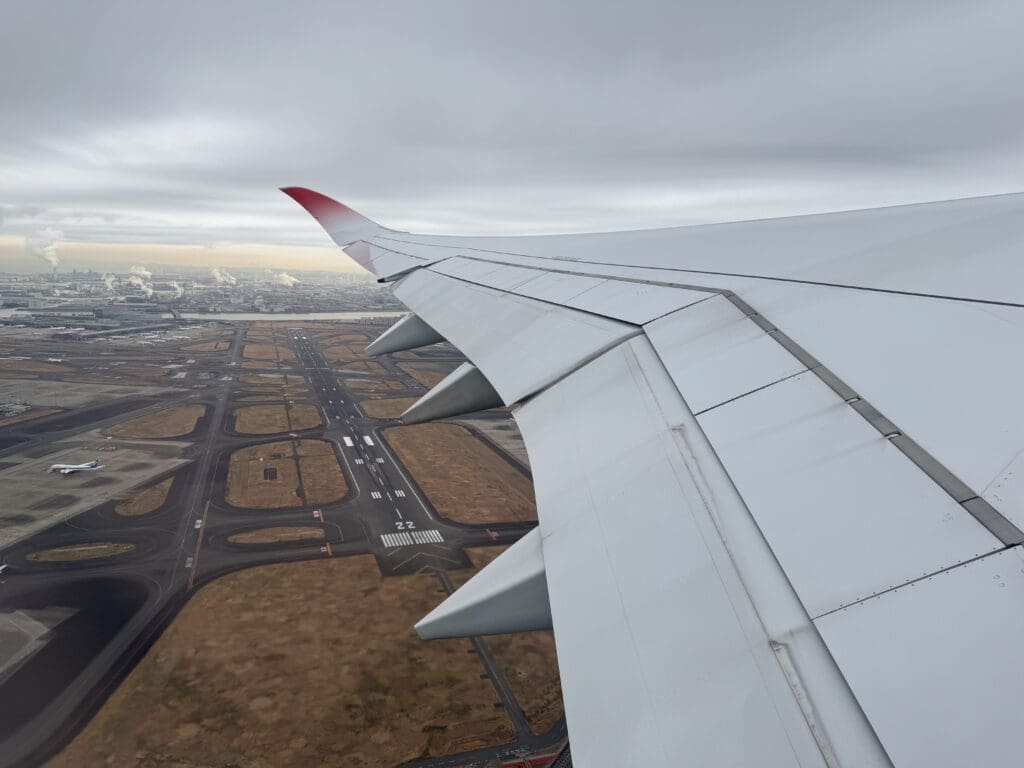
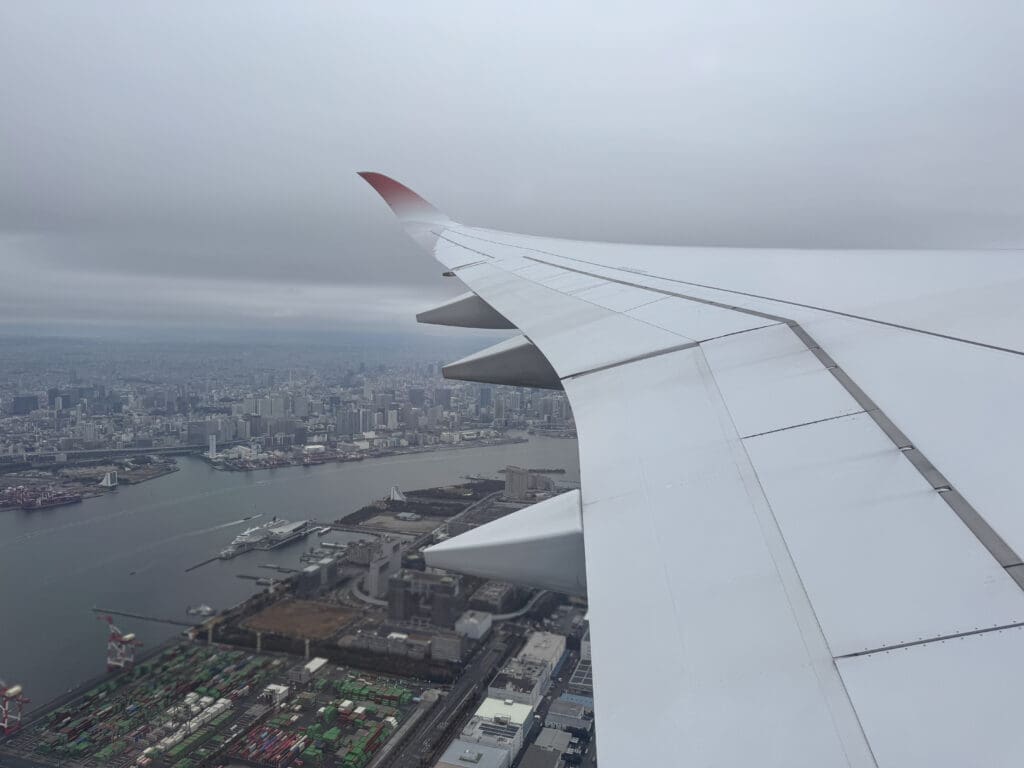
Taking off from Haneda Airport
Japan Airlines’ A350 Premium Economy Lavatories
Japan Airlines’ A350s feature two premium economy lavatories right behind the premium economy cabin. The one on the left is theoretically dedicated for premium economy passengers, as the curtain separating the cabin from economy is located behind the bathroom; whereas the one on the right is assigned for economy passengers. In reality this didn’t make much of a difference, as the crew didn’t really enforce usage of the lavatories between the cabins.
The lavatories did have a very swanky matte finish, though otherwise were quite standard A350 lavatories. Hand soap was branded and from Miller Harris.
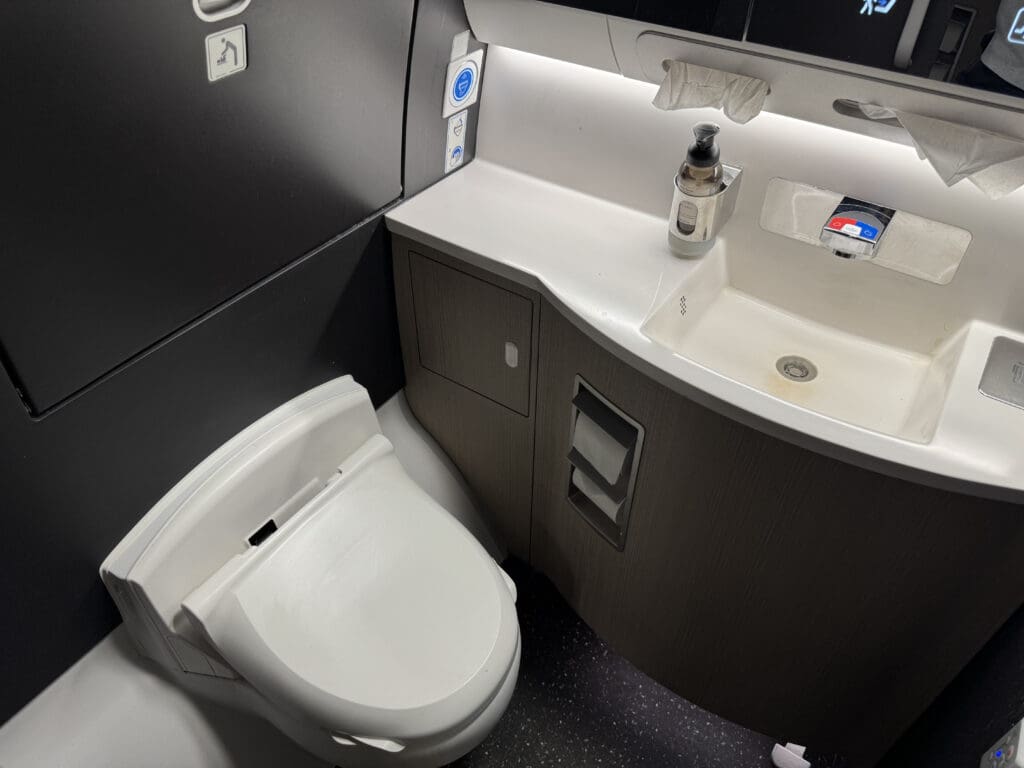
Japan Airlines A350 Economy Class Lavatory
Japan Airlines’ A350 Premium Economy WiFi
Japan Airlines has WiFi with very reasonable pricing. WiFi is priced as follows, and is charged by time with no data caps:
- All passengers get one hour of WiFi for free
- Three hours of WiFi costs US$14.40 (£10.74/HK$113)
- A full flight WiFi pass on my flight cost US$18.80 (£14.03/HK$147)
JALCARD holders get a slight discount on both paid packages – it’s US$12.95 (£9.66/HK$101) for three hours, and US$16.80 (£12.53/HK$131) for the entire flight.
The WiFi was easy to connect to, and this was some of the fastest onboard WiFi I’ve experienced when we were flying out of Japan. However, as expected, it did drop out when we were flying very far north.
Japan Airlines’ A350 Premium Economy Meal Service
During takeoff, we were provided menus. These are sleek menus designed for premium economy.
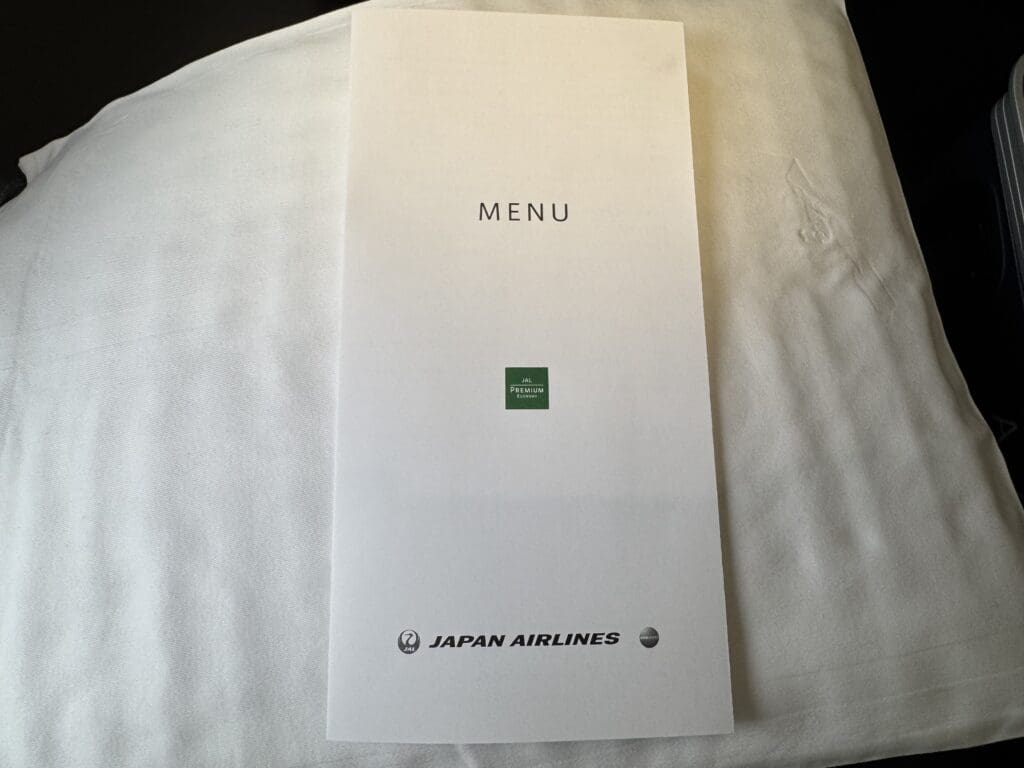
Japan Airlines A350 Premium Economy Menu
Alternatively, you’ll also be able to find the menu loaded onto the entertainment system, which is pretty fun.
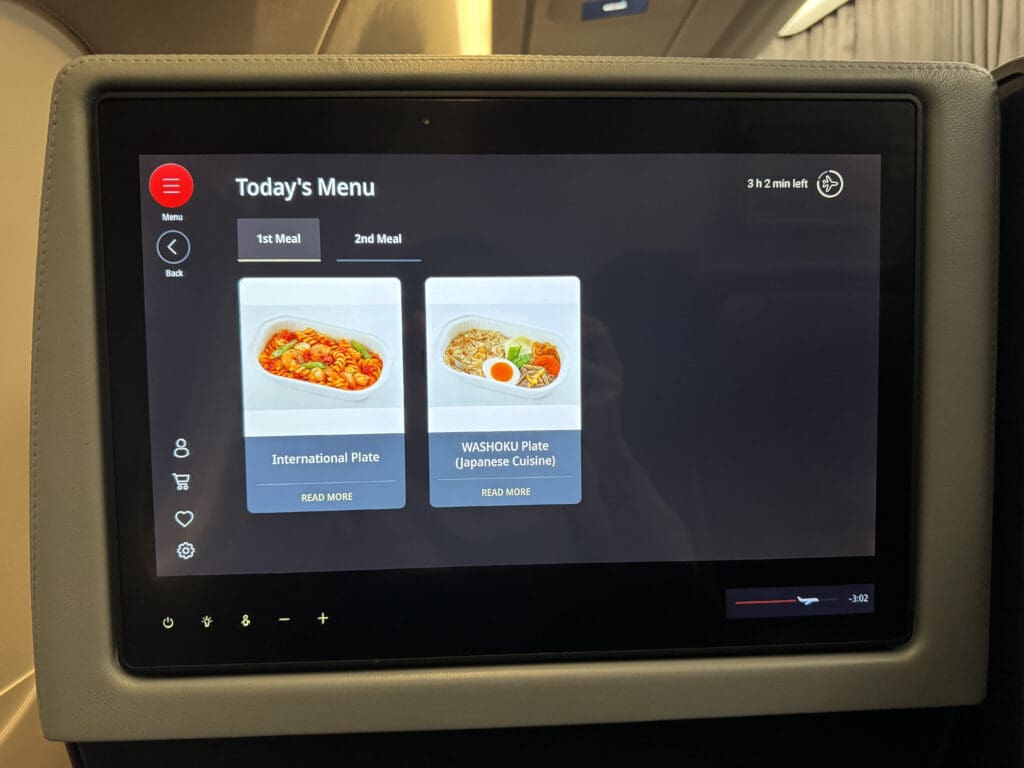
Japan Airlines A350 Premium Economy Menu
The first meal service commenced around 30 minutes after takeoff, beginning with a business class-branded towelette.
Japan Airlines A350 Premium Economy Towelette
A drinks service was conducted 45 minutes after takeoff. A wide range of drinks were available. The drinks menu read as follows:
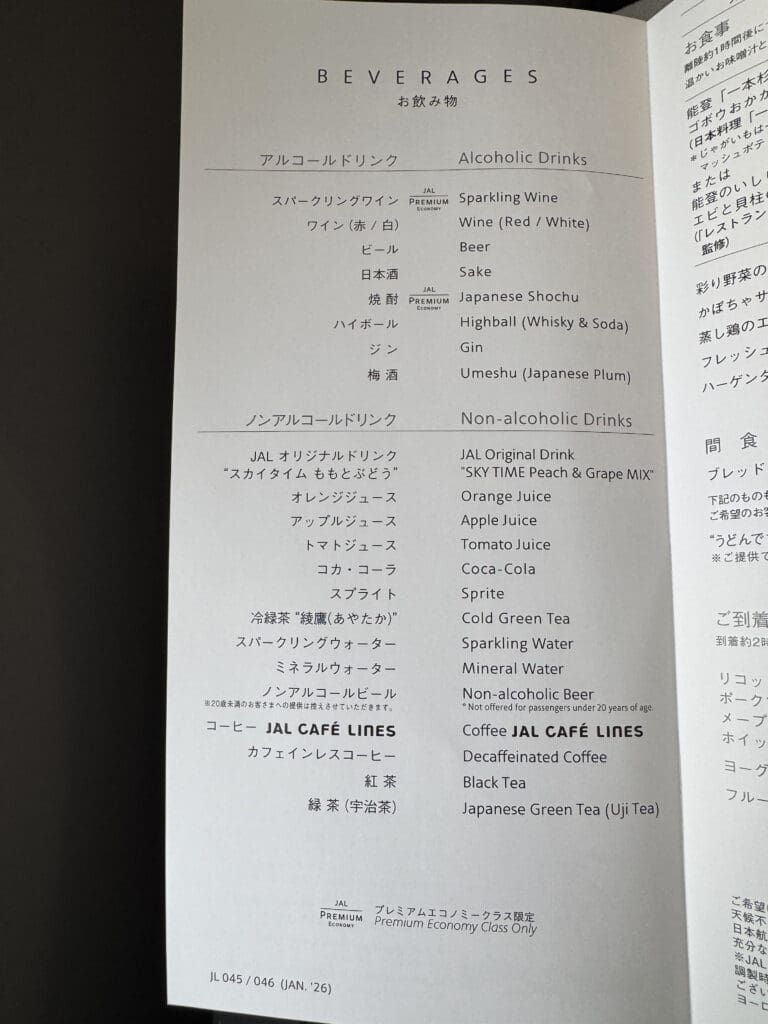
Japan Airlines A350 Premium Economy Drinks Menu
I chose a Japanese green tea, which was served with some airline-branded rice crackers.
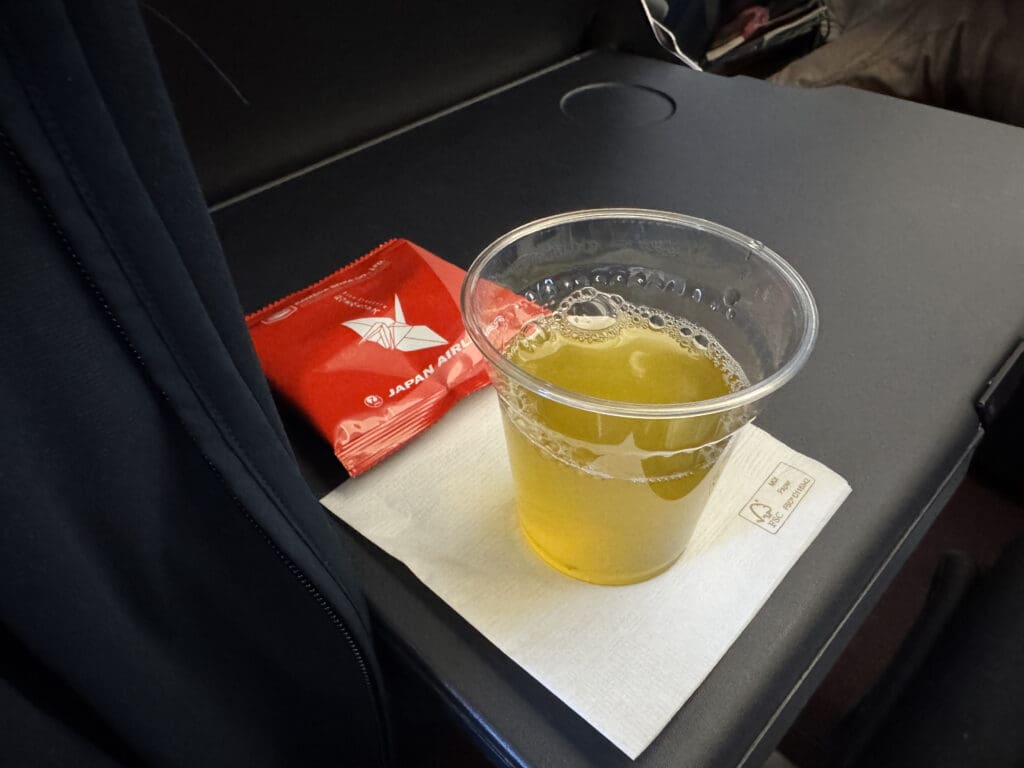
Japan Airlines A350 Premium Economy Pre-Meal Drinks Service
The meal service was served 50 minutes after this (which I’d consider to be on the slow end, though I don’t mind this too much for a daytime flight). The menu for the flight read as follows:
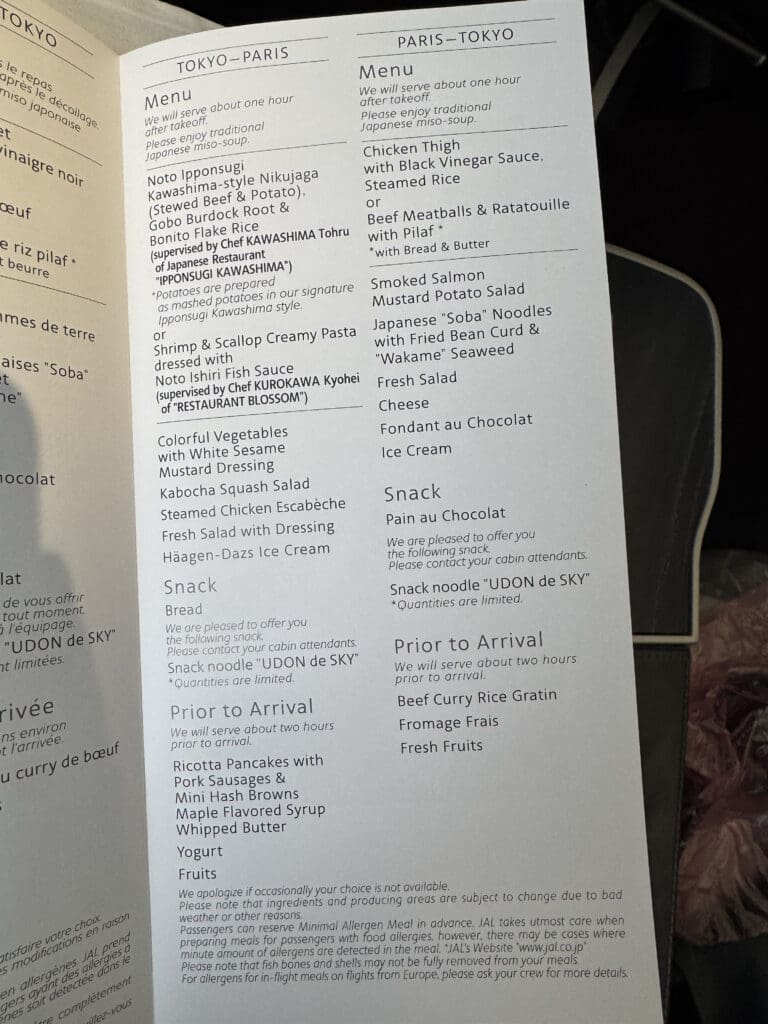
Japan Airlines A350 Premium Economy Menu
On the plus side, the menu looked so enticing – everything sounded so tasty. Both of the dishes were backed by named chefs, and there were lots of side dishes to accompany as well. However, this is the exact same meal service that you’ll receive in economy.
Don’t get me wrong. This is incredible catering for economy class, and I’m not trying to be snobbish and say that I need upgraded catering – this is also better-tasting food than you’ll receive on many other airlines in premium economy. However, there’s something to be said about the fact that I’m paying a premium over Japan Airlines’ own economy class product, and other airlines may provide more meal options as well compared to the two offered on Japan Airlines.
I ordered the washoku (Japanese) option, which was a Kawashima-style nikujaga (nikujaga is beef and potato stew – Toru Kawashima is the name of the chef that “supervises” this dish). If you’re curious, the dish was Noto peninsula cuisine – an area that juts out from Kanazawa, a city on the northern coast of Japan’s main island that takes ~3 hours to reach by bullet train from Tokyo.
The dish was fantastic. The stew had a hint of yuzu in it, the rice was flavourful with a burdock root and bonito flake stock, and the Kawashima-style mashed potatoes were buttery and smooth. There was even a perfectly soft-boiled egg on top. The side dishes of steamed chicken escabeche, kabocha squash salad, and vegetables with sesame dressing were good as well – I particularly enjoyed the chicken escabeche, which was refreshing. The only uninspiring element was the side salad, which could’ve been easily missed.
The meal was served with some miso soup, which was served in a cup.
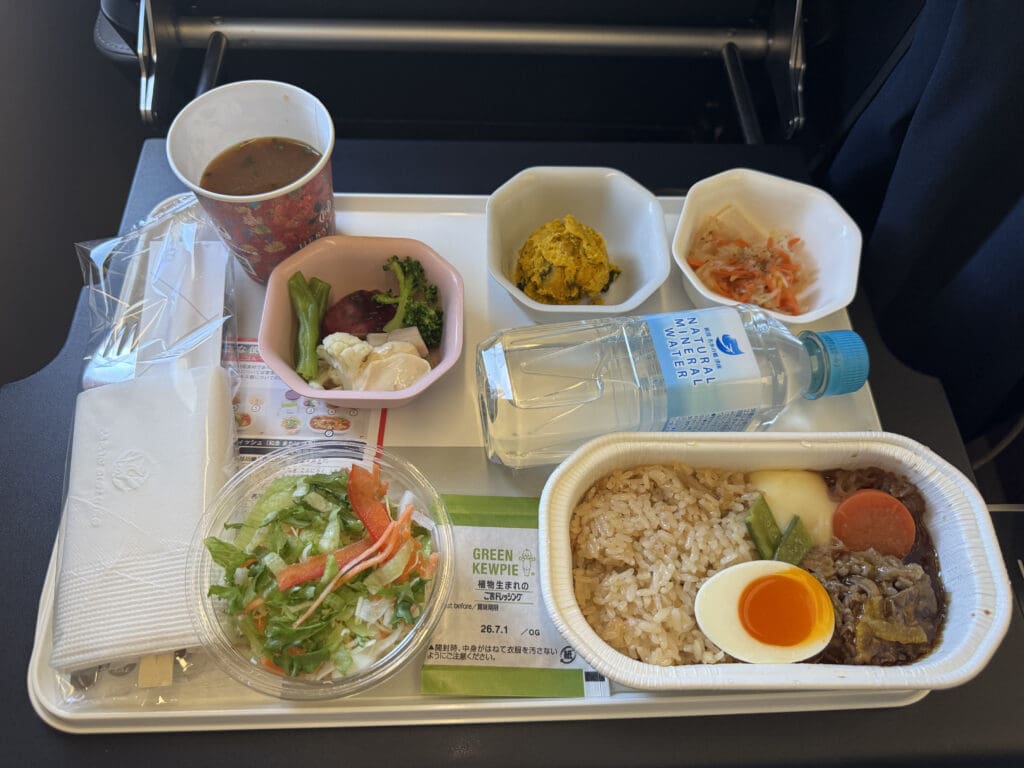
Japan Airlines A350 Premium Economy Meal – Kawashima-style Nikujama
With this I had a Sky Time drink. Japan Airlines has a signature drink that they serve in all cabins, and the recipe rotates – the recipe today was peach and grape, which I enjoyed. I’ve flown Japan Airlines before, and enjoy some of their Sky Time flavours significantly more than others – however, the variety is a fun element.
It’s fun to see the approach that airlines have for signature drinks – Japan Airlines mass-manufactures their Sky Time beverages and mixes up the recipe every once in a while, whereas airlines such as Cathay Pacific have fresher, more premium signature drinks only served in first and business class, with a recipe that never changes over the years.
(Ignore the ChatGPT prompt in the background of the picture below – I was trying to see whether I could spin up an itinerary in CDG, since my connection would be longer than expected, or so I thought at the time. I definitely wasn’t using ChatGPT to write this post – I have strong opinions on this.)
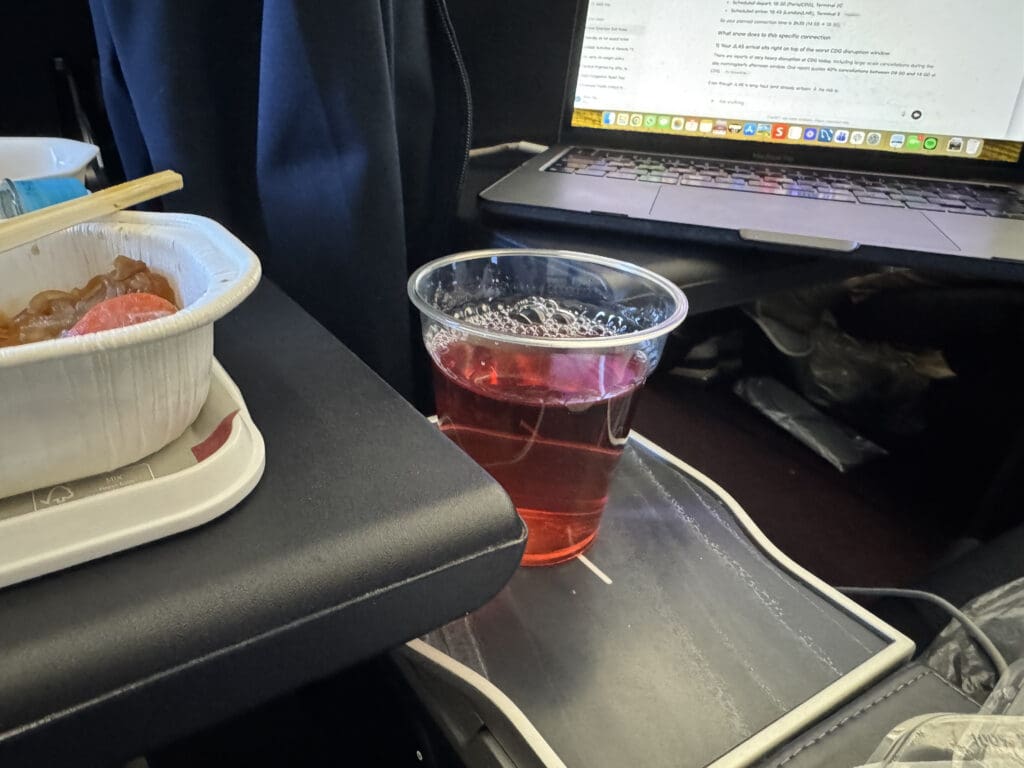
Japan Airlines A350 Premium Economy Drink – Sky Time
Our meals were cleared 30 minutes after they were served, and I received some chocolate fudge Häagen-Dazs ice cream.
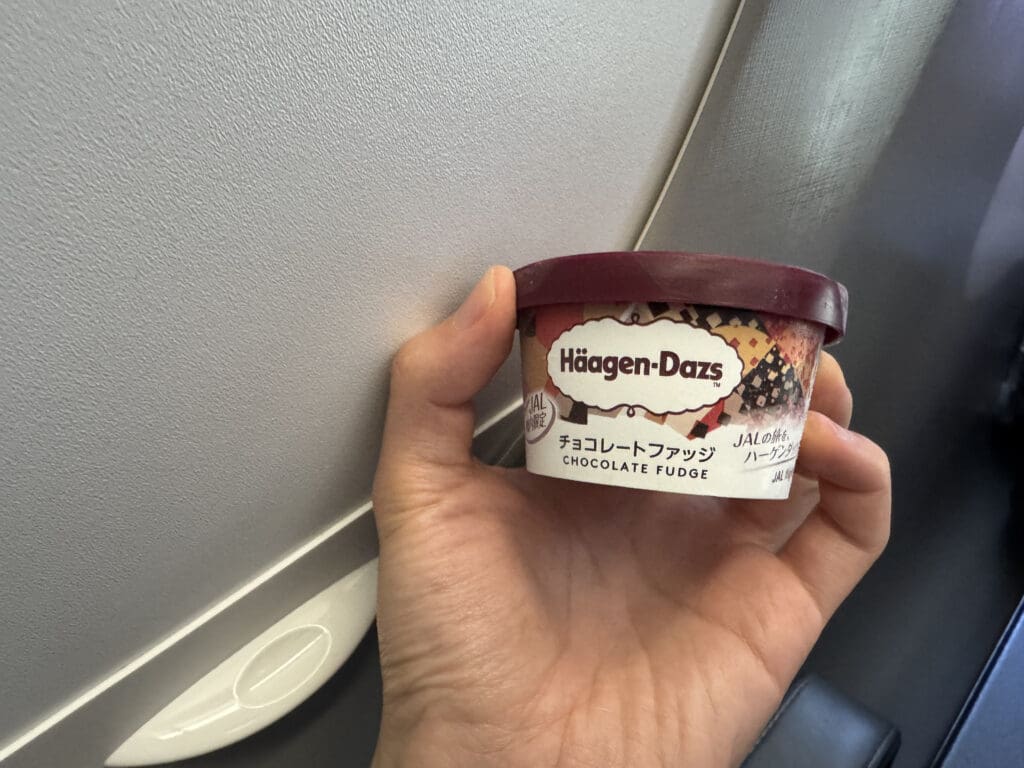
Japan Airlines A350 Premium Economy Ice Cream
I’d much rather have a fantastic-tasting meal with a mediocre presentation than a mediocre-tasting meal with a fantastic presentation. In this case, I think Japan Airlines delivered the former. The meal was one of the most memorable-tasting meals I’ve had outside of first and business class, though the main was served in an economy-style cardboard casserole, with the sides served in reusable plastic tubs (there was metal cutlery).
In an ideal world, however, I’d love to see a differentiated meal service in premium economy, served in a better presentation (more similar to other airlines), and perhaps with an extra choice or two. I also noticed that the service flow was identical to what economy class would receive – Japan Airlines doesn’t provide much differentiation between premium economy and economy class when it comes to the onboard service offering.
Do note that Japan Airlines will let you order a “paid exclusive meal” – a business-class style meal in economy or premium economy class, if you’re leaving Japan. On my flight, choices included either a broiled eel rice bowl (unagi don), or a beef cheek and mushroom stew. I elected not to try this out, as I wanted to compare their standard meal offering head-to-head with other airlines. The price for this is JPY 3,000 (£14.26/HK$149) – not a bad deal if you’re very into Japanese cuisine, though their standard offering tastes fantastic as well. Their main competitor, ANA, has a similar offering.
Experiencing a sunset on a Japan Airlines daytime flight
Around an hour after the meal service, sunset mood lighting was turned on throughout the cabin.
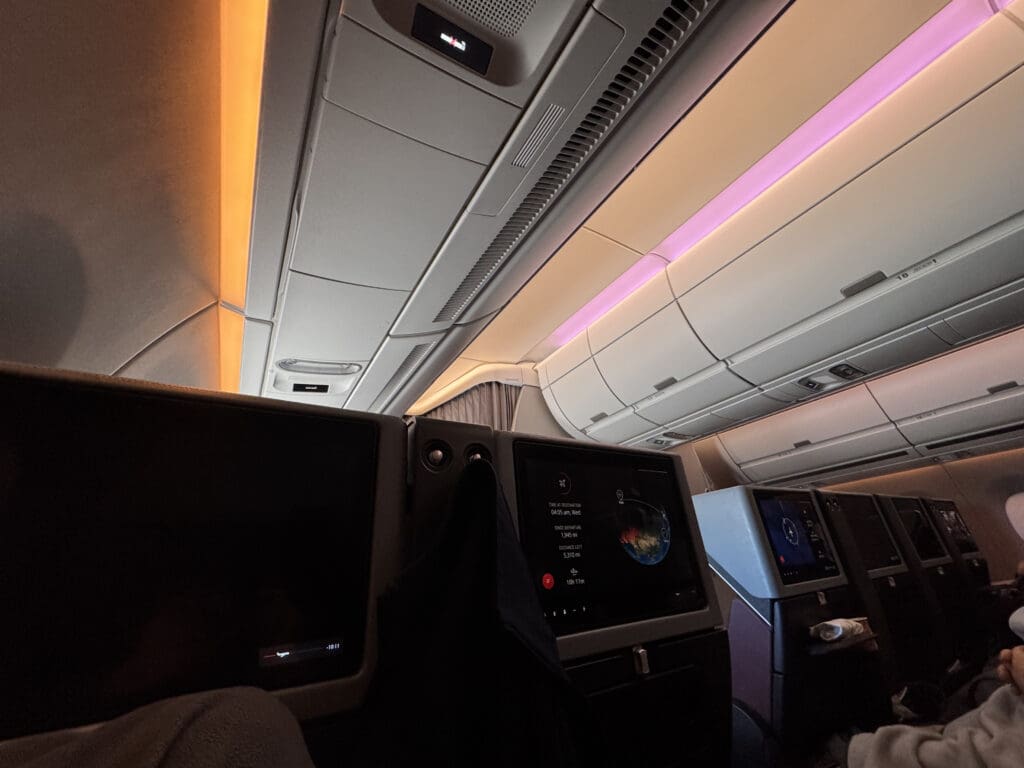
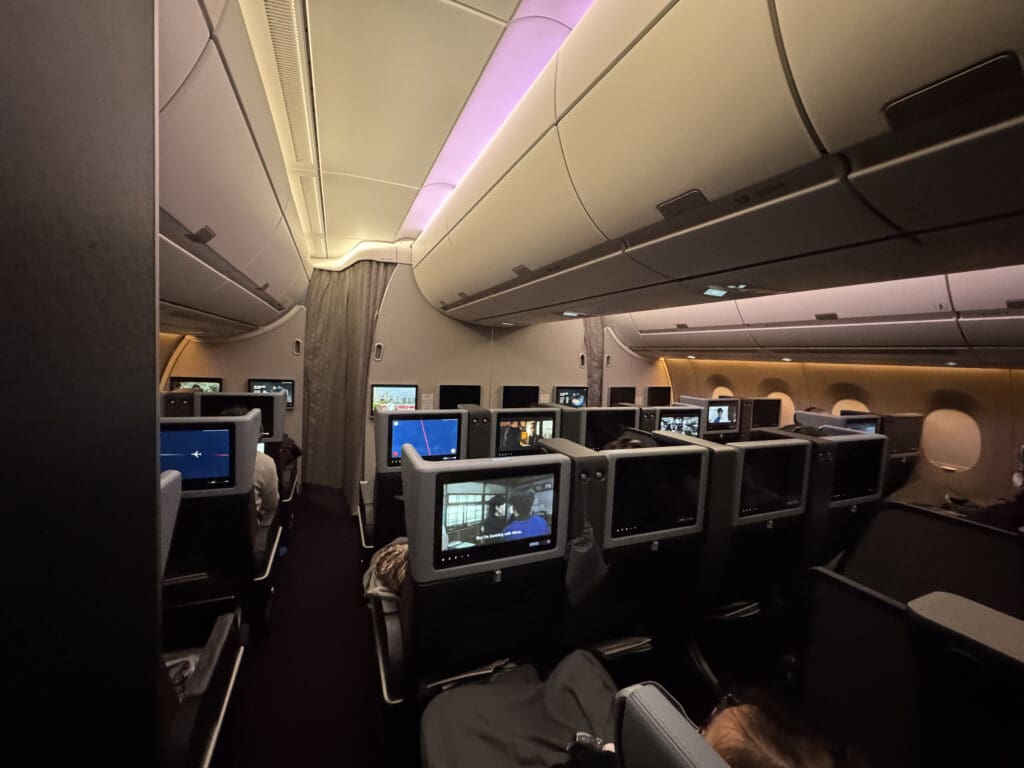
Japan Airlines A350 Premium Economy Mood Lighting
This light setting lasted for quite a while, and around an hour after this, I spotted a sunset outside the window. Wait, isn’t this a morning flight that lands in the afternoon? Japan Airlines’ flights to Europe fly east over the Arctic, so we were technically flying overnight into the next day, but crossing the international date line in the process (additionally it’s dark most of the day in the Arctic anyway).
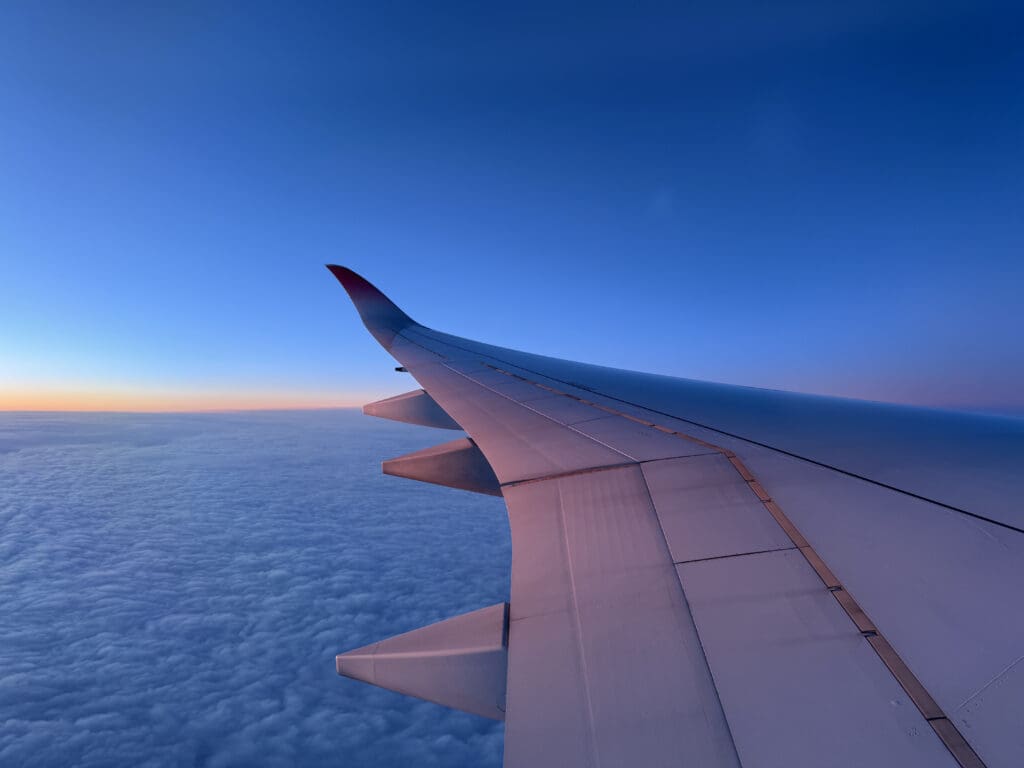
Sunset over the Arctic
It’s worth noting that you can sometimes get lucky with seeing the Northern Lights on this route. These will be on the side facing north – so if flying eastbound (e.g. this flight from Tokyo to Paris), the Northern Lights would be on the left. Sadly, albeit being sat on the correct side, I didn’t see any on this flight.
The flights heading back towards Japan also fly east over the Eurasian continent (due to tailwinds it’s faster to fly that way), as opposed to flying over the Arctic. So you won’t get Northern Lights on those routes. This also means that if you’re flying a Japan Airlines roundtrip from Tokyo to Europe or vice versa (i.e. if going on vacation), you’ll literally be flying around the world.
Japan Airlines’ A350 Premium Economy Mid-flight Snacks
Japan Airlines’ premium economy class features one dine-on-demand option – instant noodles. Specifically, these are called “Udon de Sky”, and they’re meant to be a premium offering – Japan Airlines doesn’t offer this in economy, so this is one of the only differentiating elements between the onboard service in premium economy and economy (as opposed to Cathay Pacific, who offers instant noodles in economy as well). I asked to try this around an hour after the meal service, and the crew came back quickly, asking me to wait three minutes for the noodles to cook.
I was also asked what I wanted to drink, and asked to have some Japanese shochu (also a premium economy exclusive) – I was asked whether I wanted to have this on the rocks and/or with soda, and said yes to both. That’s a nice and premium touch.
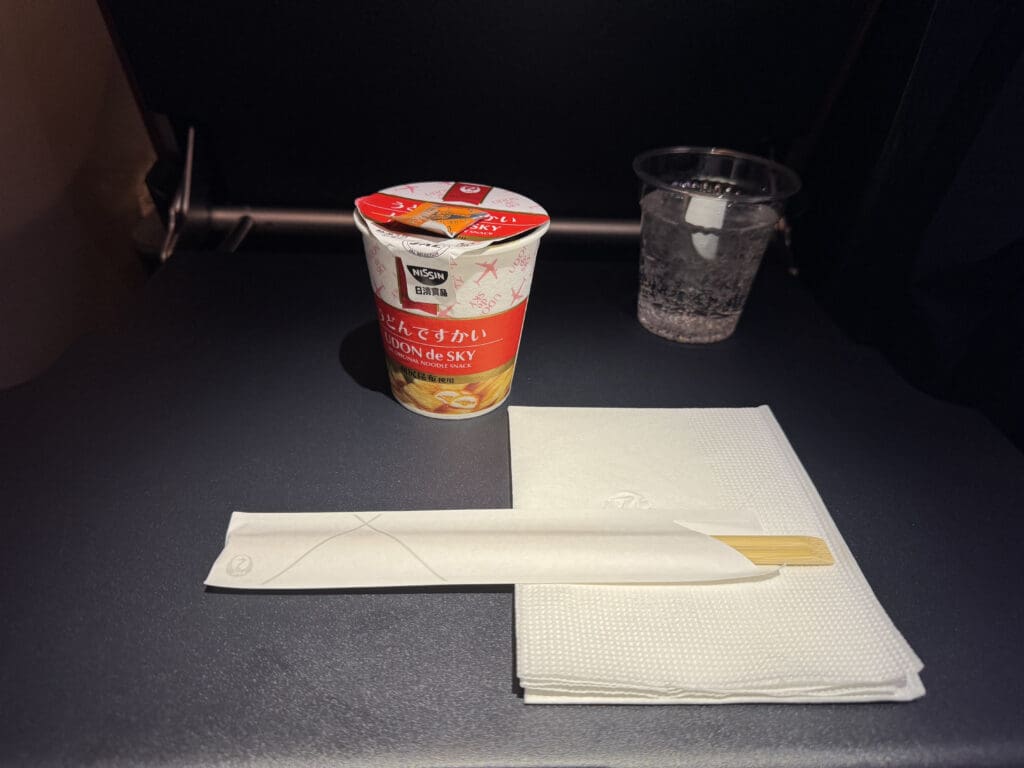
Japan Airlines A350 Premium Economy Udon de Sky
The noodles themselves were tasty, though I’m not sure I’d have considered them any more premium than a typical serving of cup noodles. In other words, this isn’t Qantas’ mid-flight dining.
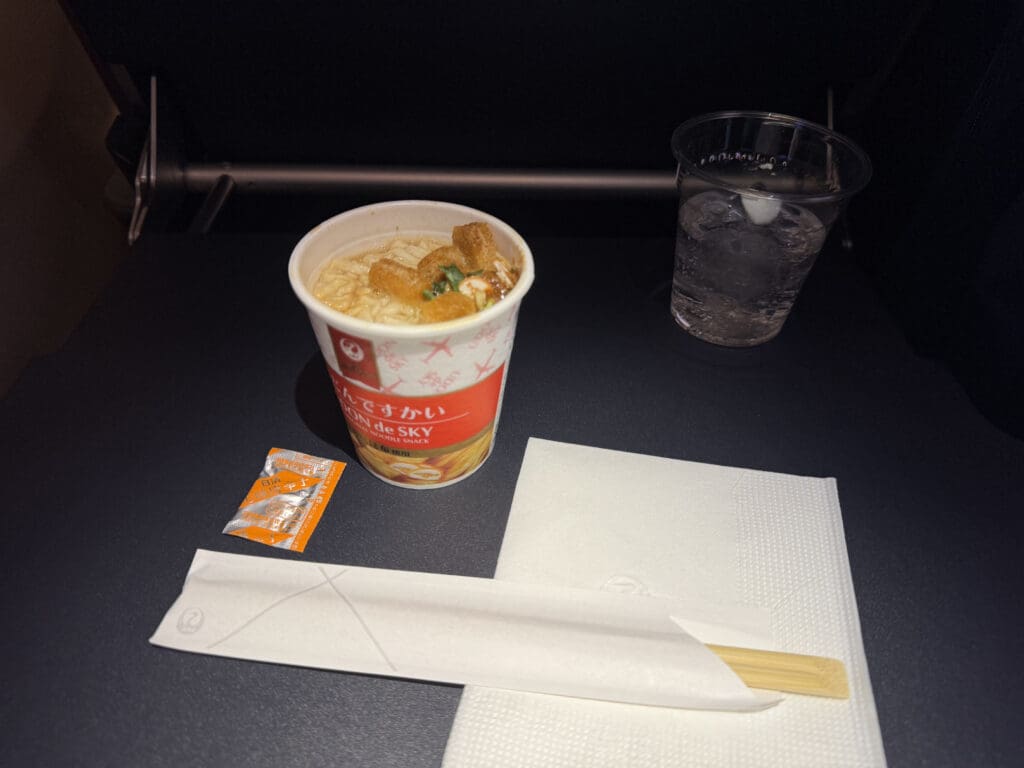
Japan Airlines A350 Premium Economy Udon de Sky
Later in the flight I asked for some umeshu, and also was asked whether I wanted it with soda and/or on the rocks. This was my first time having an umeshu highball, and…I’m a fan! The crew came and proactively offered some snacks with it as well, so I had some tasty galley snacks with my umeshu highball.
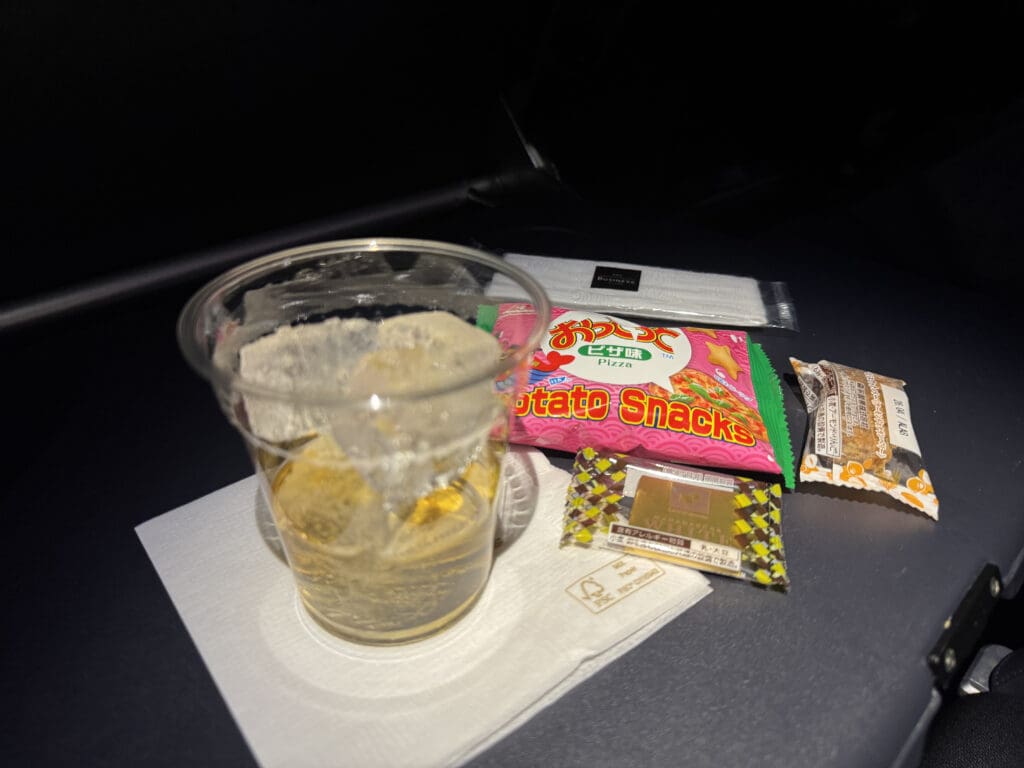
Japan Airlines A350 Premium Economy Drink – Umeshu on the Rocks
Speaking of galley snacks, there were ottotto potato snacks (salt and pizza flavoured), rice crackers, and some individually packaged chocolates and biscuits as well. There was also water, Minute Maid orange juice, and I could order a drink whenever between meals.
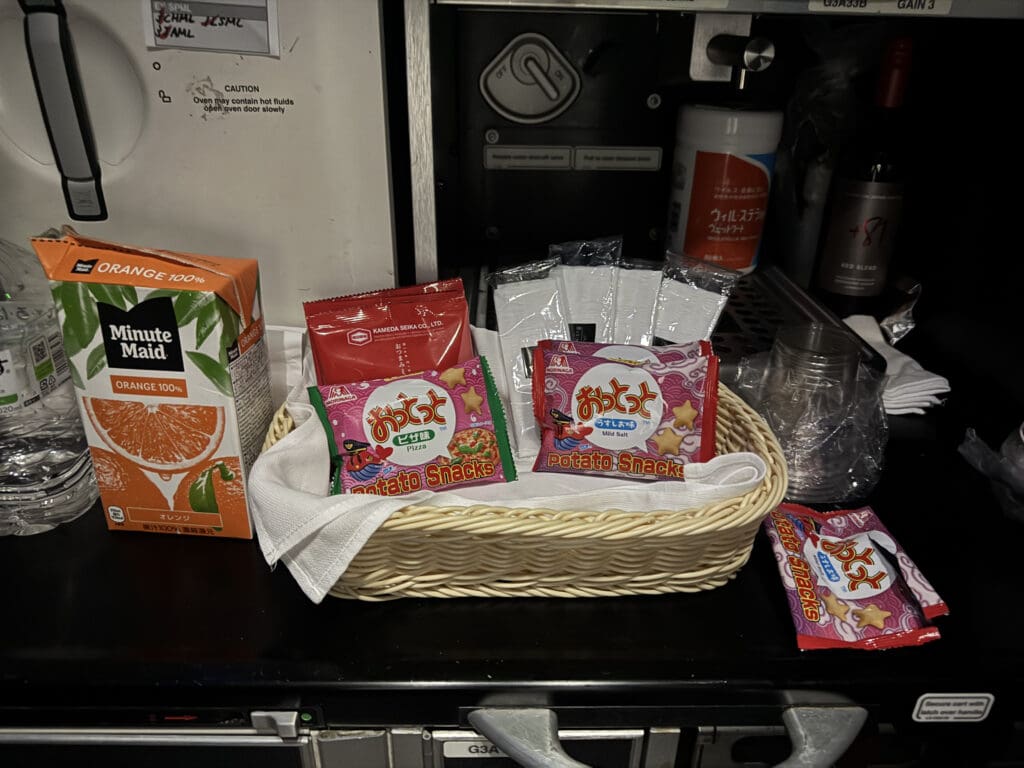
Japan Airlines A350 Premium Economy Galley Snacks
While not the most extensive mid-flight on-demand dining menu I’ve ever seen, I found this to be a solid selection, and didn’t go hungry as we cruised on over the Arctic.
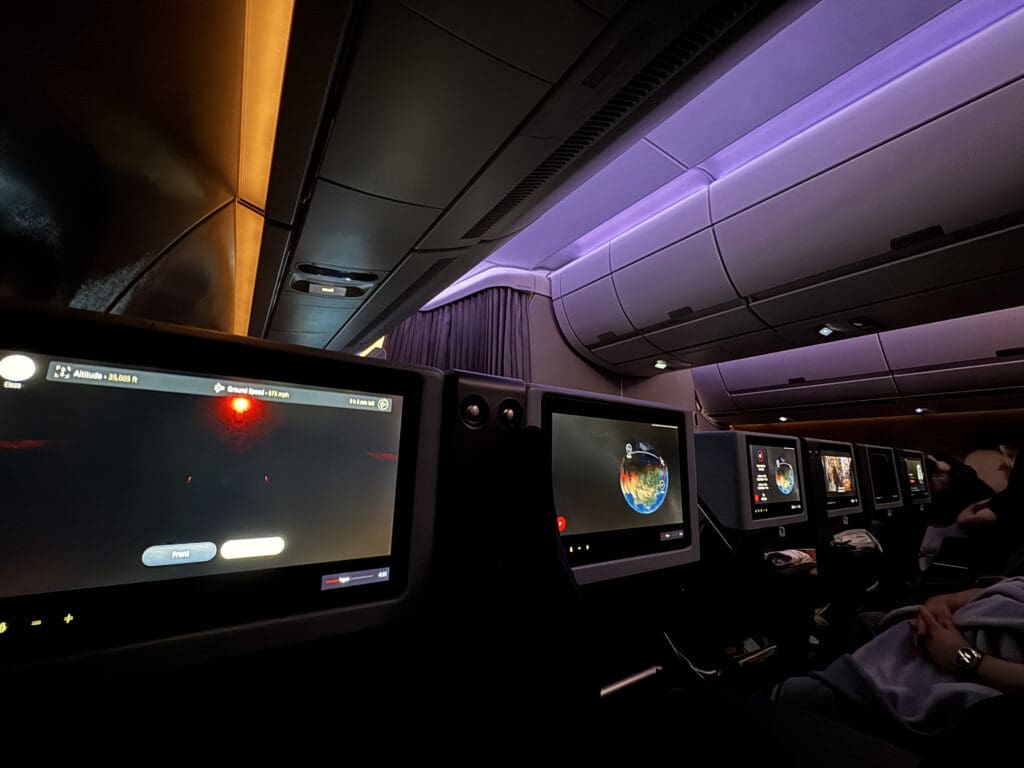
Japan Airlines A350 Premium Economy Cabin
Japan Airlines’ A350 Premium Economy Mid-Flight Meal Service (?!?)
Around smack-dab halfway into the flight with just under seven hours to go, the crew turned on all of the lights within the cabin. Wait, what’s happening?
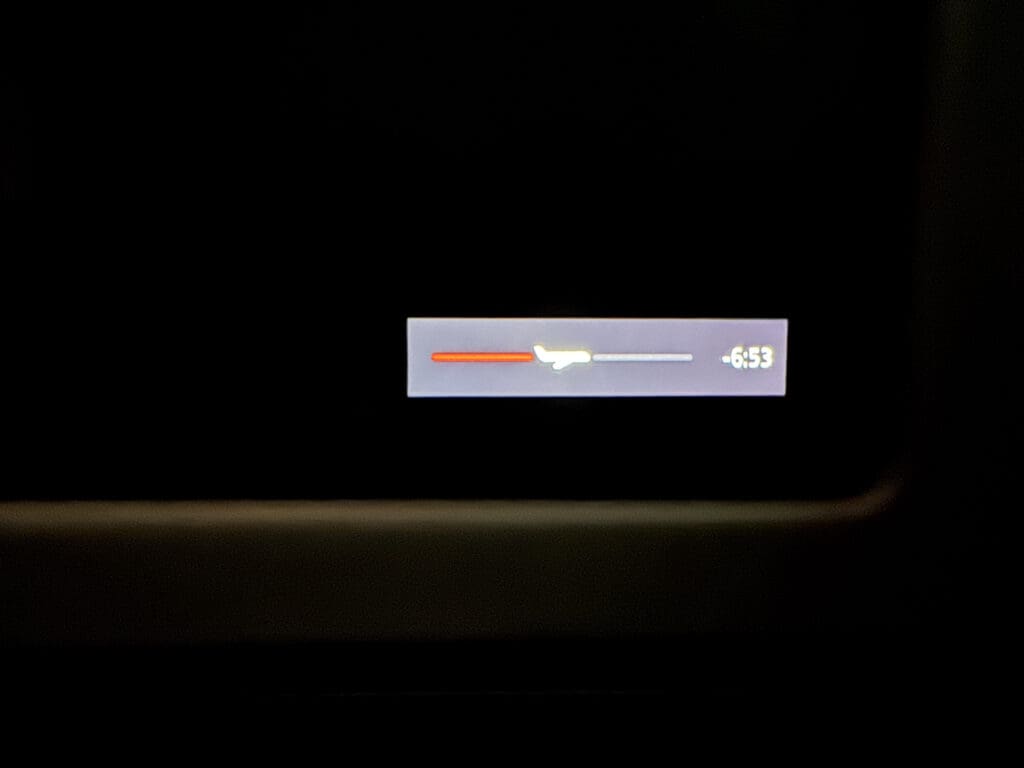
Japan Airlines A350 Premium Economy Time Remaining
Turns out that Japan Airlines treats its mid-flight snack as a separate meal service, which is meant to be served halfway into the flight – the service flow takes this literally, and serves this six hours into the 14-hour flight. The menu didn’t overcomplicate the description of this meal service at all – while the first meal service featured a supervising chef and as much information about the originating region as the menu could fit, this meal service was simply described with a single word – “Bread”.
I was asked what I wanted to drink with the meal service, and had a non-alcoholic Suntory beer, which was served ice cold (I find Japan Airlines to be good at keeping their beers at a good serving temperature).
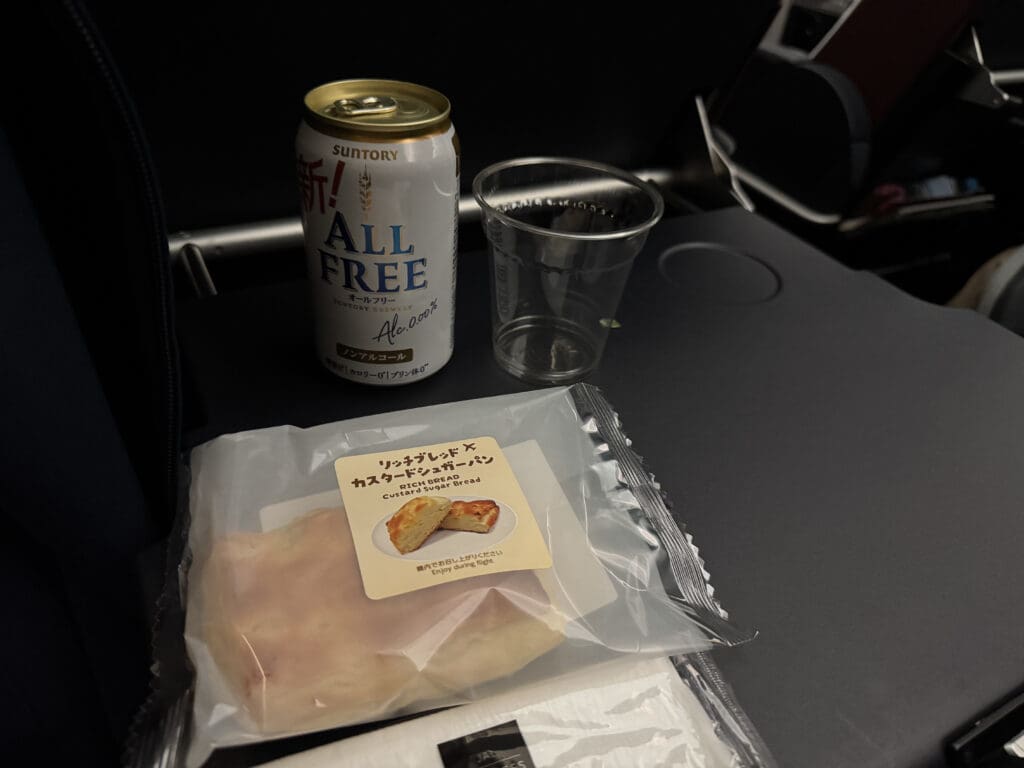
Not a meal I’d want to purposefully be woken up for
I’m not even sure I’d describe this meal service as bread. It was just a packaged sweet pastry of sorts with custard, and it was served cold. Don’t get me wrong, it was tasty – though I’m just not impressed that the entire cabin was woken up for this, especially since it was dark outside and some passengers were trying to sleep.
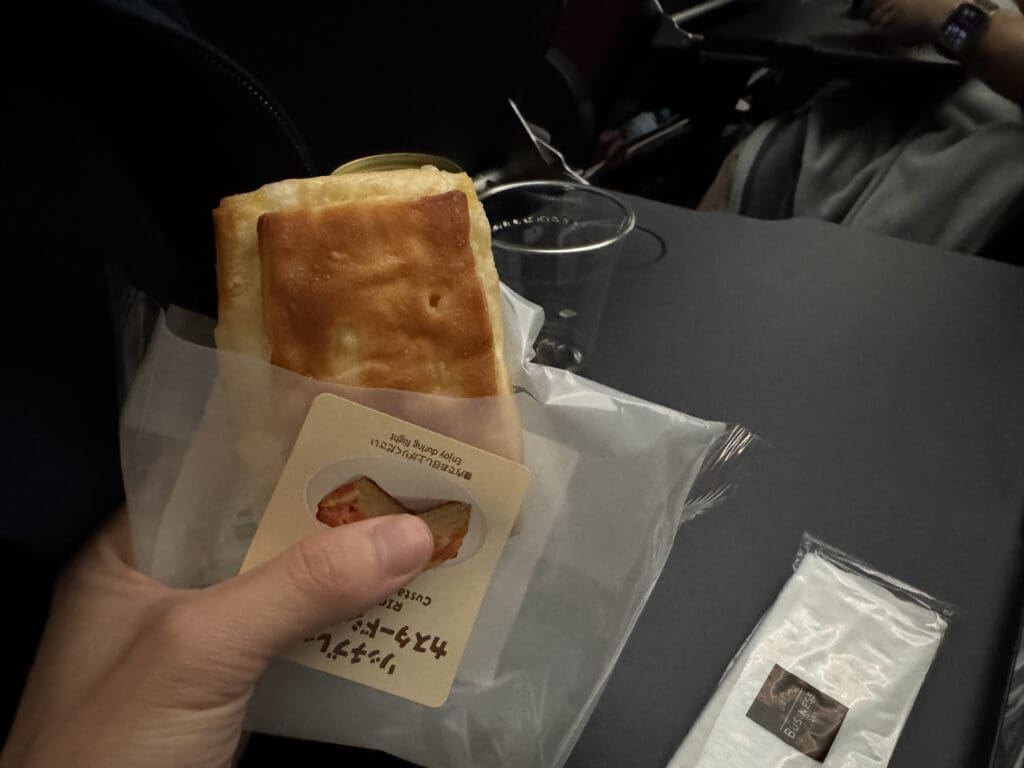
Japan Airlines A350 Premium Economy Meal – “Bread”
Cathay Pacific and EVA Air also serve pastries in premium economy, and those are served on-demand, without waking up the rest of the cabin. On these airlines, the pastry is even served warm, and is a bit more substantial. Japan Airlines really doesn’t need to wake the entire cabin up just to deliver this meal service.
Japan Airlines’ A350 Premium Economy Pre-Arrival Meal Service
I alternated between napping and working on this flight, and also watched the Gran Turismo movie, a movie depicting the account of GT driver Jann Mardenborough. As aforementioned, the Japan Airlines selection isn’t massive, though I found the movies to be top-notch – Gran Turismo was such a good movie that I thoroughly enjoyed.
The cabin lights were turned on just under three hours before landing (once again, far too early for my liking). At this point we were flying at an altitude of 39,000 feet, and we were treated to a beautiful sunrise on the tail camera.
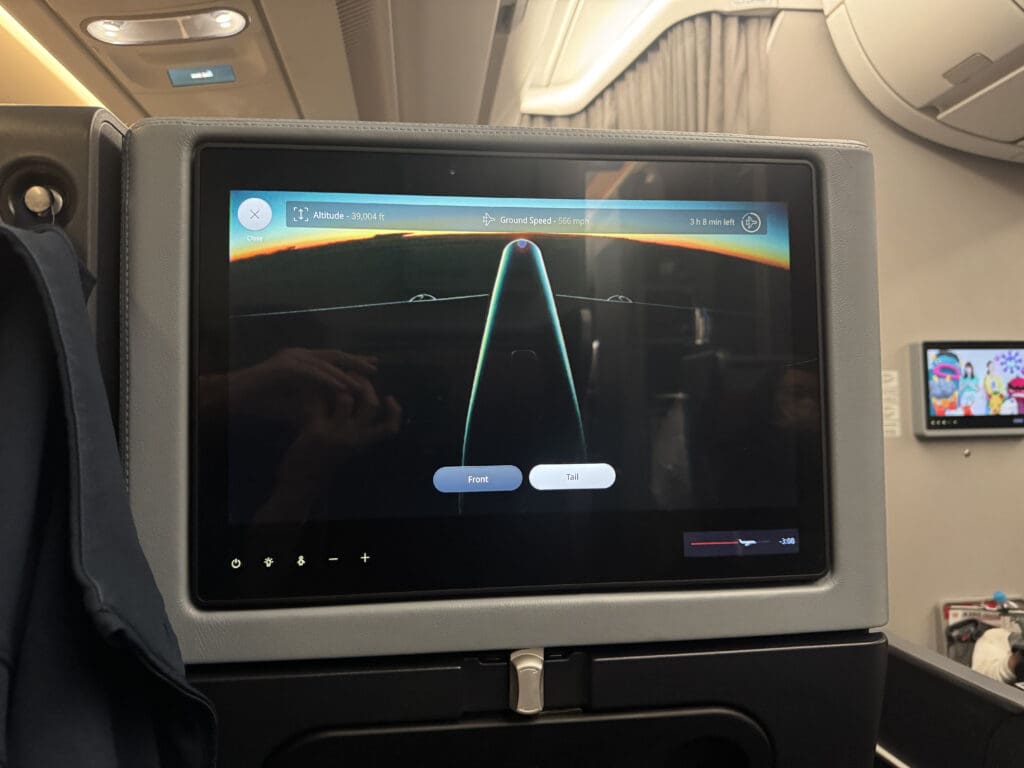
Sunrise over the Arctic
There was only one option for breakfast this morning, and it was ricotta pancakes with pork sausages, mini hash browns, maple flavoured syrup, and whipped butter. Despite the sweet-savoury combination, this was an extremely well-executed breakfast, and it was really unique to see the “soufflé”-style pancake served onboard a plane. However, I would’ve wished for perhaps another option, or for it not be served in an economy-style casserole.
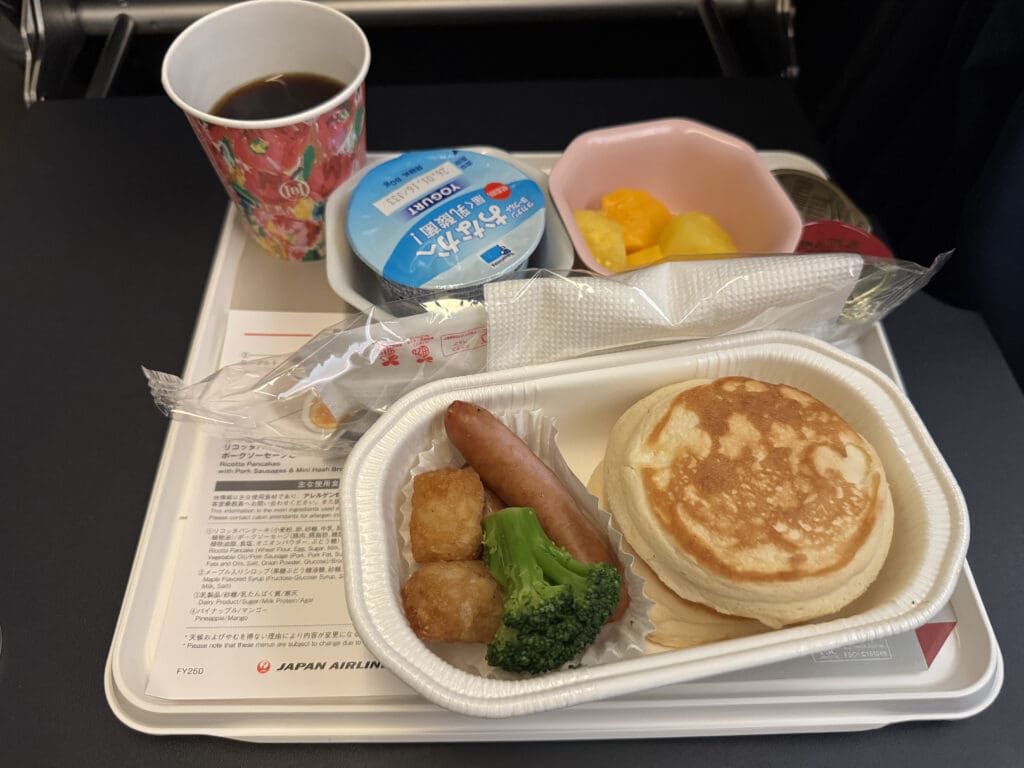
Japan Airlines A350 Premium Economy Meal – Ricotta Pancakes with Pork Sausages and Mini Hash Browns
One thing I didn’t mention during the first meal was that these meals were served with menu cards that told you what everything was. As you’d expect, the meal was served almost identical to the picture, except for the main casserole being turned the other way round.
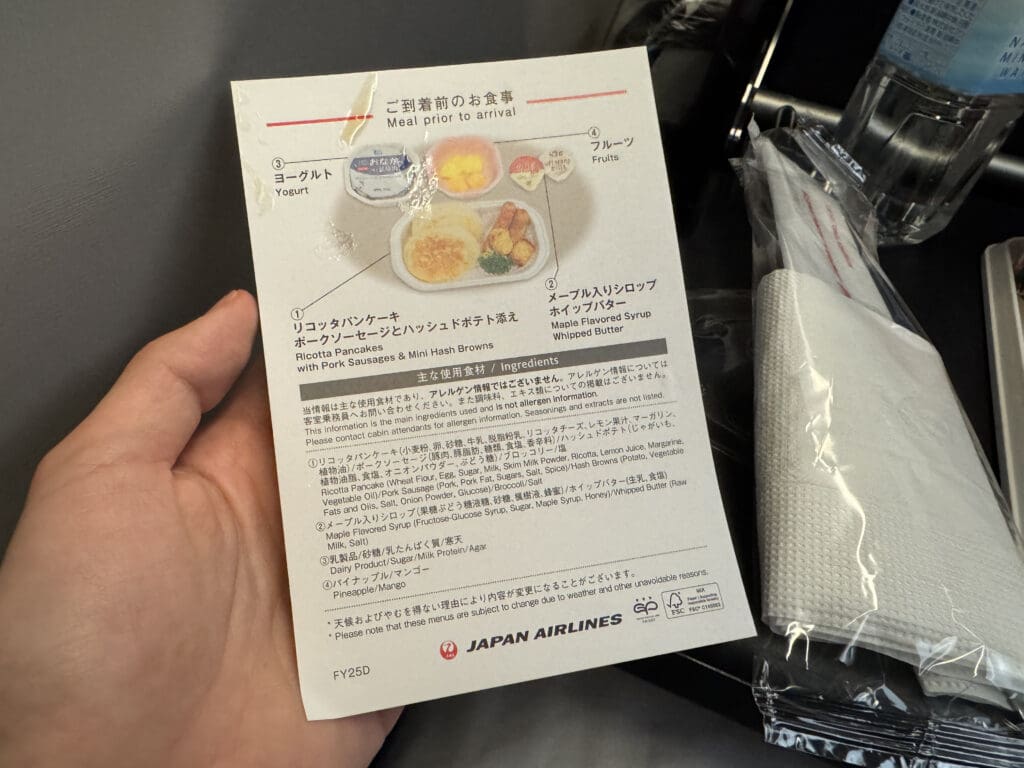
Japan Airlines A350 Premium Economy Menu Card
We were well into a sunrise at this point, as we headed south from the Arctic into Europe.
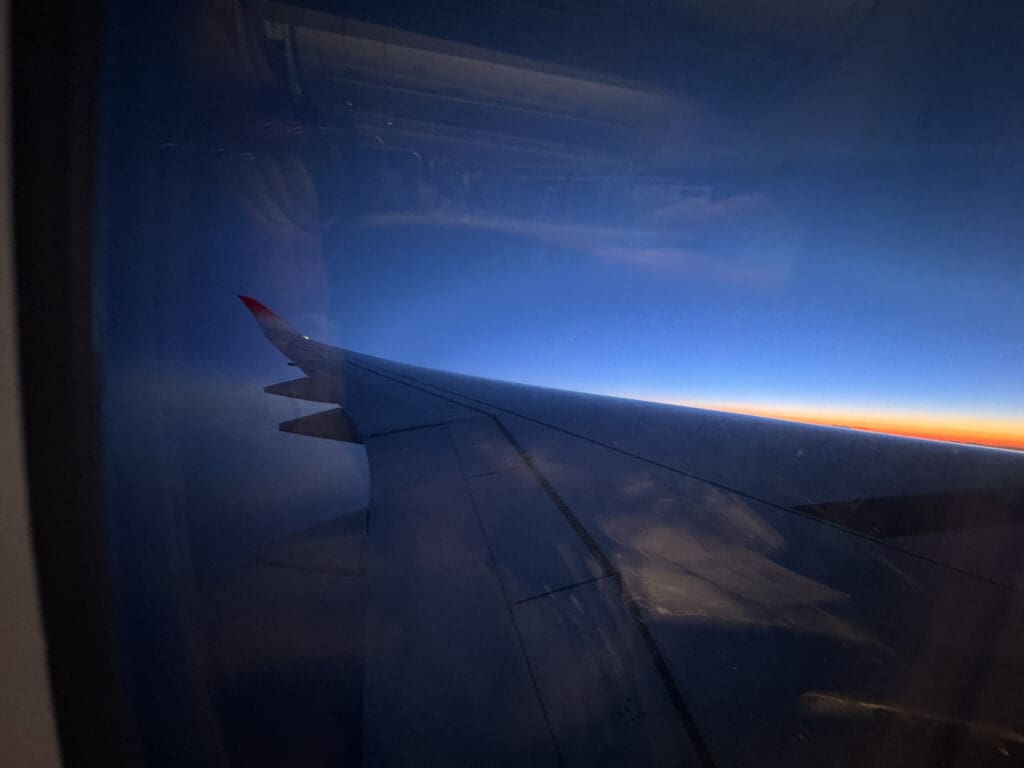
Sunrise over the Arctic
Around an hour and a half before landing, we were handed gentle steam eye masks. These were masks that you placed on top of your eyes, that heated up once exposed to air (i.e. once you opened the packet). While not the type of amenity you’d commonly see (especially in premium economy), I enjoyed my eye mask experience and found it relaxing.
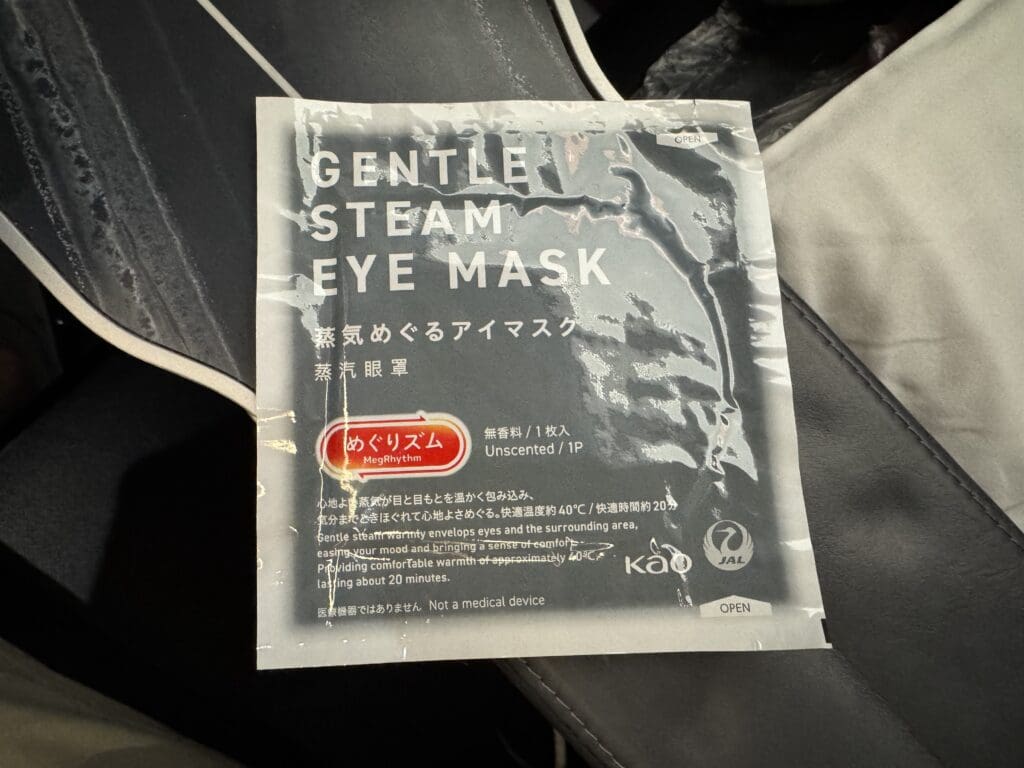
Japan Airlines A350 Premium Economy Gentle Steam Eye Mask
Approaching Paris Charles de Gaulle Airport
Around an hour before landing, the inflight entertainment system indicated that we were passing over Birmingham. I was quite amused by this, as I didn’t realise this Tokyo to Paris flight would fly so close to London (where I’d be heading next).
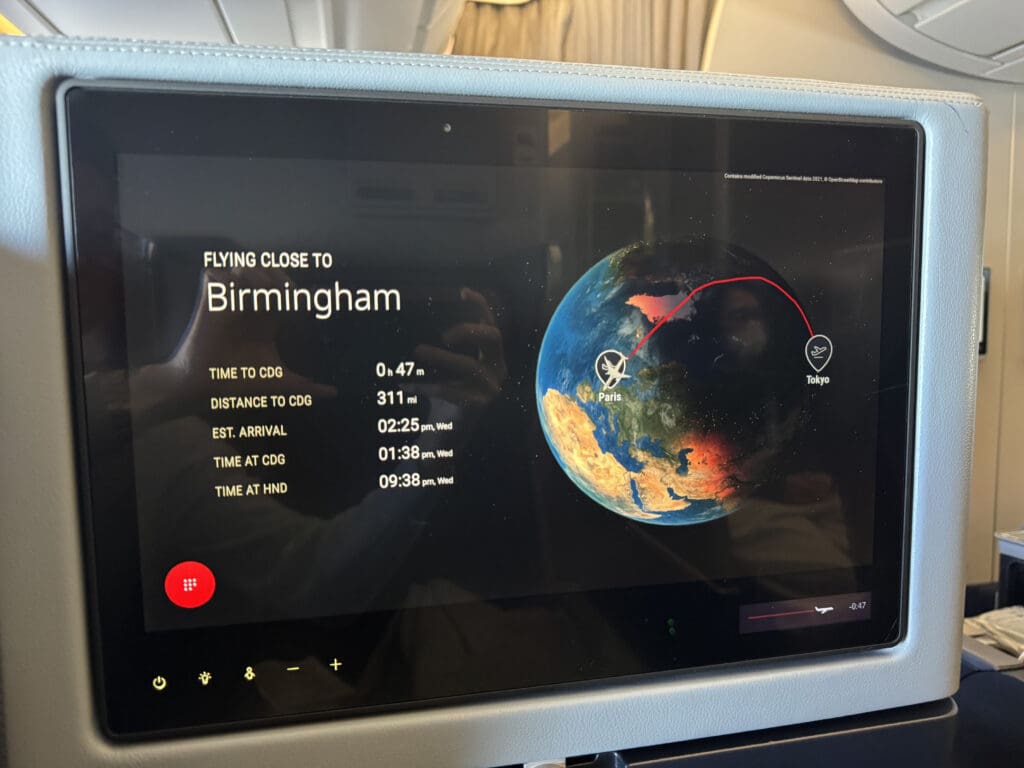
Japan Airlines A350 Premium Economy Airshow
As we crossed the English Channel into mainland Europe, we flew over some snow-capped French cities. This was the point in the year where France and the Netherlands were facing a severe cold snap, so we flew over settlements covered over by blankets of snow. This included beautiful views over the city of Rouen, France.
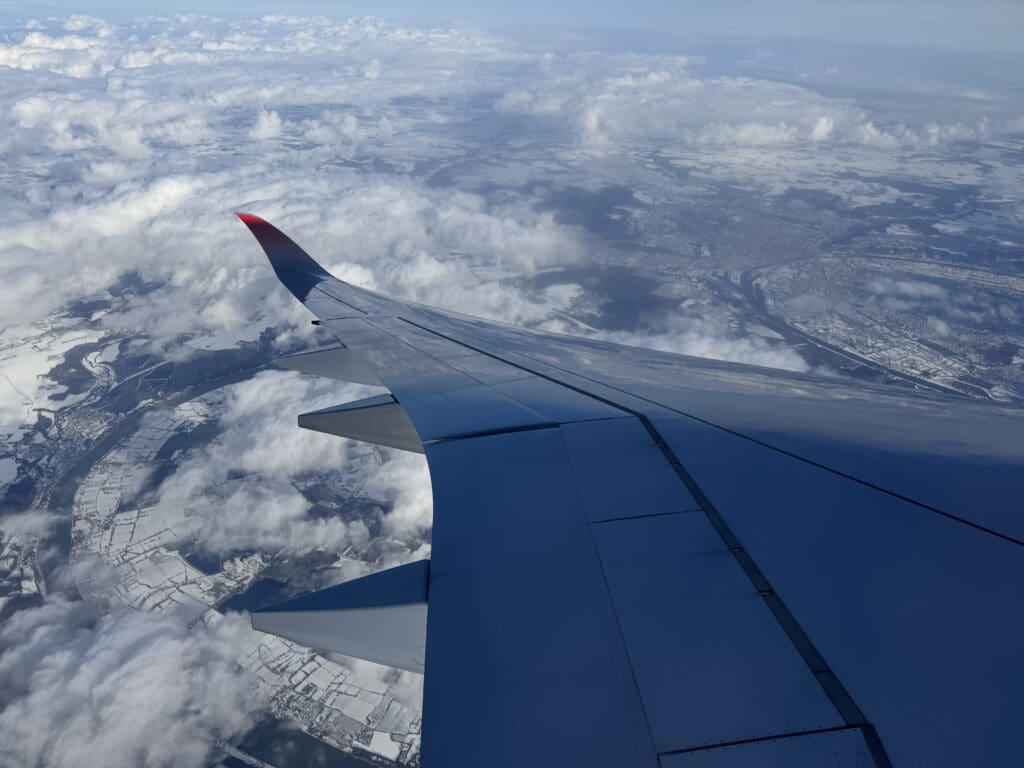
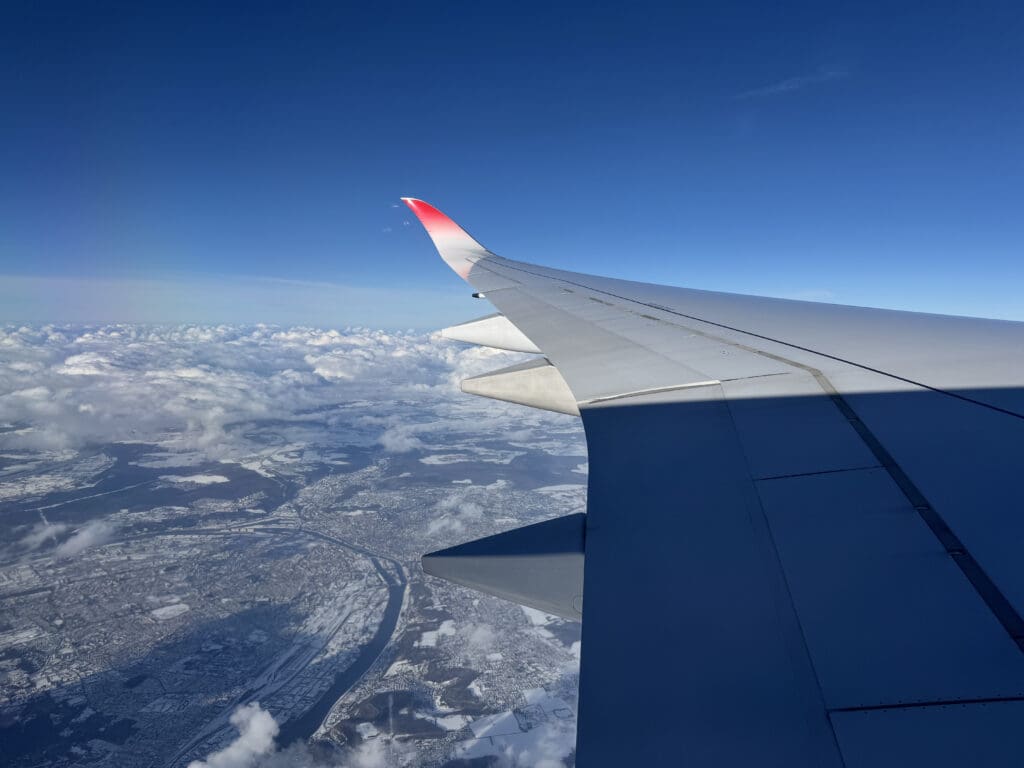
Flying over Rouen, France
Paris was a bit more overcast than Rouen, and we struggled to make out anything underneath the clouds until we were basically on our final approach.
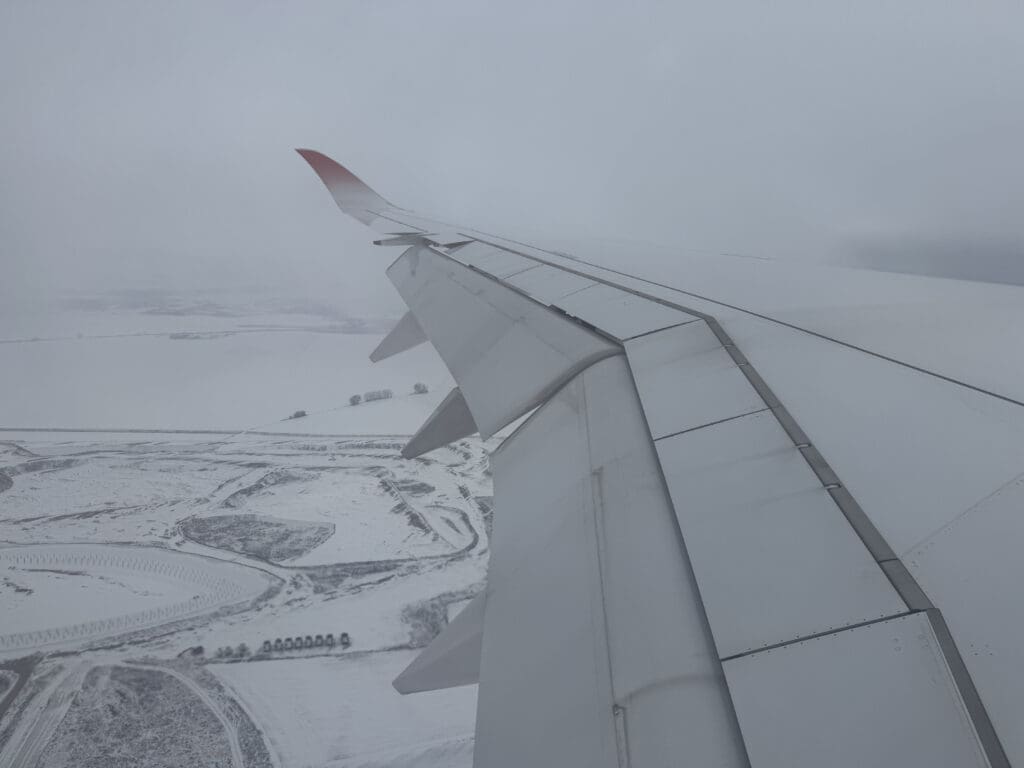
Landing into Paris CDG
We touched down onto runway 27L at 2:30 PM, 25 minutes before our scheduled arrival. Unfortunately at that point Paris CDG was dealing with major ground delays after a very rough and snowy morning, so there was a taxi-in delay of almost two hours. The captain kept us as well-informed as he could, though there wasn’t much information the CDG air traffic control could give him, unfortunately. At one point we were given an estimated docking time of 3:45 PM, though as that rolled round, we weren’t given a gate.
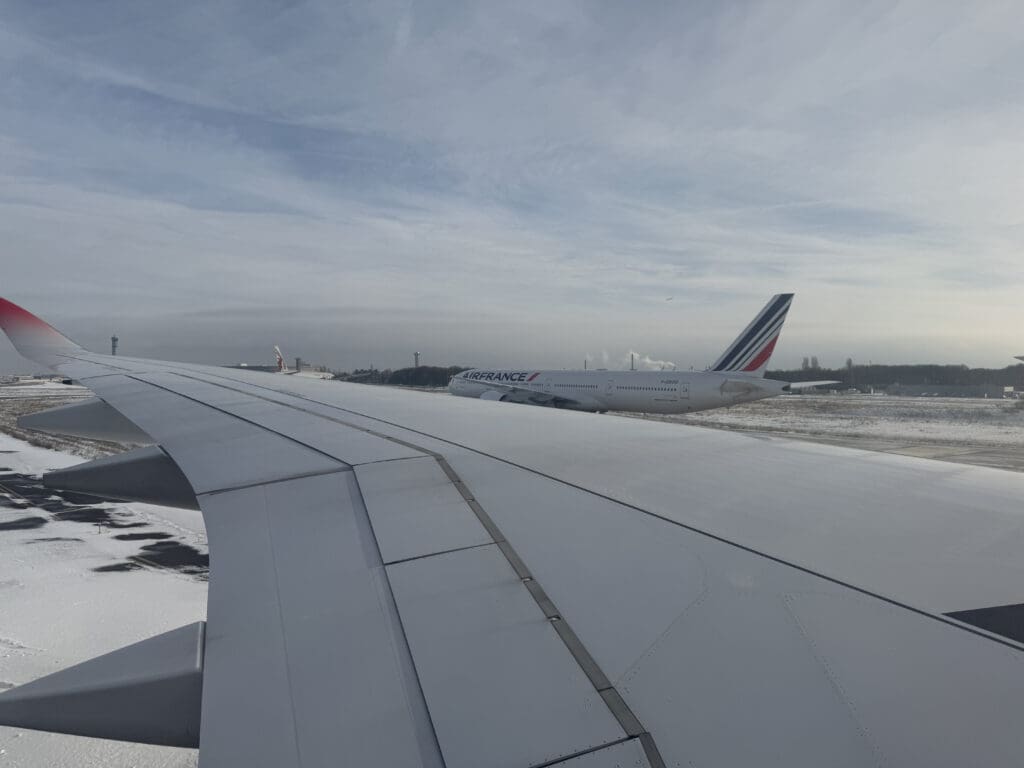
Taxi-in delay at Paris CDG
On another airline there might’ve been a commotion as people watched the time tick by and their connections leave the airport, though in this case the plane was near-silent, with passengers patiently waiting for a further update.
At around 4:25 PM there was finally movement as we headed towards Terminal 2E. On our way we passed a Malaysia Airlines A350, which had unfortunately experienced a diversion and turned back to Paris (for whatever reason) – this flight ended up being cancelled, and operated an extra flight back to Kuala Lumpur the next day.
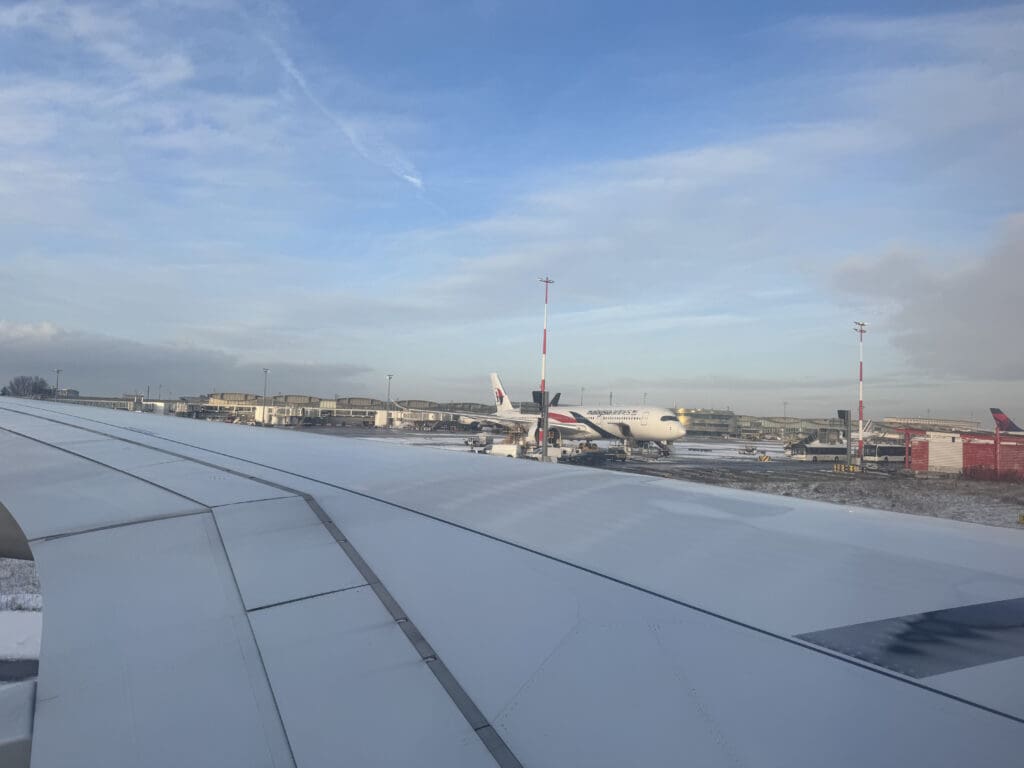
Malaysia Airlines A350 at Paris CDG
Once we arrived at the gate, a goodbye video played on the screens, and the captain apologised for our lengthy delay.
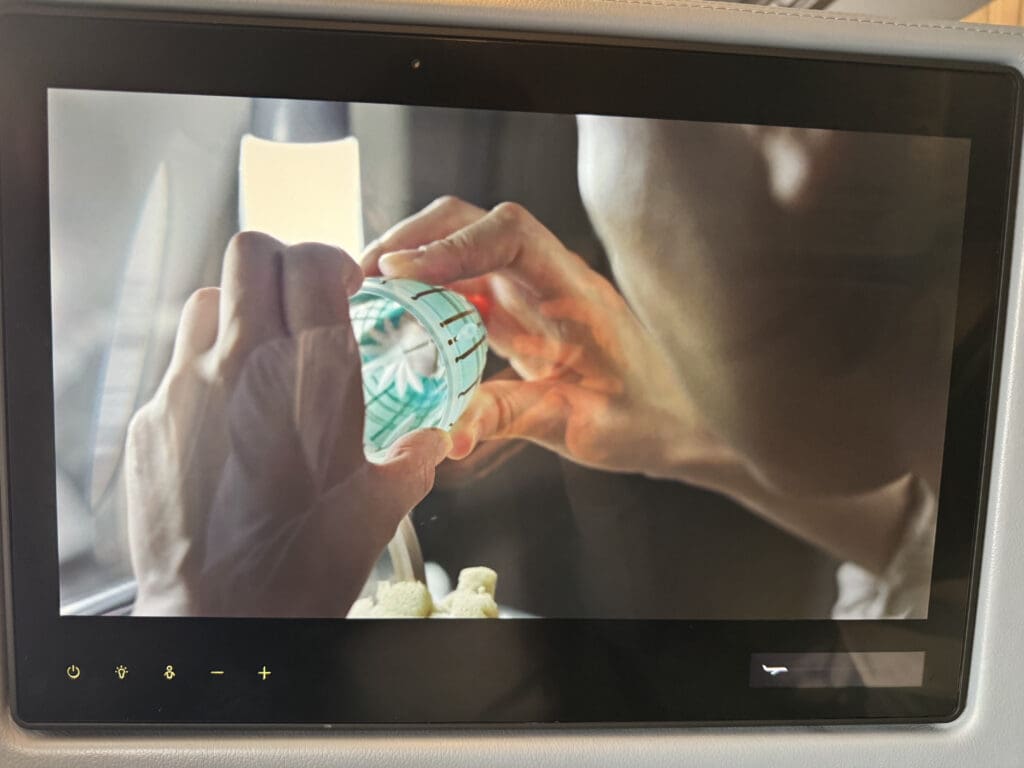
Japan Airlines A350 Premium Economy Post-arrival Video
While I enjoyed my flight on Japan Airlines, it was great to be off the plane after 16 hours (the longest I’ve been on a plane so far), and I bid farewell to our Japan Airlines A350 as I headed over to my connecting flight.
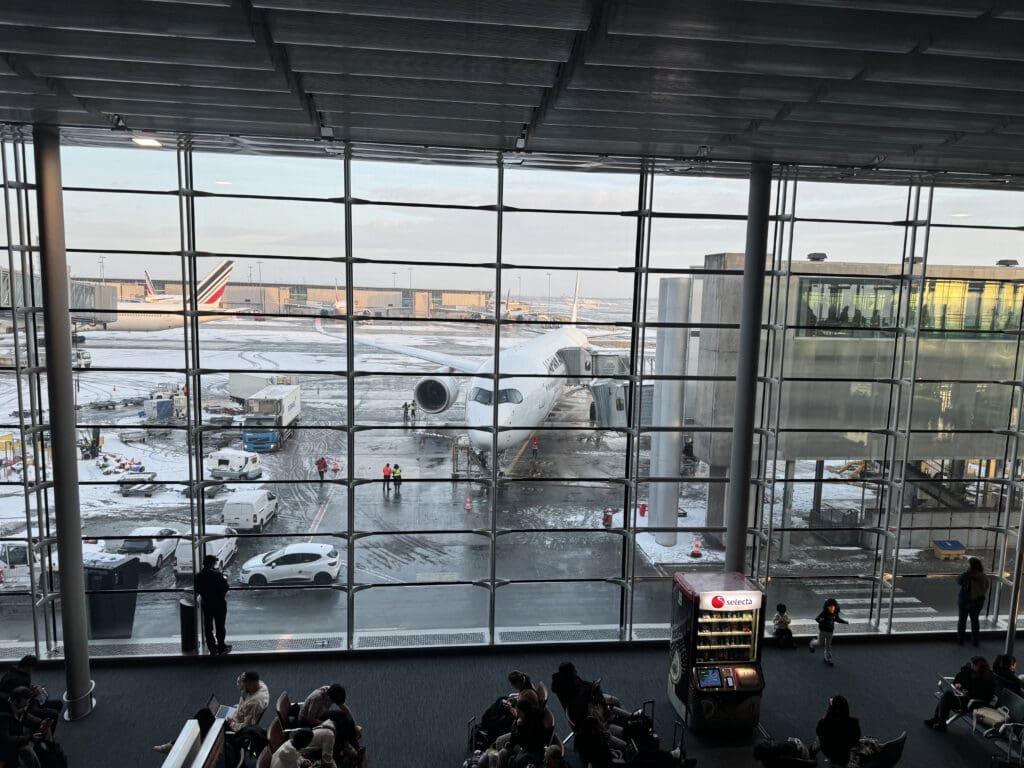
Japan Airlines A350 at Paris CDG Airport
Even the buses were running a reduced service after the big snow storms in the morning, though I did eventually make it to my connection (originally departing 3h 35m later) with a little bit of time to spare before boarding.
Conclusion: Japan Airlines’ A350 Premium Economy
Japan Airlines’ A350 premium economy is a highly competitive product. They have the most seat pitch in the industry, the only premium economy seat with motorised seat controls and a legrest that folds up 180°, and the lounge access element doesn’t hurt either. I had no complaints about the WiFi (it’s completely fair that it’d cut off over the Arctic, based on current technological limitations), and find it to be a competitive advantage.
However, while the “on-paper” stats would suggest that they hands-down have the best seat in the industry, I felt like this seat was comparable, but not victorious over other premium economy products. The 180° legrest couldn’t be used that practically, and the actual recline function was on par with other carriers. While the food was fantastic, I wished for a less economy-style service flow and presentation, and was confused about the meal service smack-bang halfway through the flight.
Overall, I’d put Japan Airlines as one of the best premium economy options flying between Europe and Asia that I’ve tried so far, but perhaps not the best. Qantas still has a more refined food and beverage offering for me, while offering a comparable seat.


Thanks for the very extensive review. I appreciate the great attention to detail. Were there air nozzles? Asian carriers often keep the cabin quite warm and individual air nozzles can be a lifesaver.