

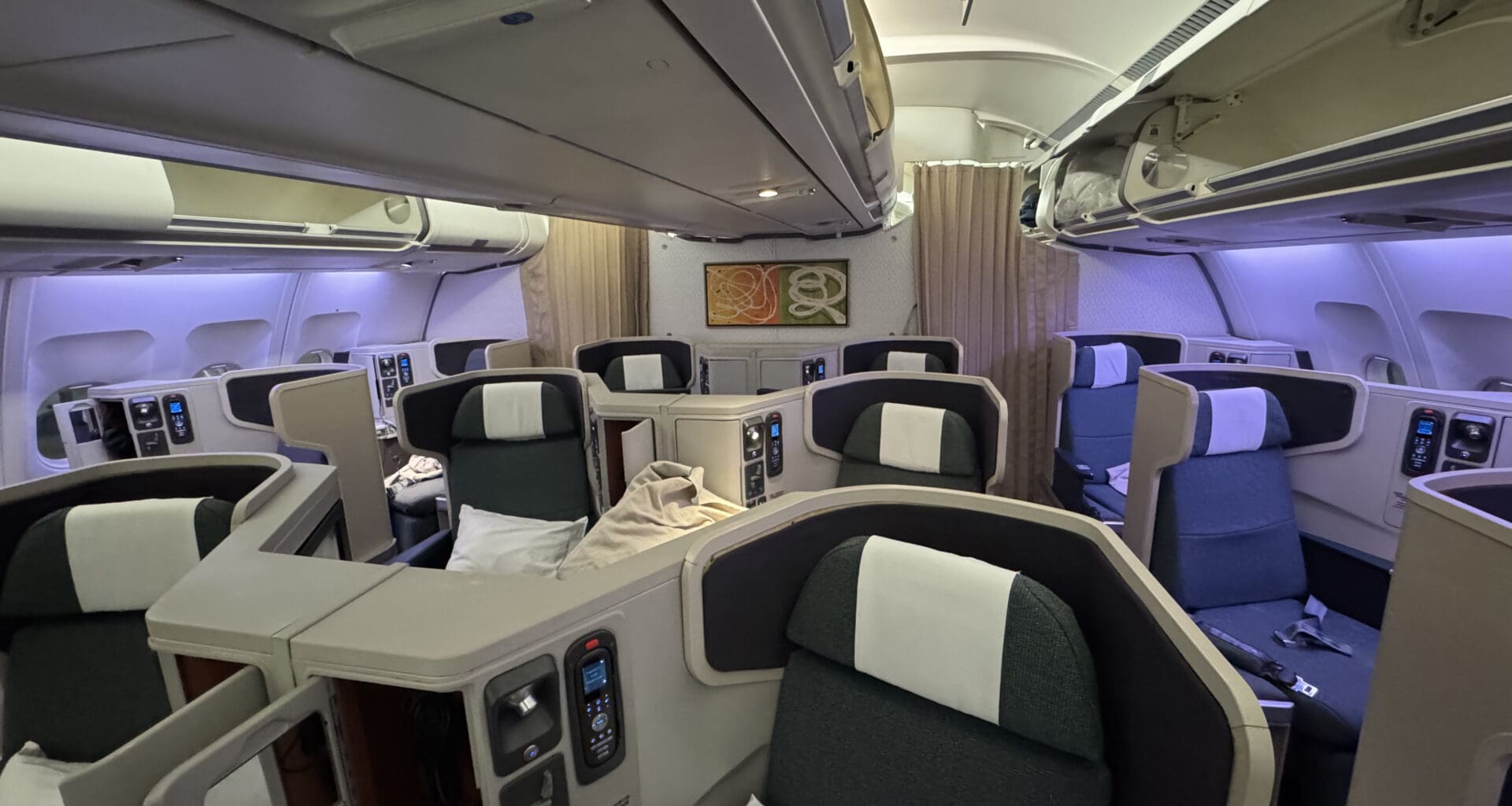

During my most recent trip to Singapore and Hong Kong, I flew Cathay Pacific’s A330 business class from Singapore to Hong Kong. I fly Cathay Pacific a few times a year on average, and realised the last time I reviewed them in their longhaul A330 business class was 10 years ago, so I figured I’d try and give them another go. Flying business class out of Singapore meant that I got to sample all of the Oneworld lounges at Singapore Changi Airport (at least the ones I was eligible for as a non-status business class passenger), though I was also looking forward to the flight itself.
For context, my recent flights in Cathay Pacific’s regional business class were on the underwhelming side. I flew Cathay Pacific’s refreshed and non-refreshed regional business class within a span of a couple of months, and while my flight in their refreshed product from Hong Kong to Shanghai was decent, my flight from Seoul to Hong Kong was perhaps the most underwhelming business class flight I’ve had on the continent. So while I knew that the hard product on this flight between Singapore and Hong Kong would be better, I was surprised by how good the catering and service were.
Here are my first impressions of the flight, and I’ll share a full review in the coming weeks.
Cathay Pacific’s A330 Business Class: How Did They Get This Seat So Right?
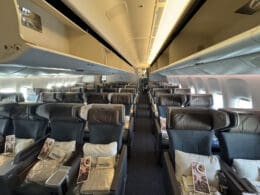
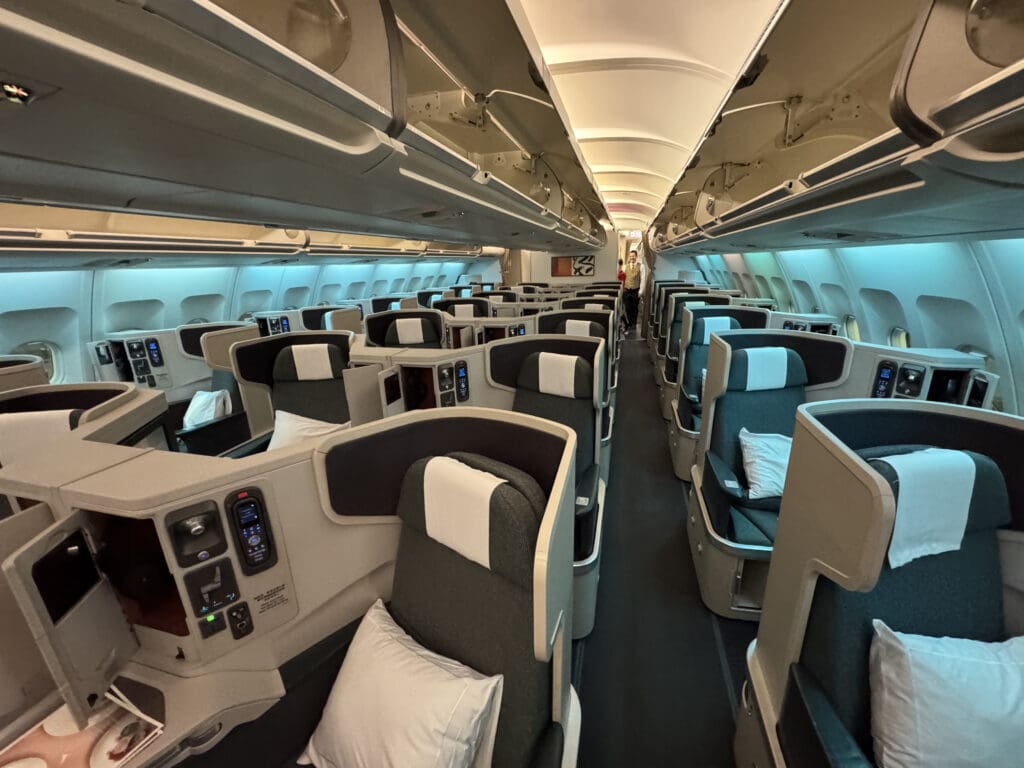
If Cathay Pacific’s regional business class is as wrong as they could’ve gotten a seat, they did a disproportionately good job with their first-generation business class seat, which was introduced a whopping 15 years ago (in 2011). I flew a reverse herringbone seat on SriLankan Airlines just a few days ago, and while the actual seat comfort is comparable, my impressions of the design couldn’t be more different.
These planes used to fly all the way down to Australia, though these days none of the A330s fly on flights beyond 6 hours, given that Australia is now predominantly served by A350s and 777s (their older 777s have the same seat, though, and those continue to operate ultra long-haul flights).
Cathay Pacific A330 Business Class
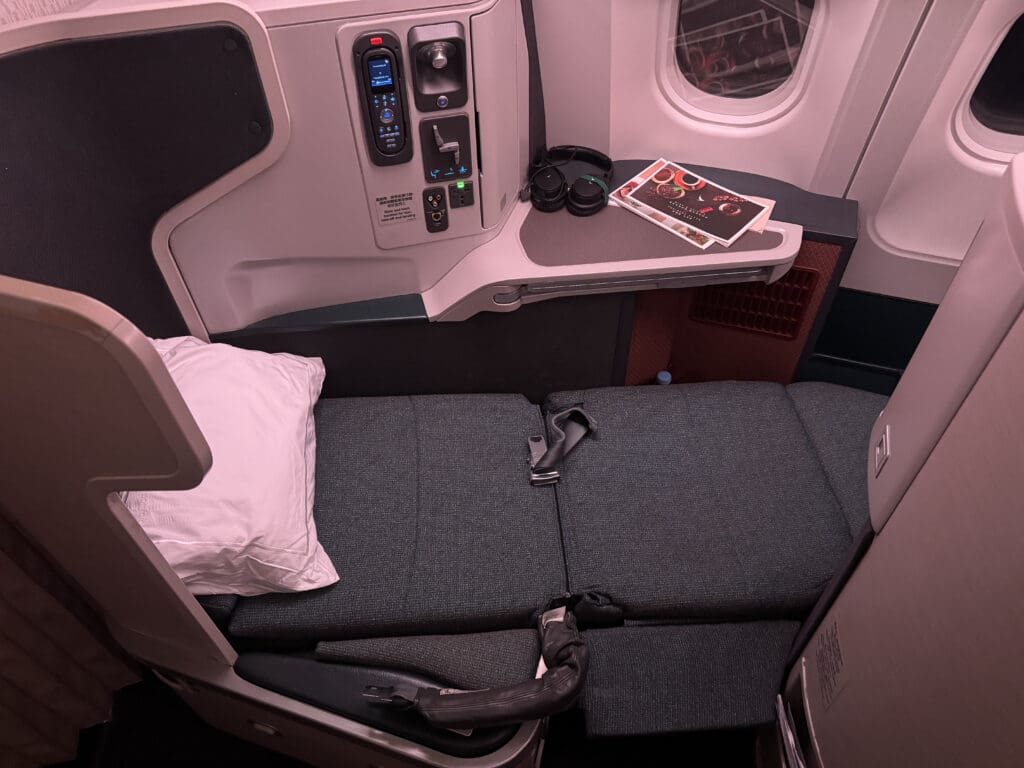
There’s great attention to detail in this seat – for example, in bed mode there’s a little platform that folds up, leading to enhanced bed width near the hip area.
Cathay Pacific A330 Business Class Bed
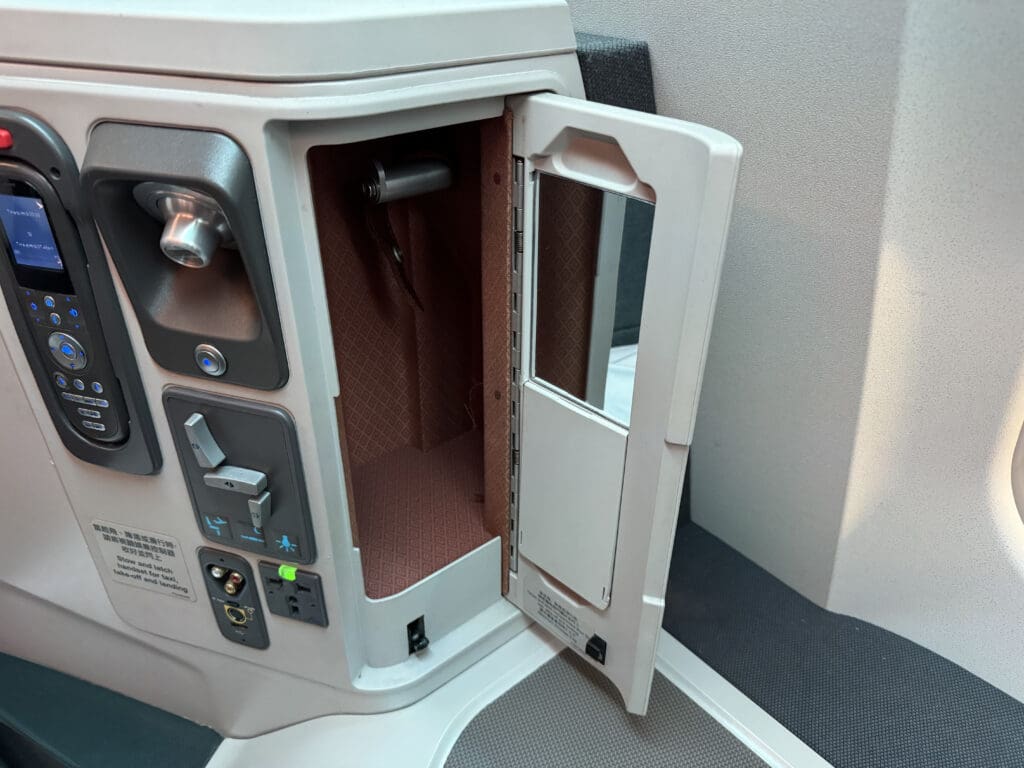
Then there’s also a very good amount of storage. There’s space near the leg area, a cabinet at the side console, a literature pocket for a small laptop, and a separate shoe cabinet as well. Storage is even better on the A350s, with more efficiently used space by the ottoman (sadly the brand-new Aria Suite actually has much less storage, which has been a common complaint).
Cathay Pacific A330 Business Class Storage
Then there’s also a wing for head privacy, where I wouldn’t have been able to see my seatmate unless I was craning my neck. Of course there isn’t a door or anything in this last-generation seat, though it’s certainly more private than other seats in its time.
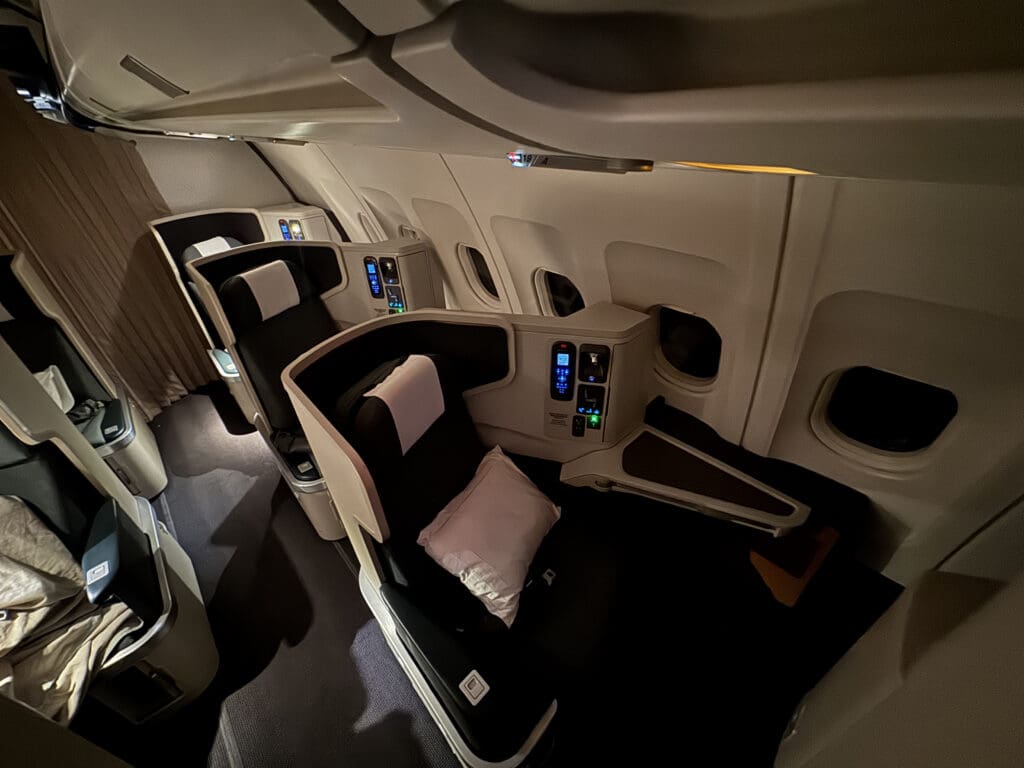
Cathay Pacific A330 Business Class – head privacy wings by the headrest
My one complaint is that the IFE was almost unusably unresponsive, though given WiFi was free for business class passengers and easy to connect to, this wasn’t a big issue for me (it’s also good that these planes don’t fly flights that long anymore).
I didn’t spend too much of this flight in the fully flat position (and only reclined my seat slightly), though I still found it to be exponentially more comfortable than the airline’s regional business class seats. Not only do you have direct aisle access, though the seat itself is just so much more sensibly designed.
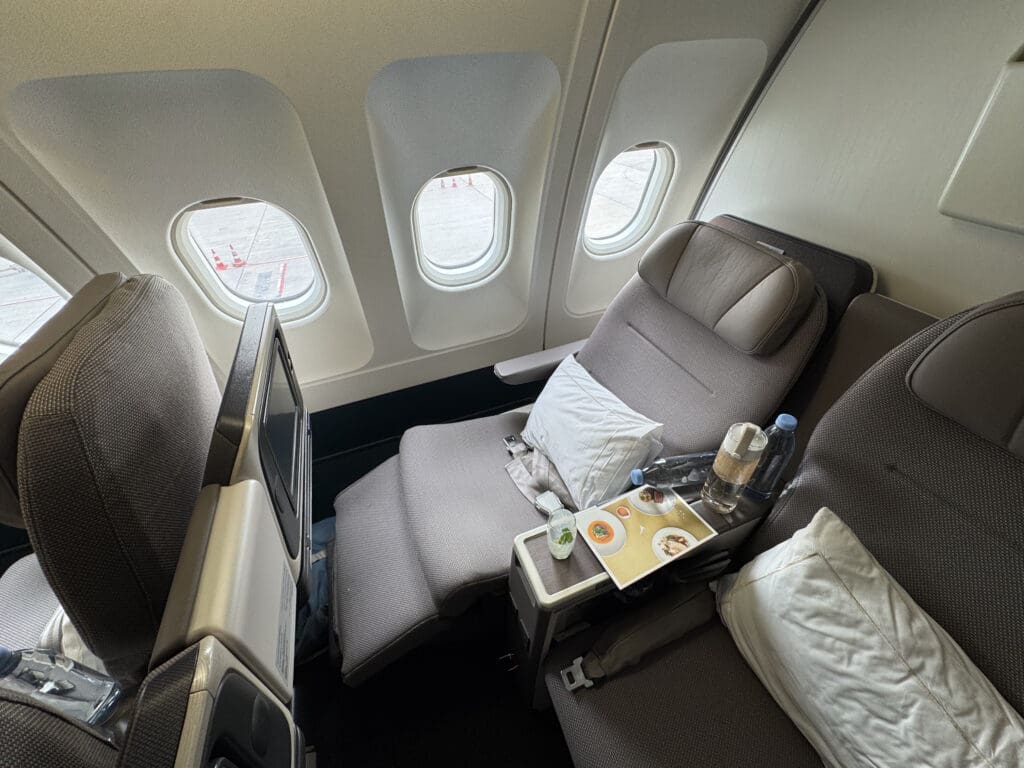
Cathay Pacific A330 Regional Business Class Recline
Of course, Cathay Pacific is introducing their lie-flat Aria Studio, which will bring them towards lie-flat business class fleetwide. However, we’re still months away from the inaugural flight, let alone the product becoming mainstream on all routes.
WiFi on all Cathay Pacific routes is fast and free in business class, which is a silver lining if you’re otherwise stuck in their regional business class product.
Cathay Pacific’s ex-Singapore Catering Is Very Good
In September, my four-hour flight from Seoul to Hong Kong featured bibimbap – though it was served with microwave rice, and the bibimbap itself was quite rudimentary. In fact, I received an extremely similar meal on my flight from Hong Kong to Seoul in Korean Air’s economy class.
Singapore to Hong Kong was a different story – there was a choice between steamed halibut, rack of lamb, and chicken rendang with nasi lemak, all of which looked very enticing. I decided to give the rack of lamb a go, and was thrilled to see it cooked medium rare, and the meat itself was of great quality as well. The garlic bread it came with was also well-executed and not soggy, unlike what I’ve experienced on other flights with the airline.
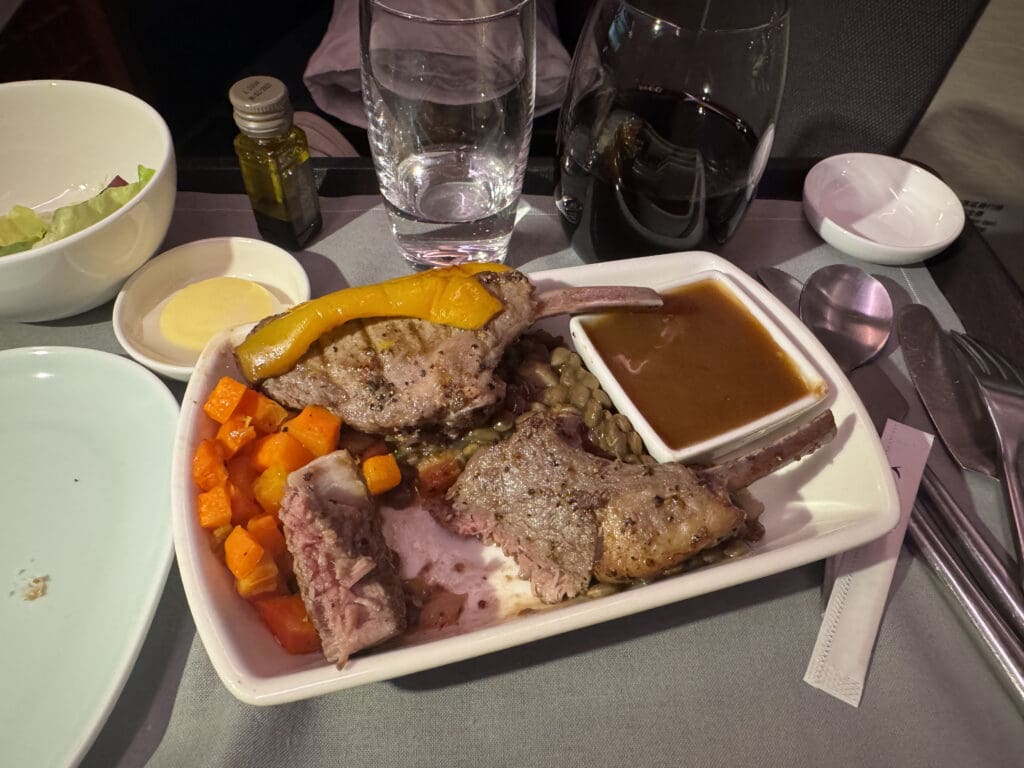
Cathay Pacific A330 Business Class Meal (cutting done by yours truly)
I’ve also had a really good experience with meal service on the route in premium economy, so I’d say that Cathay Pacific’s ex-Singapore catering is just very good in general.
Also, I’ll generally give Cathay Pacific credit for having a good drinks list in business class. It’s good to be able to get a martini, negroni, or their signature Cloud Nine cocktail at your leisure, as well as their signature mocktail Cathay Delight as well (if they don’t run out). On the Singapore to Hong Kong route the airline does a drinks service and serves a separate drink with your meal by default, which is great.
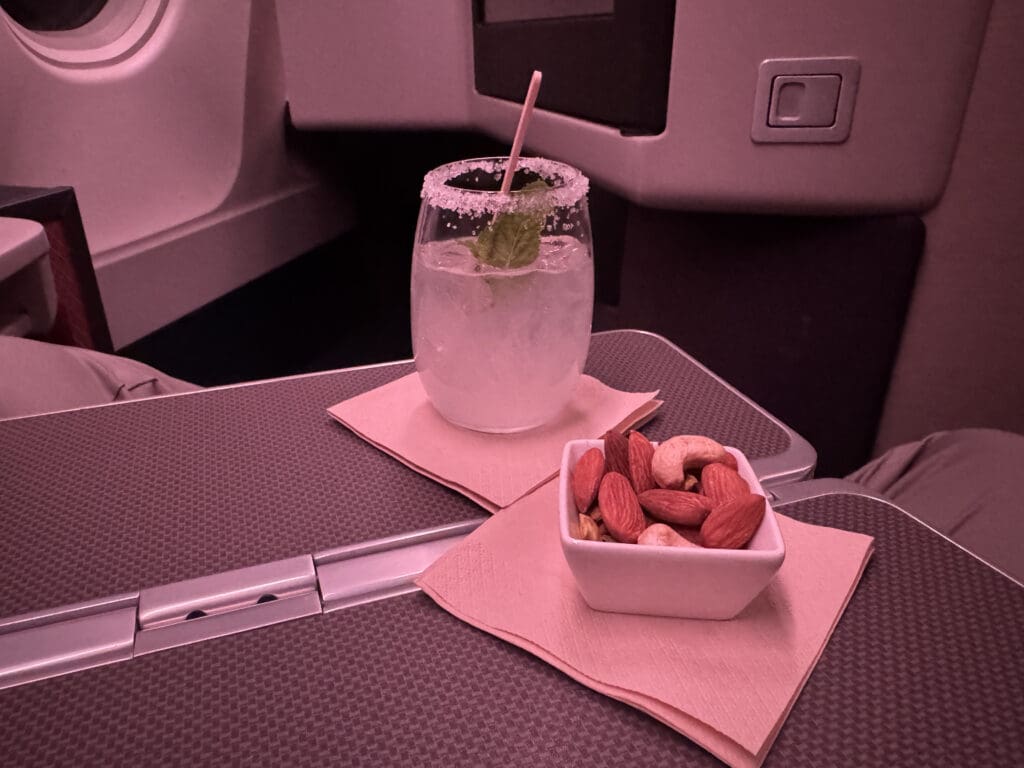
Cathay Pacific A330 Business Class Drinks
The service flow on this flight was very good as well
The flight attendants on this flight were great, and executed a relaxed and personable service, consistently checking if people needed anything. I also noted that trolleys were only ever used to serve dessert (though the main meals were placed on a tray, as opposed to directly on the tablecloth like they do on longhaul flights).
Service on Cathay Pacific can be a mixed bag, though in this case the crew couldn’t have been friendlier.
Cathay Pacific’s consistent inconsistency in shorthaul business class
While all airlines have some variance between their onboard cabin products, Cathay Pacific must be the Asian airline that has the biggest variance in both hard and soft product, depending on which flight you’ll take. Firstly, even though the airline has planes equipped with regional business class seats, their entire A330 subfleet with lie-flat business class operates exclusively regionally, which offer a significantly better experience than their “true” regional aircraft.
Secondly, out of the major airlines within Asia, Cathay Pacific must be the one with the biggest product variance. To name a few, but not all examples within the subcontinent:
- Singapore Airlines phased out their non-lie flat business class seats, and now you’ll have a lie-flat business class seat regardless of which plane type you take
- Airlines such as Malaysia Airlines, Vietnam Airlines and Thai Airways have narrowbody aircraft with simple recliners, though flying any widebody aircraft will get you at the very least an angled flat bed
- Japan Airlines and ANA have regional seats as well, though those are marginally more comfortable than what Cathay Pacific offers (and they fly them more consistently across routes)
- EVA Air and China Airlines fly their older longhaul aircraft with angled flat beds on some regional routes, though they don’t have a custom-made regional business class product in the same way
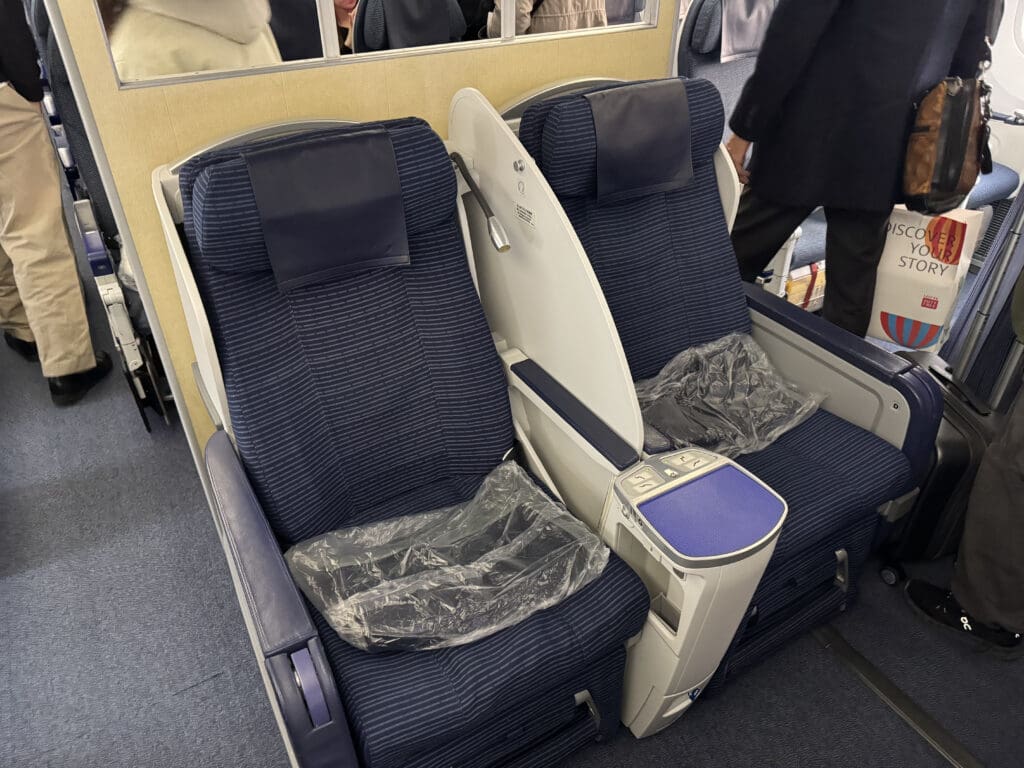
ANA’s regional seats are much more consistently flown on routes
In other words, there isn’t another airline in Southeast Asia that has as large a fleet of custom-made, widebody business class seats designed for regional travel…which isn’t actually used on all regional routes. Even on fleet allocations within regional routes, Cathay Pacific has quirks:
- Some routes are rostered as “flat bed only” though equipment swaps still happen – for example, Singapore is one of those routes, though one of the earlier flights on my day of travel got swapped to a regional A330 (because of the recent tail strike incident involving one of the flat bed A330s, taking it out of action)
- Some routes are exclusively operated by lie-flat A330s (such as to Urümqi, Jakarta, and some flights to India)
- Some regional routes are listed as Aria Suite routes – for example Sapporo is exclusively operated by either the Aria Suite or A350s
- Some routes are operated exclusively by the regional 777 (including some of the Tokyo, Denpasar, Seoul, Shanghai frequencies), which I avoid whenever possible – some of these flights fly up to 5 hours
- Of course, there are some routes that are exclusively operated by the A321neo, though that’s more understandable
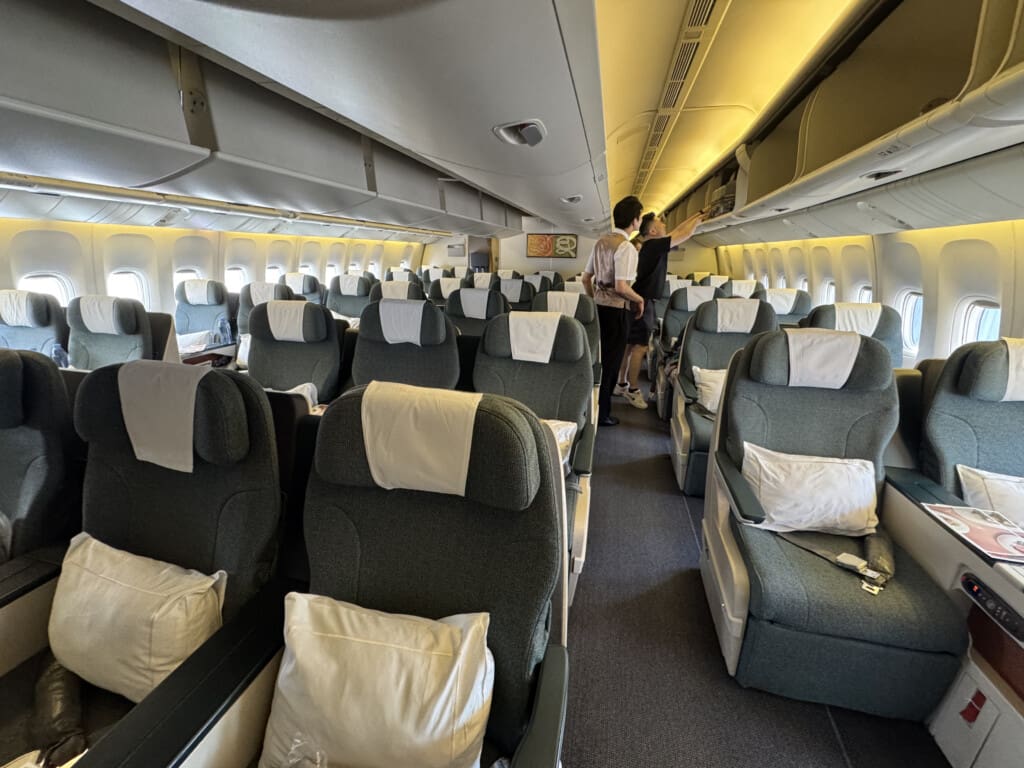
While I enjoyed my four-hour flight on an A330 with lie-flat beds, a four-hour flight in this cabin would be much less enjoyable
That’s not even to mention catering, which also varies hugely per route as well. So in conclusion, there’s a huge variance between the product you’ll get when you’re booking a shorthaul Cathay Pacific flight, which can leave a very different impression on the airline.
Conclusion
Many like to rag on Cathay Pacific for having a declining product, and it’s sometimes true, as some of my flights in Cathay Pacific’s regional business class have been some of the underwhelming shorthaul flights I’ve had outside of Europe. However, my recent flight from Singapore to Hong Kong fired on all cylinders, and featured a comfortable, oldie-but-goodie hard product with great service and catering.
The only thing consistent about Cathay Pacific is its inconsistency, at least in shorthaul business class.
What do you think about Cathay Pacific’s regional business class?