




A few months ago I wrote an article titled “is premium economy worth it“? Today I’d like to take the topic even further. Many on social media find premium economy to be a scam, for one major reason – it’s the most profitable cabin on the plane, when you count by square footage.
Particularly for those who enjoy flying first and business class, premium economy is seen as an unwelcome trend – masquerading with business class fares, while not providing a service much better than economy. Realistically, personally I don’t think that’s the way the market has played out. Although premium economy is the most profitable, I think that’s just because it’s a good product that’s marketed well.
I don’t think the product is for everybody (particularly those who need a flat bed to get comfortable, or those who can sleep really well in economy), but I’ll continue to happily pay for it in the future.
Premium economy is the most profitable cabin on the plane
There’s quite a bit of research out there that suggests that premium economy is the most profitable cabin per square metre on the plane. I’m not going to do the maths myself, though I’ll recommend a video from Flight Formula – Simon (the guy who runs Flight Formula) estimated a 2.3x yield per square metre in premium economy over economy, compared to a 1.6x yield over business class.
How can airlines make so much profit with this cabin? Well, that’s because many of the world’s latest and greatest business class seats require quite a bit of square footage, whereas premium economy only requires a marginal increase in square footage. Think – business class seats normally exist in a 4-abreast configuration (although airlines have optimised the latest lie-flat seats to just require 45-50″ seat pitch due to clever angling), whereas they can fit double the number of premium economy seats abreast with just 38-40″ seat pitch.
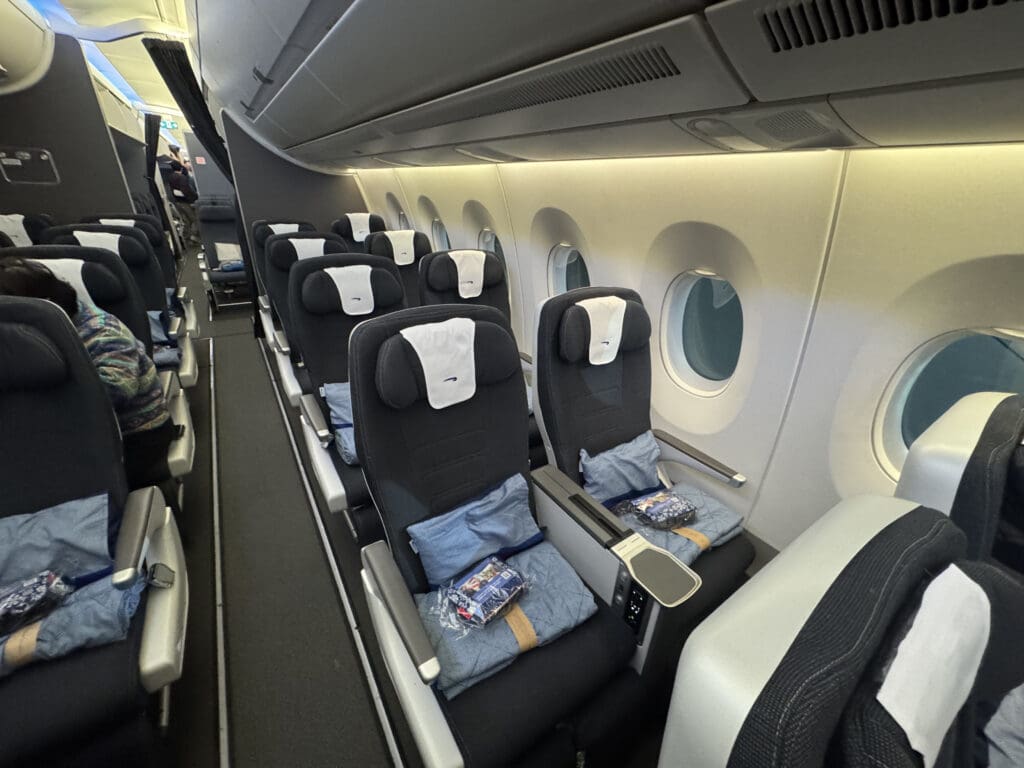
Premium economy is just slightly less dense than economy, though airlines can charge substantially more for it
Many years ago, business class used to look like what premium economy does now. While airlines charged more, they also offered a much higher level of service in the cabin, whereas service in premium economy is usually more similar to what you’d expect in economy. It makes sense that this new cabin would be profitable, since airlines are offering the same hard product that business class used to be back in the day (probably with even more density), whereas they aren’t spending nearly as much on soft product investments.
However, that doesn’t mean the market is stupid
If I were to think of an airline seat like rent, paying for premium economy is a terrible deal. I’m paying up to 80-100% over the amount I’d pay for economy, for around 40-50% of extra space. I’ve reviewed ~20 premium economy flights and have plenty more booked, and I might as well be throwing my money in the bin.
However, that’s not the way I see my airfare spending. Regardless of whether I’m paying cash or miles for a ticket, I’m thinking mainly about how well-rested I can be from the flight, as well as my personal interests of how much of an airline’s flair and culture I can experience (especially if they’re from a country that I’m unfamiliar with). The reality is that the extra 40-50% of space gives me a level of rest onboard the plane that I value at way more than 40-50% of the cost over economy. I also value the extra shoulder space and think I can be more productive, which earns back some of that extra cost that I’m paying.
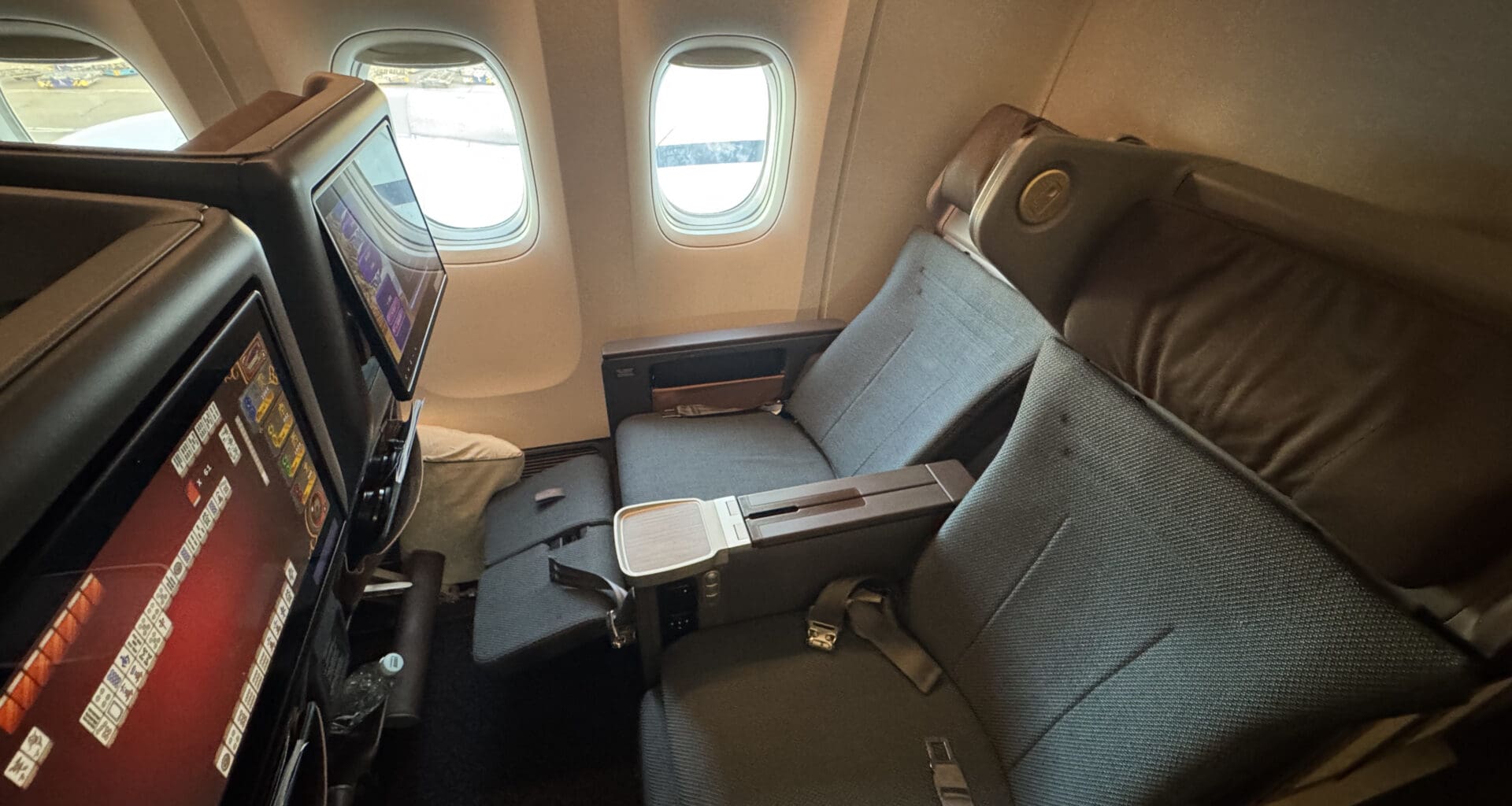
My Japan Airlines premium economy ticket cost 17,500 miles more than economy. I’m not thinking about the fact that I only got 15% more space – I’m thinking of the extra work I got done and the extra sleep I got due to the increased recline
I’d encourage savvy travellers to think of their own valuation of airline products. For example, some people I know can sleep and be extremely productive in economy. First of all, I’m 24 (young) and not good at this, so that’s my own problem for being so jaded. If I were one of those people, premium economy would appeal a lot less to me, since I’m not incrementally getting that much better of an experience (whereas I’d still recommend trying business class especially on points, since that’s an aspirational experience on a different level).
However, on the other hand, I know people who can’t sleep at all unless they have a flat bed. In this case, I also wouldn’t say premium economy is worth it, especially on night flights. You’re not getting a much better soft product and the incremental space doesn’t benefit you as much, so I also wouldn’t recommend premium economy.
For me personally, the difference between my sleep quality in economy and premium economy differs massively, and I’m happy to pay extra on that. While I appreciate when airlines offer a differentiated soft product in premium economy, I am largely paying for how much sleep I can get, and how comfortable I’ll be when I land at my destination. As a passenger, I don’t necessarily care if this requires 15% or 150% more space from the airline.
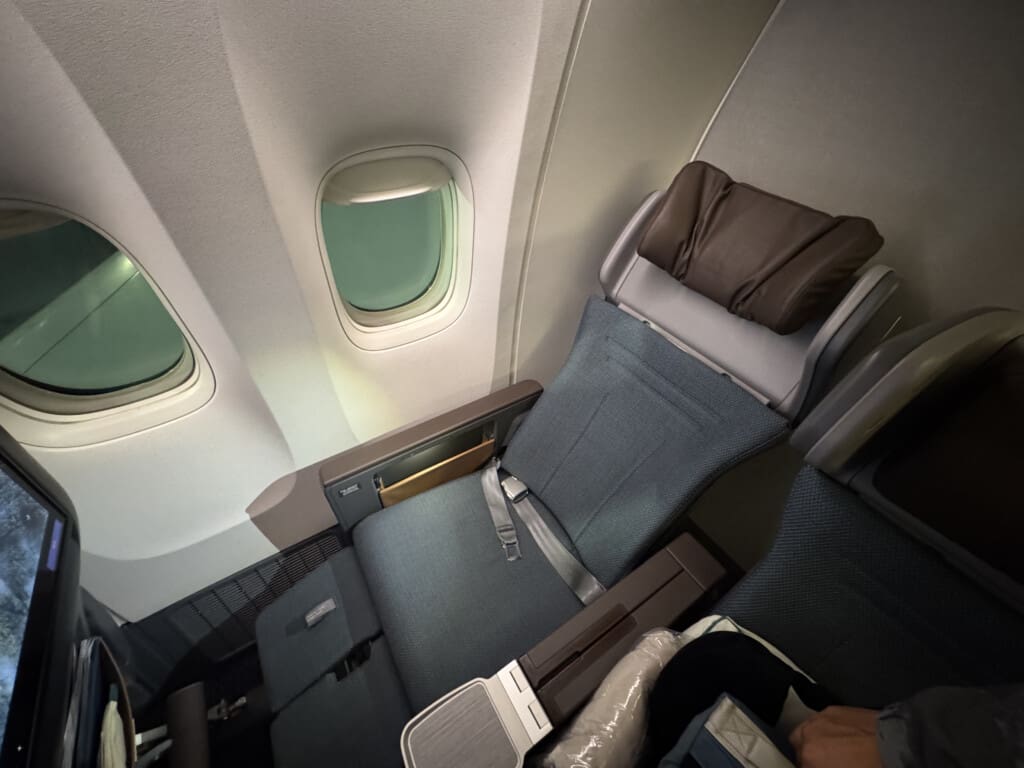
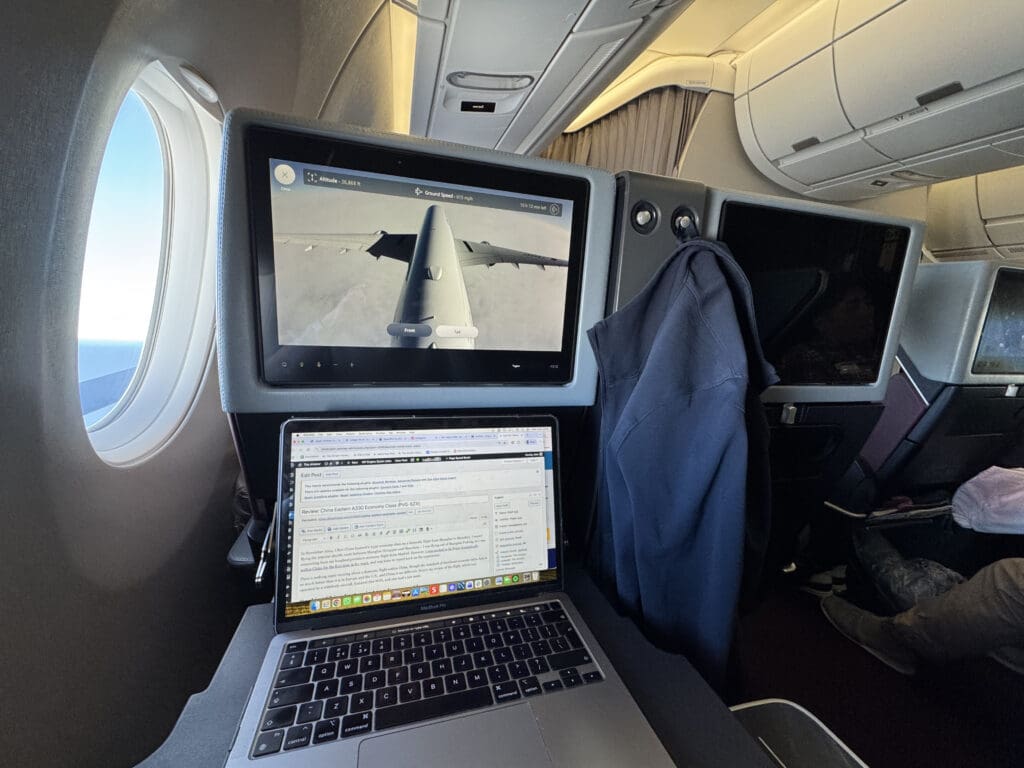
I might as well call this the “money shot”, as this is why I pay money for premium economy
I think people need to let airlines have win-win situations sometimes
As a general commentary on the relationship between airlines and the general public, I think people need to stop thinking that airlines are out to get them with their fares. Airlines obviously have an incentive to charge as much as they can. The margins generated on air travel are incredibly low, and many times airlines rely on surge pricing and corporate fares just to get a net-positive balance sheet.
When you have to get a last-minute flight for an emergency and end up paying five times extra compared to the person next to you, that’s not a money-hungry corporation trying to juice out your bank account. Frankly, airlines sometimes lose money on discount tickets, and rely on simple microeconomics (supply and demand) and resultant airfare fluctuations in order to operate profitably.
Premium economy is a good example of a good airline product that is a win for the airline, but not automatically a loss for the consumer. For me, it’s not a loss. I’m paying what I consider to be a little extra, for a much better experience on the plane (especially in terms of sleep and productivity). From an airline nerd standpoint, I also get to know the airline more as well, due to the more extensive soft product offered on most airlines.
Other people may value their air travel experience differently, and I totally respect that. I just get annoyed when people make bracketing statements about premium economy being a scam for stupid passengers.
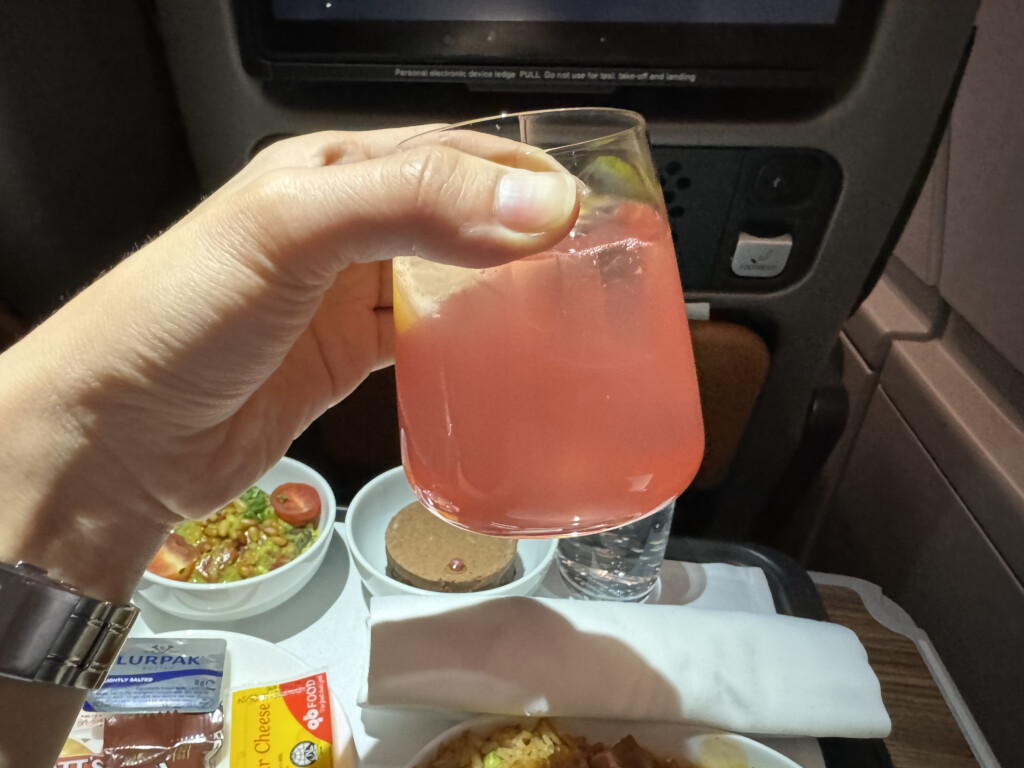
While I’m paying for space and recline, I don’t mind the incremental soft product upgrades airlines provide in premium economy at all
Conclusion
Premium economy is the most profitable cabin on the plane per square metre. However, I don’t think this means it’s a scam, or a terrible deal. I think premium economy is a good product for a certain market, including consumers like me who can’t regularly afford business class (with cash or miles), but value the extra space to sleep and work.
This brings in a bigger conversation on what you’re paying for when you’re paying extra for a cabin class that isn’t economy. In my case, I’m paying mainly for comfort and the value I can get out of my activity on the flight, as opposed to the actual space that’s offered (and I’d also pay a bit extra for the experience and soft product). Others will be paying extra for different reasons, and I respect that.
Do you find premium economy to be a scam? What do you value most when paying extra for a premium cabin?
It’s not 10-15% more space from an area perspective for standard PE seats – varies by cabin and airline but even the ‘tightest’ gain I know of is A350s – for example, BA’s goes from 31″ to 38″ (22% longer) and the passenger width (NOT the seat width – most of PE is in the wider armrests) is about 11% wider (9 abreast to 8 abreast), or about 35% more space overall (1*1.22*1.11 = 1.3542).
That’s close to worst case (not including a few airlines airlines like Condor that sell extra legroom economy seats as Premium Economy, which IS only an extra 10-15% more space), the best case is something like EVA’s 787-9 which adds 35% more pitch (31″ vs 42″) and 28% more width (9 abreast to 7 abreast), or about 73% more room overall (1*1.35*1.28=1.728)
@ Ben – Thanks. Well, technically, there are airlines like Shenzhen Airlines that give you 14% of extra space (same width, 35″/31″ = 14% extra). But your point is valid, I’ve done the maths and agree, and I’ve updated the post.
The real problem with PE seats is airlines that call it “PE” without it actually being better than economy. Extra leg room does not make it ” Premium Economy” (yes, I’m talking to you, Delta). Premium Economy can be a great value on some routes, but it’s not always worth it.
I don’t book PE domestically. Often times you can get free PE upgrade domestically with some sort of elite status. I do book PE saver awards internationally on full-service carriers.
I’m 6’4″ so PE on a long haul flight can make a huge difference in the shape I’m in when I arrive.
premium economy is a scam for stupid passengers
@ InoTsTupid – ragebait = approved