



British Airways flies ~146 narrowbody planes, and on many of them, you know exactly what to expect. The airline did a major fleet overhaul in 2015, and a vast majority of their shorthaul planes have the same seat throughout the cabin. There are a couple of exceptions – the airline outfitted some of their A320neos and A321neos with a low-cost airline style seat in the latter half of the cabin, whereas their newer A320neos and A321neos feature a new seat altogether.
While these changes were all introduced to British Airways’ fleet recently, today I wanted to visit the other side of the timeline. British Airways has two A319s that have different cabins from the majority of their newer fleet…and it’s much older. I’m intrigued by how this has happened, and am hoping to hunt down one of these A319s on a future shorthaul flight.
British Airways has decent product consistency onboard its shorthaul fleet
While intra-European cabin interiors are rarely anything to write home about, I’ll applaud British Airways for having fairly good product consistency onboard their shorthaul planes.
A vast majority of their A319s, A320s, and A321s feature B/E Aerospace Pinnacle seats. These have adjustable headrests, and in most cases, 110V power ports and USB-A ports.
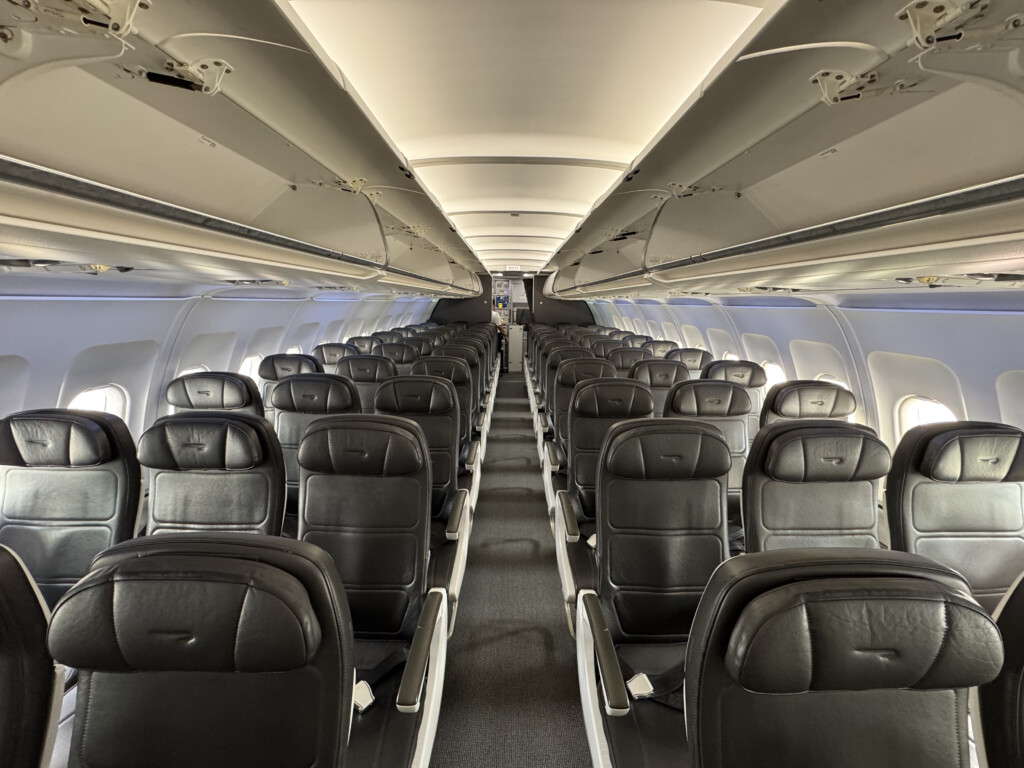
British Airways’ A320 economy class
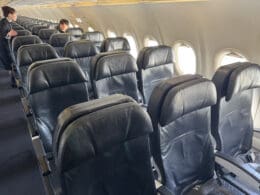
I’m not a fan of the slimline economy class seats featured on most British Airways A320neos and A321neos, though at least you can expect to find a USB-A charging port there.
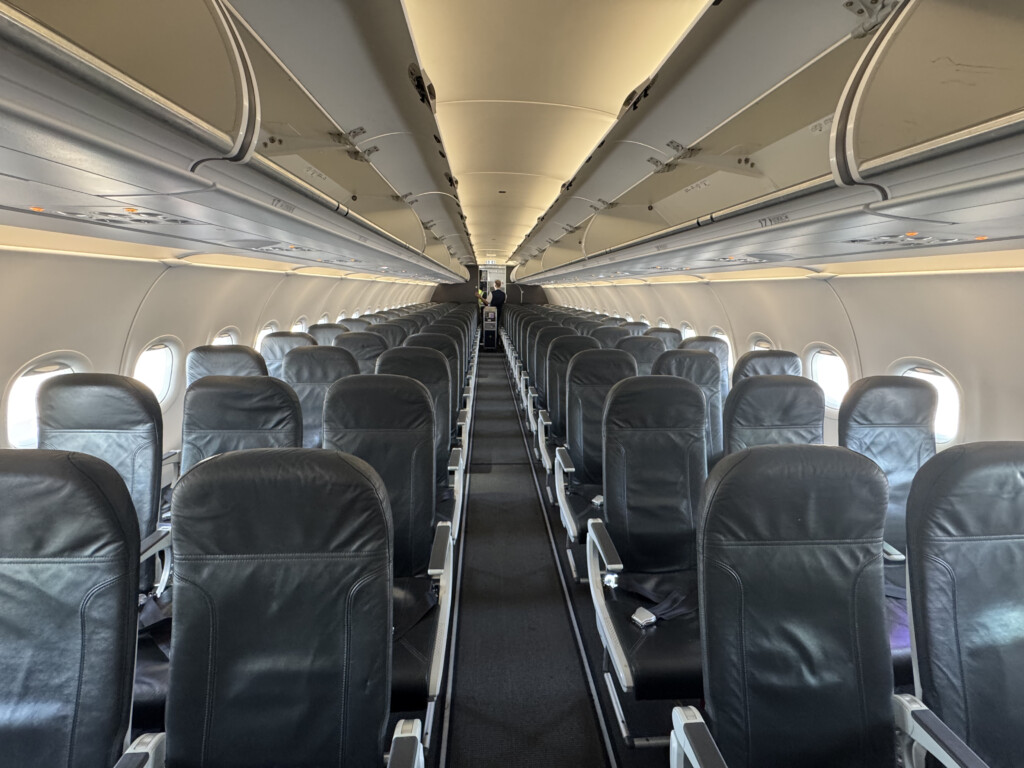
British Airways A320neo/A321neo economy class
Meanwhile, some of their newest A320neos and A321neos feature a new seat altogether, the Collins Aerospace Meridian seat. These seats also feature adjustable headrests, though don’t feature 110V power ports, and the USB-C ports in the rear half of the cabin are only rated at 15W.
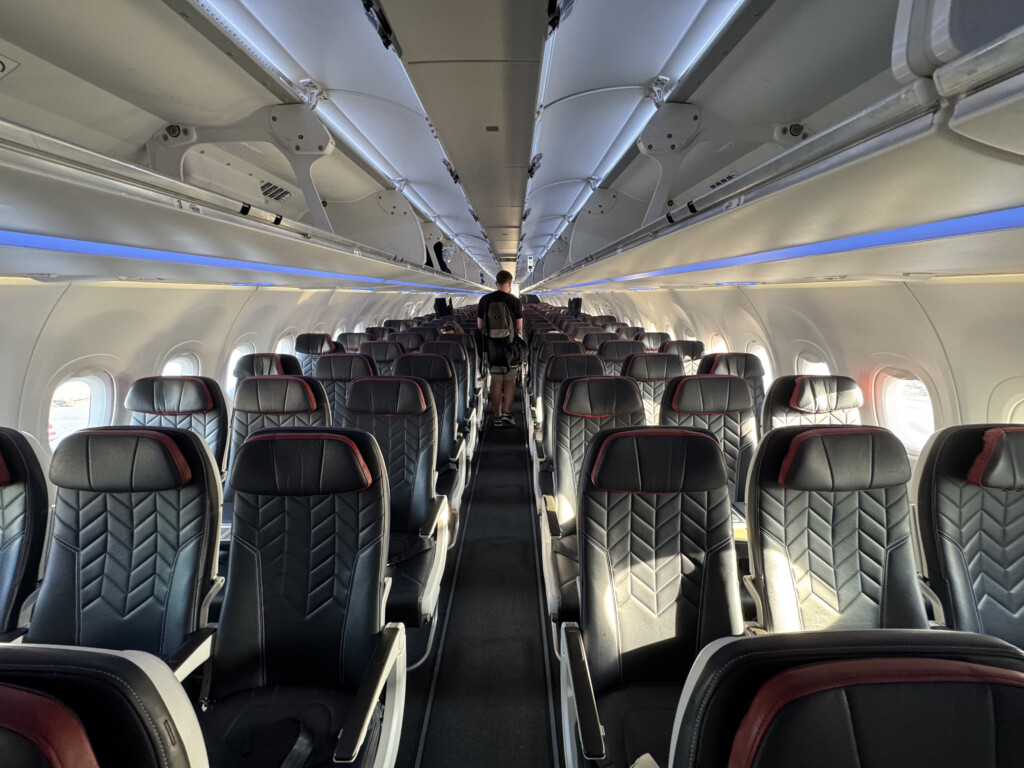
British Airways A320neo cabin
Perhaps I’m just too used to Hong Kong Airlines’ antics, though generally I know I’ll get one of three products if I’m flying British Airways on a shorthaul flight. Also, while calling the seats comfortable would be quite generous, at least I know that the seats will be in good condition, given that British Airways historically hasn’t had much of an issue with that.
There are two major exceptions, though
While a majority of British Airways’ shorthaul fleet features well-kept seats that were introduced sometime in the last 10 years, there are two major exceptions to this. Specifically, G-DBCA and G-DBCB still seem to be operated with the interiors of the planes’ predecessor, BMI.
For those unfamiliar, BMI (British Midland International) was an airline that operated primarily regional routes out of the UK. The airline was acquired by British Airways in 2012, who took on their route network as well as many of their Airbus planes. Many of BMI’s planes even featured flat beds (similar to what you’ll find on Aer Lingus nowadays) and operated high-yield routes such as to Jeddah, Kuwait, and Moscow, though those planes are long gone now.
Amongst the fleet transferred to British Airways were a number of A319, A320, and A321 aircraft. Many of these aircraft were updated to sport British Airways’ newer interiors, featuring the 2015-era Pinnacle seats. However, a number of reports state that two of British Airways’ aircraft still sport the ex-BMI interiors, with much older cabins. There were a number of other A319s that got transferred over from BMI to British Airways, but for some reason those A319s were refurbished, whereas these two weren’t.
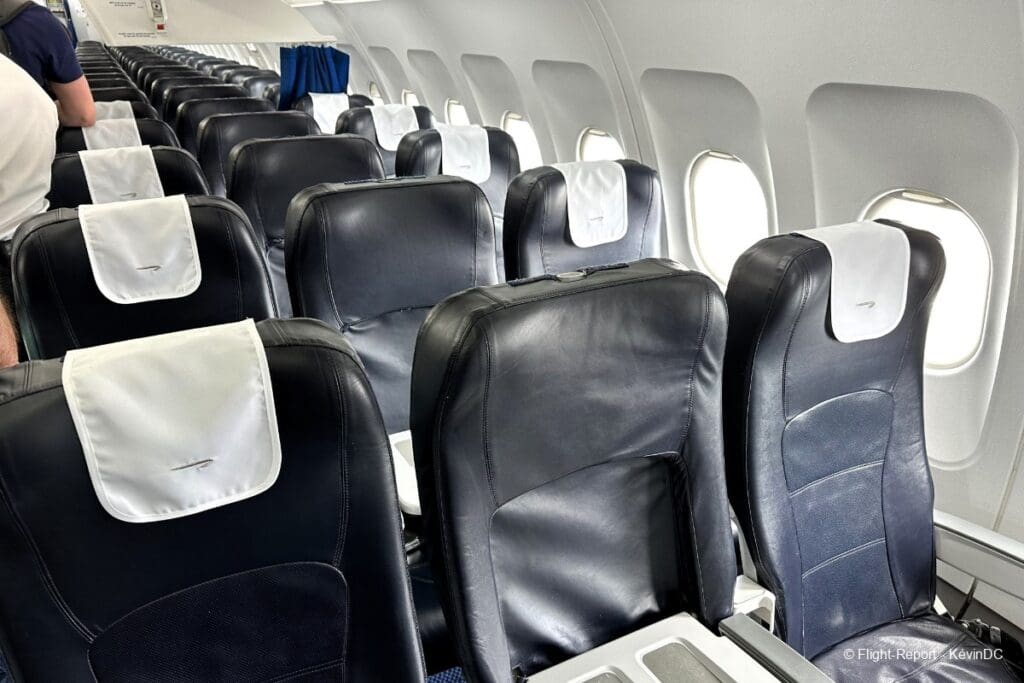
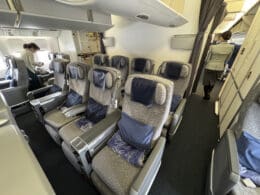
British Airways A319 Interiors (credit: KévinDC on Flight-Report.com)
These seats are super interesting in their own right, though I’m more interested in their condition, which looks…rustic.
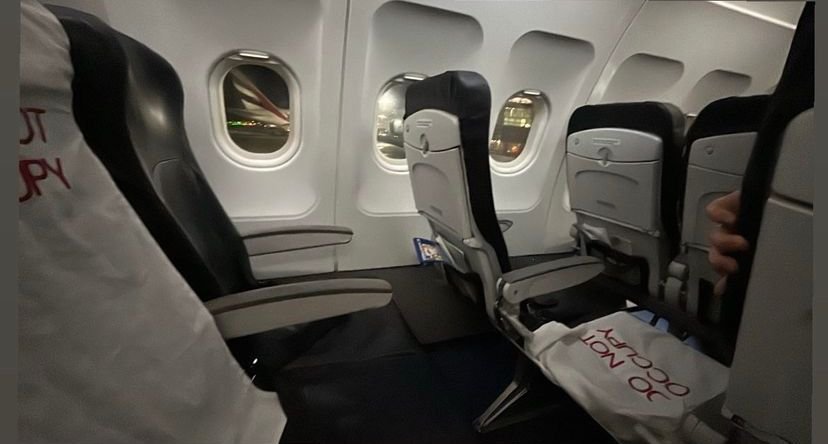
British Airways A319 Cabin and Seat (or lack thereof)
From a quick FlightRadar24 search, both G-DBCA and G-DBCB seem to be based out of Heathrow, and deployed across British Airways’ network. The most frequented routes seem to be to Zurich, Vienna, Madrid, Düsseldorf, Warsaw, Copenhagen, etc..
I’m so interested to fly one of these jets!
Flying intra-Europe can be quite boring – the seats aren’t exciting (especially in intra-European business class), catering is middling at best, and there aren’t any other amenities separating business class from economy. That’s why in Europe, I’m most interested when there’s variety in the type of planes operating various routes, especially when they involve other airlines, or when longhaul planes are involved in shorthaul route networks.
I’m so interested to hunt down a flight on one of these A319s, and see what the experience is like. I’m sure it’ll feel a bit like a blast from the past, given that these cabins are reaching 20+ years old without having been refurbished in the meantime. At the same time, I also imagine that the average traveller is not impressed when they board a British Airways A319 and see one of these seats.
Conclusion
British Airways has fairly good product consistency across its shorthaul fleet, though two major exceptions include their ex-BMI A319s, which feature different seats and aren’t in the best condition. While I imagine the passenger experience on one of these planes isn’t great, I can’t help but want to hunt down one of these seats, just so I can review the experience.
Have you been on one of British Airways’ ex-BMI non-refurbished A319s before? How was the experience?