



I’ve been writing some guides recently on how to use miles and points for different airlines. Increasingly, I’ve been made aware that the framework of how I view redemptions is almost entirely based on airline partnerships, particularly within alliances. The reality is that if you don’t know how alliances work, the number of airline options for redemptions that you have can be extremely overwhelming, particularly if you hold transferrable points.
In this post, I wanted to explore how alliances work more generally, as well as provide an explanation for those that aren’t already familiar with airline alliance dynamics. If you’re a savvy frequent flier who knows how alliances work, feel free to skip this post.
What is an airline alliance?
An airline alliance is an industry arrangement for airlines that have agreed to cooperate on a “substantial level” (I got this off Wikipedia, though other sources state it too). Generally, this “substantial level” includes expanded codeshare and interline arrangements, branding collaborations, shared passenger experience elements, and shared operational costs in some cases.
From a traveller perspective, alliances generally provide shared benefits. For example, if I’m flying one airline within an alliance in business class, I can visit lounges operated by any airline within that alliance at the airport (provided they exist).

I’ve visited the lovely Qantas Hong Kong lounge countless times, despite never having flown Qantas out of Hong Kong before
On another note, generally if you fly an airline belonging to an alliance, you can credit frequent flyer points to any airline within the alliance – although the rates vary. Redemptions are a bit of a different story, as different airlines have different quirks when it comes to accessing other airlines’ award space. I’ll touch on this a bit more later on in the post.
Lastly, if you have frequent flyer status with an alliance airline, you’ll be able to enjoy those benefits across all of the different alliance airlines. For example, if I have Cathay Diamond status, I’d be able to use equivalent benefits (known as Oneworld Emerald benefits) across the network. This means that if I was flying Japan Airlines (another Oneworld airline), I’d be able to use a first class lounge upon departure, much like I’d have been able to use a first class lounge in Hong Kong. (You’d have to be flying a Oneworld airline in order to take advantage of the benefit, though.)

The Cathay Pacific first class lounge in Hong Kong is open to all Oneworld top-tier frequent flyer members, not just Cathay Pacific’s ones
Generally, how frequent flyer status across an alliance works is that the alliance itself publishes benefits for various frequent flyer status tiers, then the airline matches the benefits of their own frequent flyer schemes to the alliance’s ones. For example, if I earn Silver status with Singapore Airlines KrisFlyer, it would “match” to Star Alliance’s own Silver status. The ease of attaining status varies by airline.
What are the major airline alliances?
While airline alliances have existed for almost a century, there have only been three major airline alliances to come out of the trend. Here they are in size order.
The largest alliance is Star Alliance, which has 25 members:
| Aegean Airlines Air Canada Air China Air India Air New Zealand All Nippon Airways Asiana Airlines Austrian Airlines |
Avianca Brussels Airlines Copa Airlines Croatia Airlines EgyptAir Ethiopian Airlines EVA Air LOT Polish Airlines |
Lufthansa Shenzhen Airlines Singapore Airlines South African Airways Swiss International Air Lines TAP Air Portugal Thai Airways International Turkish Airlines United Airlines |
Star Alliance has two major tiers: Silver and Gold. Silver doesn’t really get you anything except priority waitlisting, and Gold gets you what you’d otherwise expect from a business class experience, including business class lounge access, priority boarding, and fast track security. Some airlines within Star Alliance will let you access first class lounges if you hold a specific frequent flyer status, though there’s no alliance-wide first class lounge access policy (unless you’re flying first class on another airline within the alliance).
There’s substantial collaboration between these airlines when it comes to the passenger experience. For example, if I was flying Lufthansa or Swiss business class out of Heathrow Airport, I could use an Air Canada or United lounge (if open), and credit my miles to Singapore Airlines KrisFlyer, for example. I could even visit a lounge and get priority boarding etc. if I had Star Gold status with, for example, Ethiopian Airlines or Turkish Airlines, even if I was flying economy.
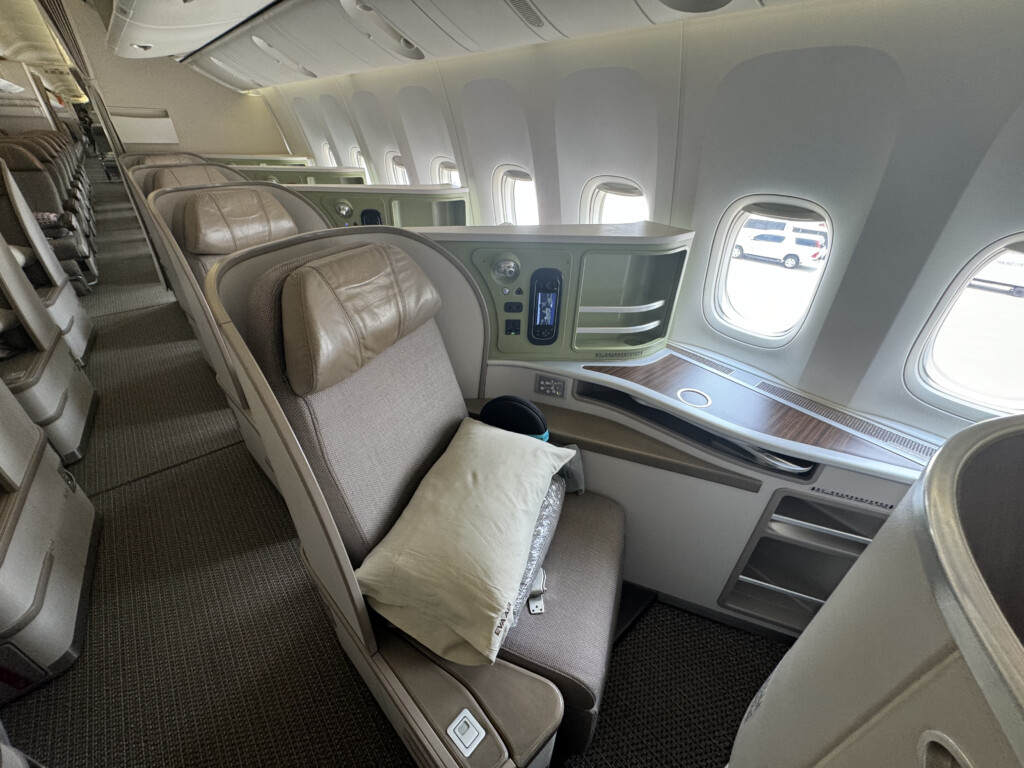
If I flew EVA Air business class (part of Star Alliance), I’d be able to earn miles with any Star Alliance airline, or use any Star Alliance lounge operating at the airport (e.g. KrisFlyer lounge in Bangkok)
The second largest alliance is SkyTeam (both in passenger numbers and number of airlines), which has the following airlines:
| Aerolíneas Argentinas Aeroméxico Air Europa Air France China Airlines China Eastern Airlines |
Delta Air Lines Garuda Indonesia Kenya Airways KLM Royal Dutch Airlines Korean Air Middle East Airlines |
Saudia Scandinavian Airlines TAROM Vietnam Airlines Virgin Atlantic XiamenAir |
SkyTeam has two elite tiers: SkyTeam Elite and SkyTeam Elite Plus. SkyTeam Elite membership comes with priority boarding, check-in and extra baggage allowance, whereas SkyTeam Elite Plus gives you priority baggage and lounge access, similar to what you’d get if flying business class. Once again, there’s no agreement to visit first class lounges here.

KLM is part of SkyTeam. This means that e.g. if I was flying China Airlines business class out of Amsterdam or had Elite Plus status with any SkyTeam airline, I could use the KLM lounge in Amsterdam if I wanted to
The smallest alliance of the three is Oneworld, which consists of the following airlines:
| Alaska Airlines American Airlines British Airways Cathay Pacific Fiji Airways |
Finnair Iberia Japan Airlines Malaysia Airlines Oman Air |
Qantas Qatar Airways Royal Air Maroc Royal Jordanian SriLankan Airlines |
I’m actually going to plug this alliance as my favourite – obviously quality varies, though I generally find Oneworld to have the airlines with the best lounges, onboard products, and the best sweet spots (when you can find award space). Perhaps I’m biased having flown Cathay Pacific growing up, though it’s always a pleasure to be able to share Oneworld benefits whenever I’m flying business class on a Oneworld airline (perhaps except British Airways out of Heathrow Terminal 5, which is probably the least pleasant hub lounge experience out of the lot).
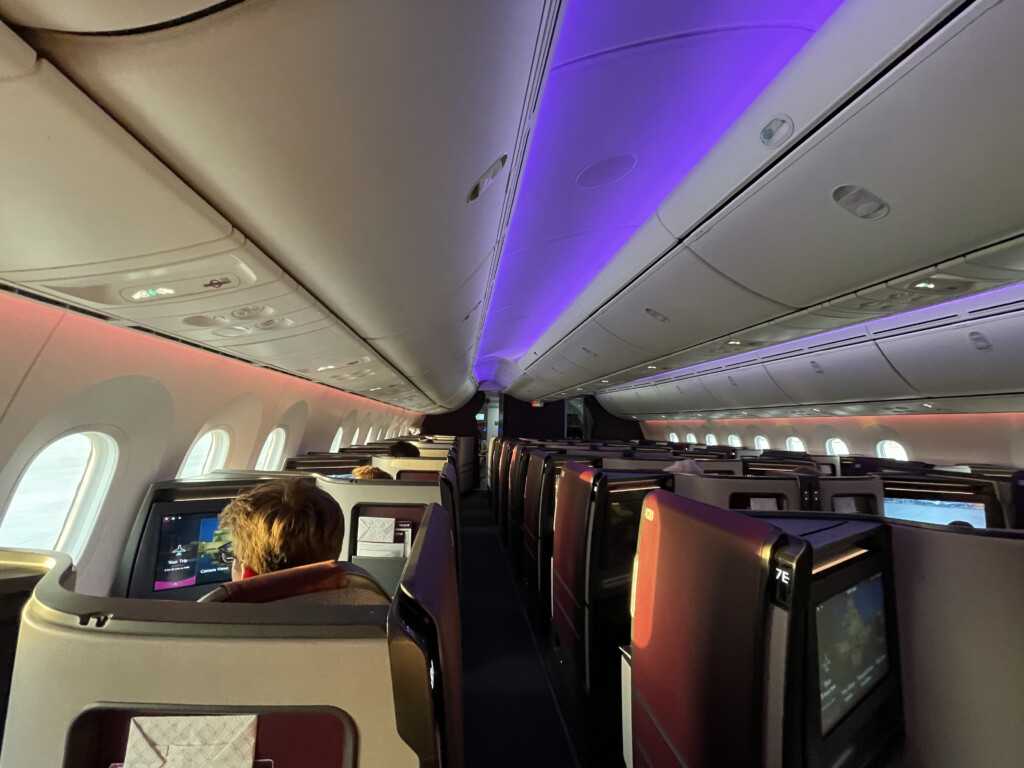
Qatar Airways business class is awesome and not too difficult to redeem with Oneworld points, and contributes to the alliance being my favourite
Oneworld has three frequent flyer tiers: Ruby gives you access to business class check-in counters, Sapphire gives you business class lounge access, priority boarding and priority baggage handling, and Emerald gives you access to first class check-in, first-class lounge access, fast track security, and priority boarding. As you can see, Oneworld Emerald is unique in being the only alliance-wide status that gives you a ground experience equivalent to first class.
Alliances vs. airline groups
Here’s a distinction to be aware of – alliances are different from airline groups. For example, the Lufthansa Group consists of Lufthansa, Swiss, Austrian, Brussels Airlines, Discover Airlines and Eurowings, and ITA Airways is getting acquired into it as well. This group shares common management, has the same frequent flyer scheme, and centrally shares a lot of the operations. These airlines will basically never compete with each other, as the same stakeholders are involved. If you run into an issue with a Lufthansa ticket in Switzerland, chances are the Swiss office might be able to access your reservation. Similarly, IAG consists of British Airways, Iberia, Vueling, Aer Lingus, and LEVEL, and they have a very similar relationship (with some nuanced differences that I won’t get into).
The Lufthansa Group airlines are almost all part of Star Alliance. Singapore Airlines is also part of the Star Alliance. However, even though these two airlines have reciprocal passenger perks, they aren’t run by the same management, have different frequent flyer programmes, and in fact, compete with one another. Singapore Airlines can’t help you if your Lufthansa ticket runs into irregular operations, or if you want to change your ticket (if you’re on a ticket that involves both airlines, though, the operating carrier should be able to help).
One of the most obvious cases is Qantas and British Airways, that both belong to Oneworld. Despite the fact that these airlines belong to the same alliance (and you can earn frequent flyer points on each other’s flights), they compete fiercely particularly on the Australia-London route. Qantas even cut ties with British Airways in 2013 to pursue a closer relationship with Emirates, which isn’t part of the Oneworld alliance. This wouldn’t happen between e.g. British Airways and Iberia, who are co-managed by IAG and wouldn’t compete in the same way.
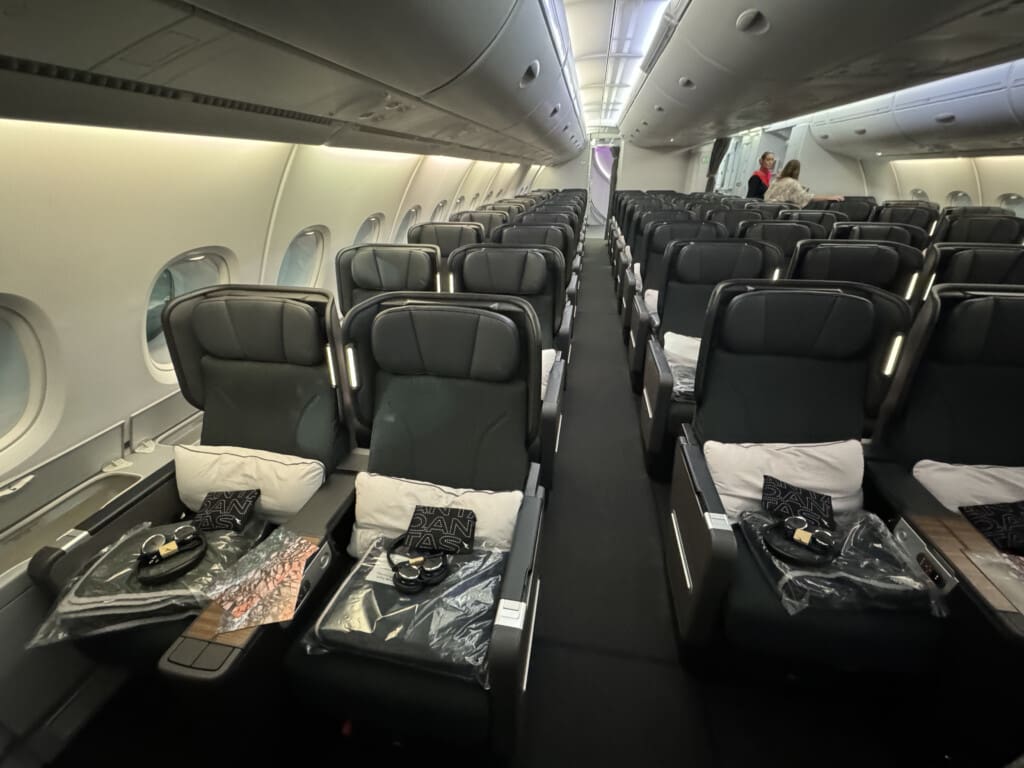
Airlines within alliances still compete with one another, even though there’s more room for interline agreements
Are there any major airline alliances outside of the “big three”?
Not with the same structure. While some airlines (particularly low-cost airlines) have tried to create alliances that rivalled the big three, there’s just zero incentive for people to make a new alliance work altogether, compared to just joining one of the big three.
However, airlines have started to create partnerships or groups individually outside of the big three alliances. Take Etihad, which isn’t part of any alliance. Etihad has individual agreements with American Airlines, Air Canada, Air France/KLM, and a variety of other airlines, allowing for earn and redeem opportunities with frequent flyer points. These partnerships have various levels of involvement – e.g. I don’t think you can use an Etihad lounge before an Air France business class flight. However, I’d say that there are more alliance-style partnerships out there in 2015 than there were ten years ago.
Okay, so does this mean I can use points to redeem on any airline with the alliance?
When airlines are in an alliance, you can easily earn points when flying with any airline in the alliance. Redeeming is a little bit more complicated.
On principle, you can redeem partner award tickets within each alliance network, as well as with any of the airline’s other partners. However:
- Airlines have control over how much award space they release to their own frequent flyer members, compared to frequent flyer members of partner carriers: for example, Cathay Pacific, Singapore Airlines, and EVA Air release much more award space to their own frequent flyer members than to their alliance partners, and Etihad only releases award space to partners 30 days before flight departure
- Airlines may also just opt out of having their award space available for partner redemptions completely (especially for first class: Lufthansa and Air France do this)
- Airlines may also have IT limitations preventing you from seeing partner award space online, or even booking it at all
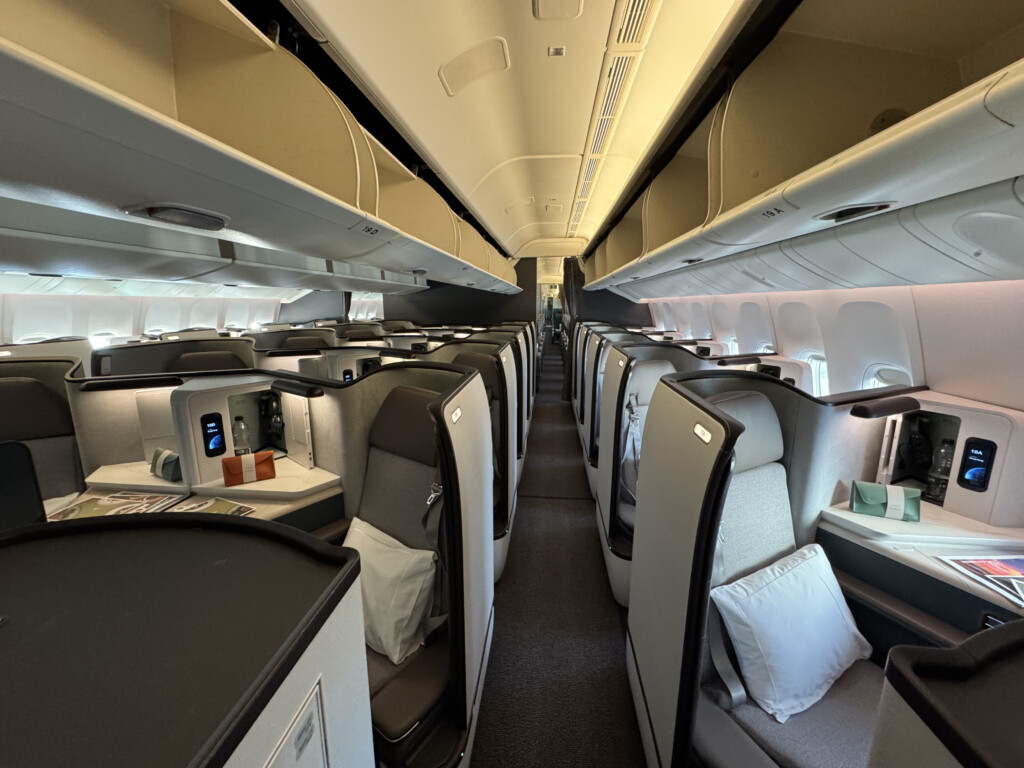
Cathay Pacific famously releases an extremely limited amount of award space to partners, particularly in premium cabins
My favourite alliance perks
So what exactly are alliance perks as a traveller? Generally you can maximise aspects of the passenger experience. Here are my favourite ways of maximising alliance-wide partnerships:
- There are airlines (particularly within Oneworld) that operate brilliant lounges: for example, when flying British Airways out of Heathrow’s Terminal 3, I love using Qantas or Cathay Pacific’s lounges, which are far better than British Airways’ own
- I generally like keeping my points with 1-2 carriers per alliance: this means that I can e.g. fly Air France/KLM and earn Virgin Atlantic points, allowing me to rack up points faster than if I spread my points out across different airlines (this is especially useful if you don’t have access to transferrable points currencies)
- I love using points to redeem for new experiences on new partner carriers: for example, I used my Cathay Pacific Asia Miles to redeem for Japan Airlines business class, which I otherwise wouldn’t be able to easily fly
- I might also be able to fly different airlines within the same itinerary, especially if the frequent flyer programme I’m using allows for multi-segment partner awards: for example, an AAdvantage itinerary in 2023 allowed me to try Qatar Airways and Etihad business class on one roundtrip ticket (Etihad isn’t part of Oneworld, though partners with American Airlines)

Getting to have dan dan noodles and dim sum in the Cathay Pacific lounge Heathrow before my British Airways flight from London to Stuttgart
Conclusion
If you’re looking to maximise your travel experience, it’s worth knowing how airline partnerships work, particularly in the big three alliances. From mileage redemptions to the actual airline ground experience, particularly if you’re flying in a premium cabin, alliances can help enhance the passenger experience. These can also come in really handy if you fly quite often, and earn frequent flyer status with a particular alliance airline.
What are your favourite alliance perks?